
Most people think they’re eating “healthy enough”… until they finally flip a package and read the nutrition label properly. I learned this the hard way while trying to clean up my grocery habits. I used to buy granola bars labeled “whole grain,” “light,” “low-fat,” and “energy boosting.” When I actually read the label closely, they were loaded with more sugar than a doughnut.
If you’ve ever felt tricked by food packaging, you’re not alone. This article breaks down label reading in a simple, practical way—no complicated nutrition jargon—and shows you exactly how to avoid hidden sugars and empty calories that sabotage your progress. Everything here comes from real-world experience, helping clients and cleaning up my own diet over the years.
This is your go-to guide to becoming smarter than food marketing.
Why Label Reading Matters More Than Most People Think
You’ve probably heard the advice: “Just eat clean.”
But here’s the truth—you cannot eat clean if you don’t understand food labels.
Most products in the grocery store are engineered to look healthy:
- “No added sugar” (but sweetened with fruit concentrate)
- “Low-fat” (usually means more sugar)
- “High-protein” (but tiny portion size)
- “Natural” (means nothing legally)
- “Zero-calorie” (often misleading in sauces and sprays)
Food companies legally hide sugars under dozens of names and manipulate serving sizes to make foods seem healthier.
Learning how to read labels isn’t about being obsessive—it’s about not getting fooled.
The Trickiest Places Hidden Sugars Sneak In
Over the years, I’ve noticed the same pattern again and again:
The foods people believe are healthy are often the worst offenders.
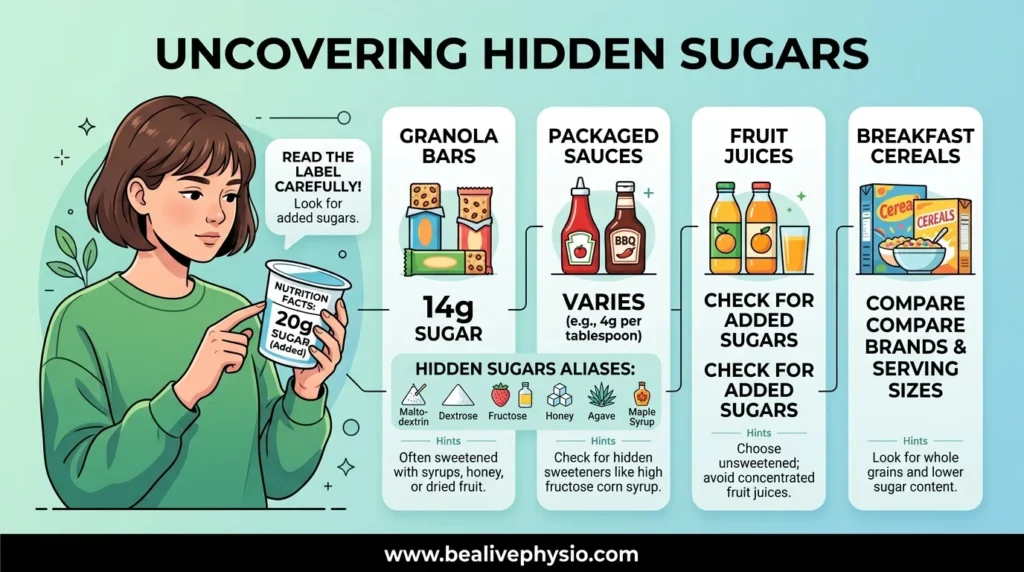
1. Yogurt (especially “low-fat”)
A single cup of flavored low-fat yogurt can have 20–28g of sugar—that’s basically a dessert pretending to be breakfast.
What to look for:
- Choose plain Greek yogurt
- Add your own berries or honey (you decide the sugar, not a factory)
2. Granola and Protein Bars
The front says “High Fiber,” “Whole Grain,” “Fuel Your Day.”
The back says 12–18g sugar.
Tip:
If sugar is among the first three ingredients, it’s not a healthy snack.
3. Store-Bought Sauces
Pasta sauce, ketchup, BBQ sauce, even salad dressings—sugar is everywhere.
For example:
- Common ketchup brands have 4g of sugar per tablespoon
- BBQ sauces can cross 14g per serving
Solution:
Compare brands—there are low-sugar versions.
4. Drinks Pretending to Be Healthy
- Vitamin water
- Energy drinks
- Iced teas
- Packaged juices
- Fruit smoothies
Your body handles liquid sugar worse than solid sugar.
Rule:
If it comes in a bottle and tastes sweet, assume sugar until you confirm otherwise.
5. “Healthy” Breakfast Foods
Instant oatmeal packets, whole-grain cereals, and flavored rice cakes often hide sugar.
Example:
A “maple brown sugar” oatmeal pack contains 3–5 teaspoons of sugar.
Step-by-Step: How to Read a Label Like a Professional
If you want to avoid empty calories and hidden sugars, here’s the exact process I use when reading any label.
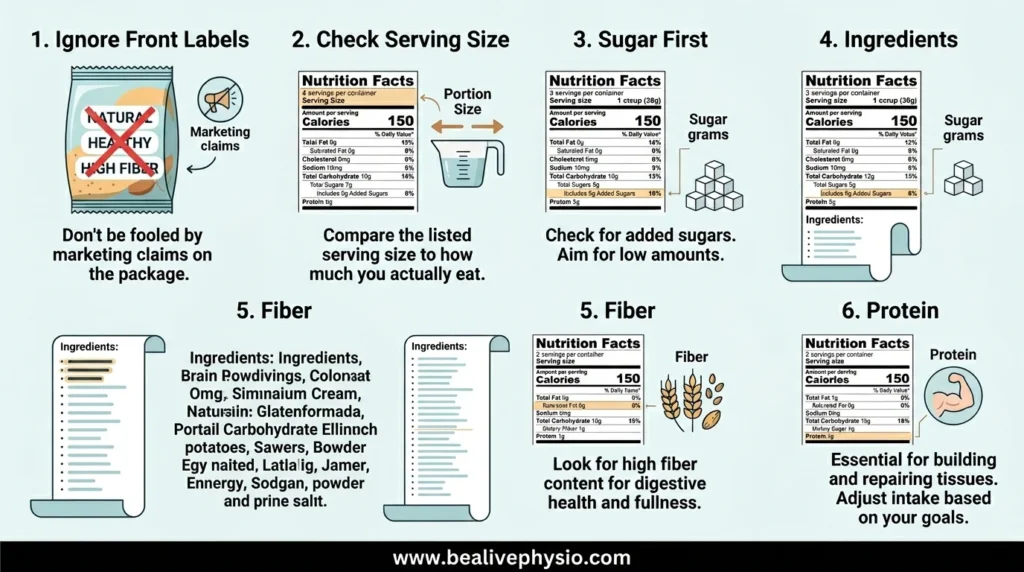
Step 1: Ignore the Front of the Packaging
Everything on the front is marketing.
Turn it around.
Step 2: Start with the Serving Size
This is where most people get fooled.
If the serving size says:
- “1/4 cup”
- “2 tbsp”
- “1 bar (half)”
- “⅓ bottle”
…it means the numbers are artificially lowered.
Real-world example:
A client once brought in a “healthy” pesto pasta sauce. The calories were listed as 90 per serving…
But the serving size was 2 tablespoons, and they were using half a jar.
Step 3: Sugar—your most important number
This is the one number that reveals the truth.
Ask yourself:
How many grams of sugar per serving?
- 0–4g = Great
- 5–8g = Acceptable
- 9–12g = Dessert territory
- 13g+ = Hidden sugar bomb
Then check: Is it Added Sugar?
Total sugar includes natural sugars (like those from fruit or milk).
Added sugar is any sugar that didn’t exist naturally in the food.
Keep added sugar as close to zero as possible in packaged foods.
Step 4: Scan the Ingredient List
This is where the real story is told.
HiddenSugarNames™ Cheat Sheet
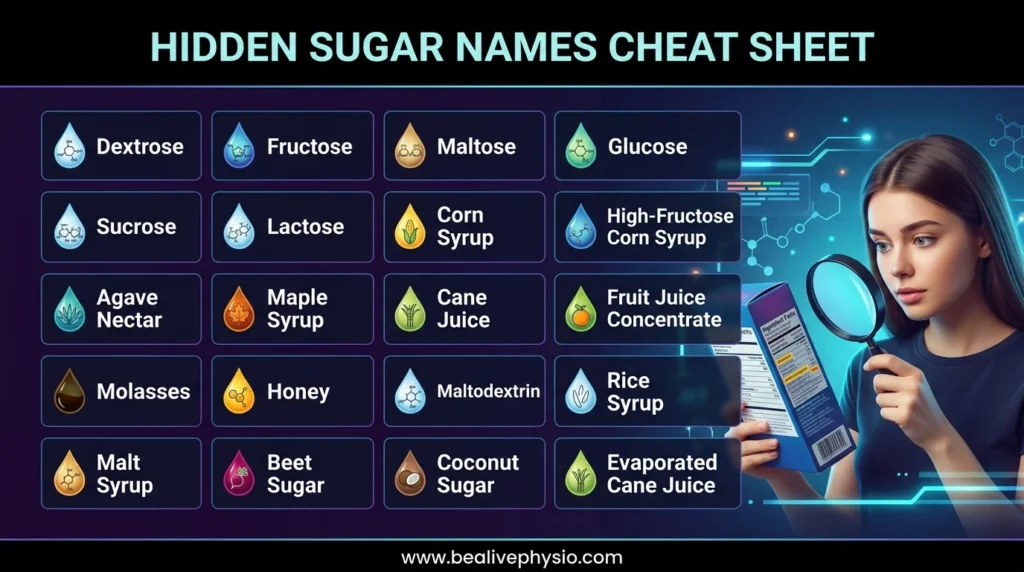
Sugars are often disguised as:
- Corn syrup
- High fructose corn syrup
- Fructose
- Maltose
- Dextrose
- Brown rice syrup
- Cane juice
- Agave
- Fruit concentrate
- Maltodextrin
- Sorghum syrup
Tip:
If you see more than 3 kinds of sugar, the product is engineered to be addictive.
Step 5: Look for Fiber
Fiber slows digestion and controls blood sugar.
Low fiber = sugar spikes = hunger returns fast.
On packaged foods:
- 3g+ per serving = decent
- Under 1g = “empty calories”
Example:
A cereal with 10g of sugar and 1g of fiber won’t keep you full.
Step 6: Check Protein
Protein is what keeps you satisfied.
- 5g+ is decent
- Under 3g = low
- High sugar + low protein = a snack that spikes cravings
Step 7: Compare Brands Like a Professional
Don’t choose the first product you see.
Pick up three versions and compare.
This is where you’ll see shocking differences.
Example:
Tomato sauce A:
- 12g sugar
- 80 calories
Tomato sauce B:
- 3g sugar
- 45 calories
Same aisle, completely different impact.
Real-World Mistakes I’ve Seen People Make (And How to Fix Them)
These are actual patterns I’ve seen with clients, friends, and honestly… myself.
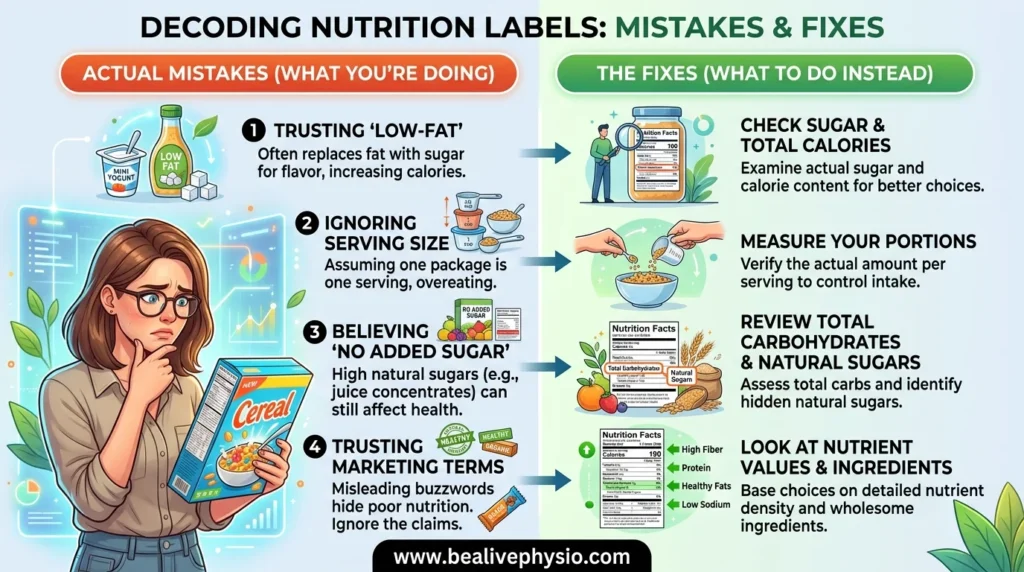
Mistake #1: Believing “No Added Sugar” Means Healthy
Fruit concentrates are still sugar bombs.
A yogurt sweetened with “strawberry purée” is still a dessert.
Fix:
Check total sugar, not just added sugar.
Mistake #2: Thinking Low-Fat Is Better
When fat is removed, sugar is added to compensate for taste.
This is why low-fat yogurt is often worse than regular yogurt.
Fix:
Choose whole-fat or Greek yogurt; look for under 5g sugar.
Mistake #3: Trusting Buzzwords like “Natural,” “Organic,” or “High Fiber”
Natural sugar is still sugar.
Organic sugar is still sugar.
Fix:
Never trust marketing terms—only labels.
Mistake #4: Overlooking Tiny Serving Sizes
If a cereal box says:
Serving size: 30g (½ cup)
Who eats half a cup of cereal?
Fix:
Multiply the numbers by what you actually eat.
Tools & Apps That Make Label Reading Foolproof
Here are a few real tools I recommend to clients:
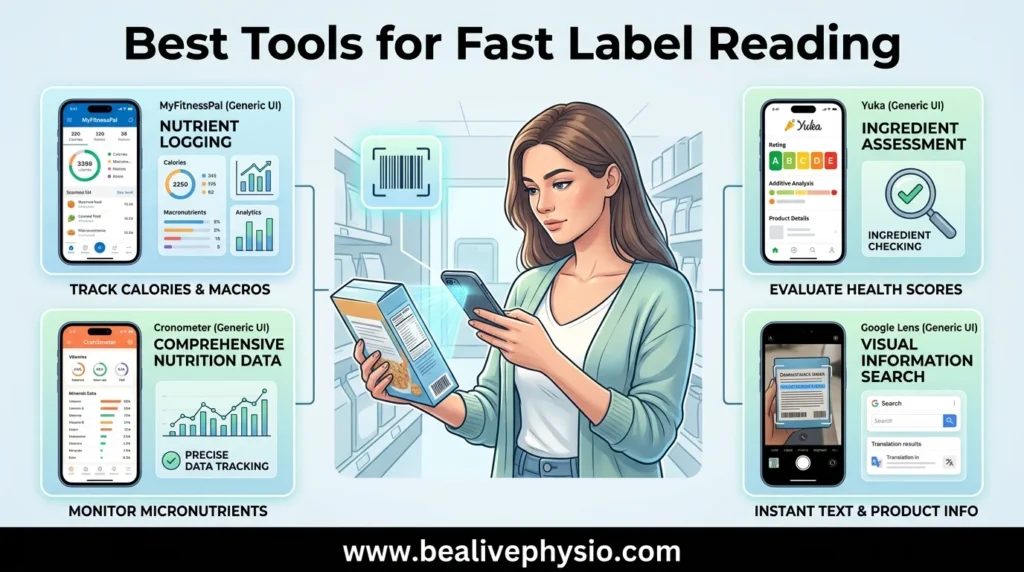
1. MyFitnessPal
Scan barcodes → instantly see macros, sugar, and calories.
2. Yuka
Rates products based on health impact; great for quickly comparing options.
3. Google Lens
Take a picture of the label → instantly converts text so you can analyze ingredients.
4. Cronometer
Best for those who want detailed breakdowns of micronutrients.
Using a scanner app helps avoid mistakes and saves time.
Which Foods Are Worth Buying Packaged?
Some packaged foods are perfectly fine—if you choose correctly.
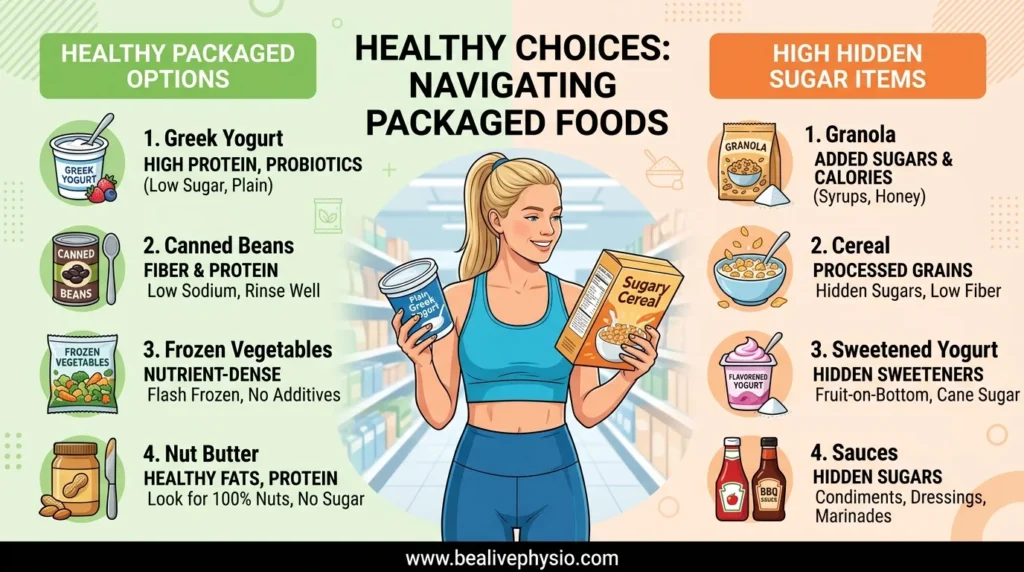
Great packaged options:
- Greek yogurt
- Frozen vegetables
- Canned beans (low sodium)
- Nut butters (no sugar added)
- Whole-grain tortillas
- Cottage cheese
- Low-sugar marinara sauce
Foods almost always hide sugar:
- Granola
- Flavored coffee creamer
- Sweetened yogurt
- Packaged smoothies
- Cereal
- Sauces and dressings
FAQs About Label Reading and Hidden Sugars
Most health organizations recommend staying under 25g (women) and 36g (men) of added sugar per day.
Not always. Many use artificial sweeteners that may cause cravings or digestive discomfort.
They’re still sugars. Natural, yes—but your body processes them similarly.
They’re fine occasionally, but don’t rely on them as a daily drink.
Switch to plain versions of foods and flavor them yourself.
Final Thought
Learning to read labels isn’t about restricting yourself—it’s about being in control. Once you understand what’s actually inside your food, you stop falling for marketing traps and start making choices that genuinely support your health goals. It becomes easier, cheaper, and surprisingly freeing.
You deserve to know exactly what you’re putting into your body.
And with the simple steps in this guide, you’re already far ahead of most shoppers.