
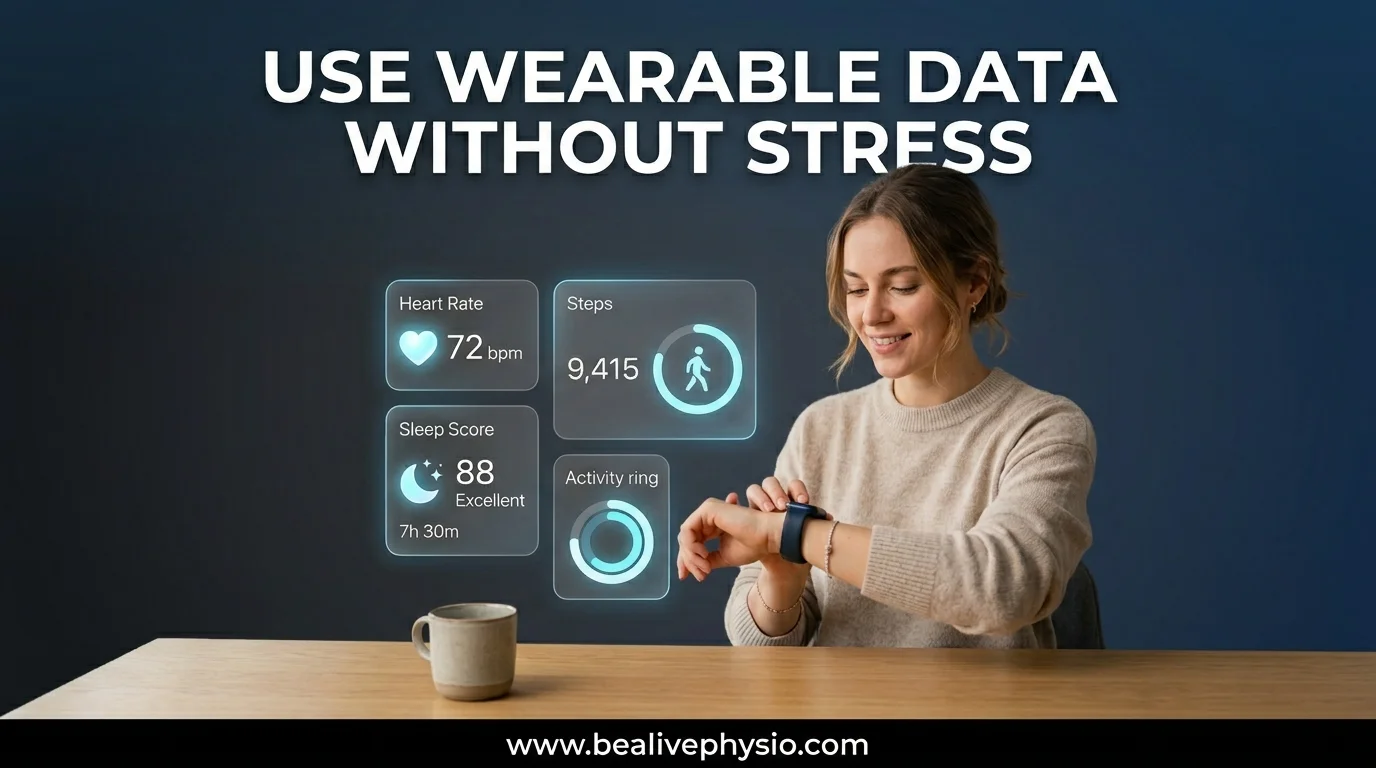
I’ve used wearables for almost a decade — from early Fitbit trackers to Garmin watches, Oura Ring, and now a Whoop band. I’ve gone through every phase: the curiosity phase, the data-nerd phase, the “why did I sleep only 78%?” anxiety phase, and finally, the healthy relationship phase.
If you’re using a smartwatch or fitness tracker, you probably understand the dilemma:
Wearable data is helpful… until it starts stressing you out.
This guide will show you how to use your wearable effectively, calmly, and intentionally, based on real experiences, user mistakes, and practical strategies that actually work.
Why Wearable Data Can Become Overwhelming
Wearables collect an insane amount of information:
- Steps
- Heart rate
- HRV
- Sleep score
- Resting heart rate
- Recovery score
- Calories
- VO2 max
- Blood oxygen
- Stress index
- Temperature
- Movement patterns
- And more… depending on your device
The problem is simple: more data does not mean better understanding.
At some point, your brain treats every metric like a performance evaluation.
I’ve seen people skip workouts because their “readiness score” was low.
Others panic because their HRV dropped on a random Tuesday.
The purpose of wearable devices is to support your health — not dictate your day.
But for many users, it becomes the opposite.
The Goal: Data Awareness Without Data Anxiety
You want to reach a stage where you say:
“My wearable supports my lifestyle — it doesn’t control it.”
This is what athletes, coaches, and long-term fitness users have learned:
Wearables work best when they guide trends… not emotions.
Step-by-Step: How to Use Wearable Data Without Obsessing
Below are real strategies I’ve personally tried (and recommended to clients) that truly reduce stress while still keeping the benefits of wearable technology.
1. Choose Only 2–3 Metrics That Actually Matter to You
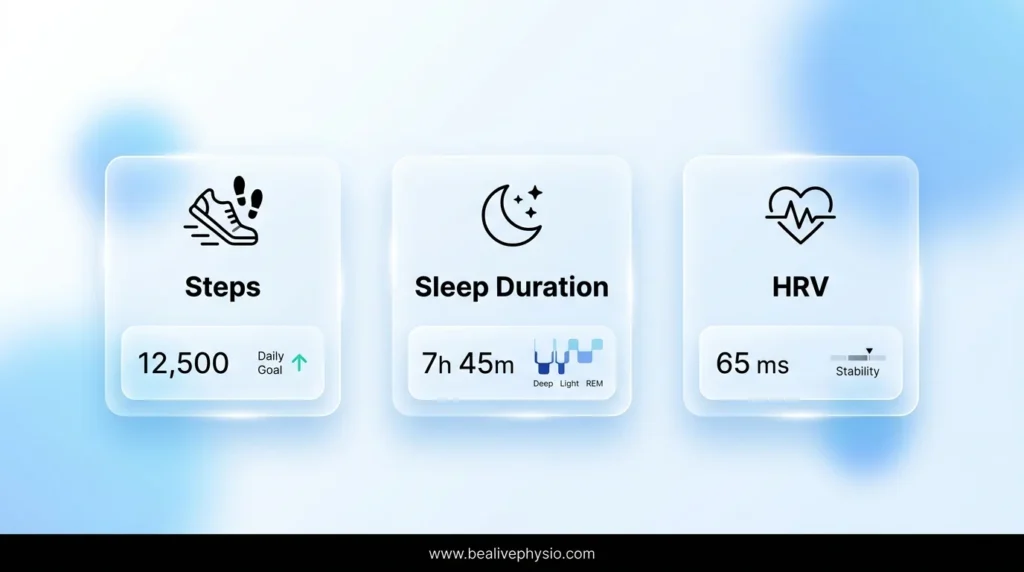
The biggest mistake users make is trying to track everything.
Ask yourself:
“What is the one thing my wearable should help me improve?”
Some examples:
- If your goal is fat loss → focus on active minutes and daily movement, not calories.
- If your goal is better sleep → focus on sleep duration and sleep consistency.
- If your goal is stress control → focus on HRV and resting heart rate trends.
- If your goal is running performance → track pace and VO2 max changes over time.
Real Example:
When I was training for a 5K, I ignored everything except pace, distance, and recovery score.
My fitness improved faster because I wasn’t mentally overloaded.
You don’t need to be a scientist — you just need to know your priorities.
2. Look at Trends, Not Daily Variations
A single bad sleep score doesn’t mean anything.
A drop in HRV for one day is normal.
A spike in resting heart rate could simply mean poor hydration.
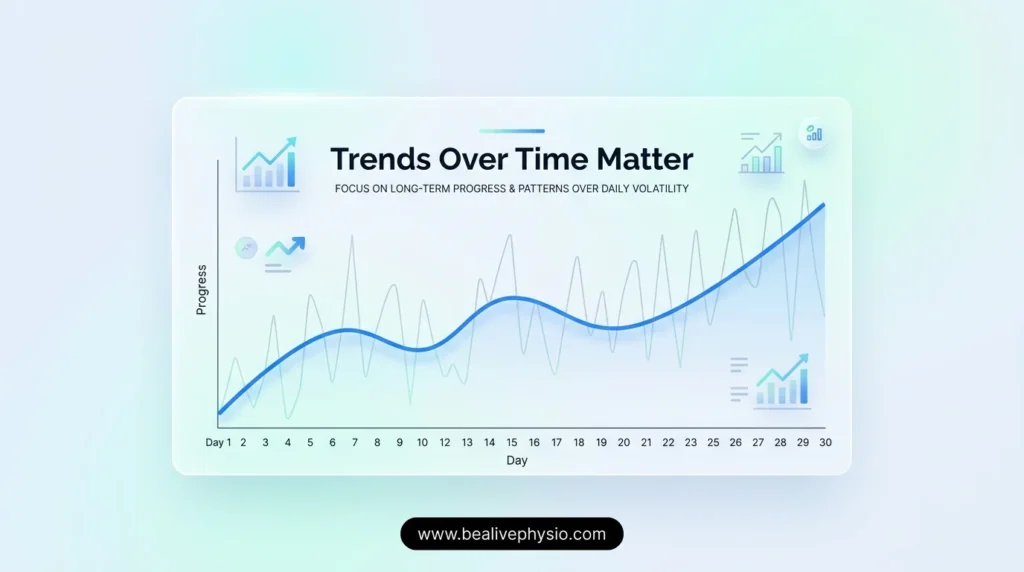
Wearables become powerful when you zoom out.
What “trend-focused” looks like:
| Metric | Wrong Way | Right Way |
|---|---|---|
| Sleep score | “Oh no, 72%! I’m tired.” | “Has my weekly average changed?” |
| Steps | “I missed my 10k today.” | “Did I hit my weekly movement goal?” |
| HRV | “It dropped 10 points!” | “Is it trending down for 5–7 days?” |
Most devices now offer trend views:
- Garmin Connect: Weekly training load
- Whoop: 7-day recovery trends
- Apple Health: Month view patterns
- Oura: 3-week readiness trends
Use them. They are far more meaningful than daily numbers.
3. Set Interpretations You Control, Not the Device
The device gives you data.
You give it meaning.
Instead of letting the wearable tell you:
- “You slept badly.”
- “Your readiness is low.”
- “Your strain is high.”
You decide what that means for your day.
Practical example:
Bad sleep score?
Instead of:
“I must cancel my day.”
Try:
“I’ll drink more water, reduce caffeine, and manage energy.”
Your wearable should not decide your mood.
4. Stop Checking Data First Thing in the Morning

This one helped me the most.
If the first thing you see is a low readiness score, it affects your mindset.
Even professional athletes avoid data first thing.
Morning rule that works:
- Wake up
- Hydrate
- Get sunlight
- Move for 5 minutes
- THEN check your stats
You’ll interpret the numbers more rationally.
5. Build “Data-Free Days” or “Low-Tracking Days.”
Wearables shouldn’t be glued to your wrist 24/7.
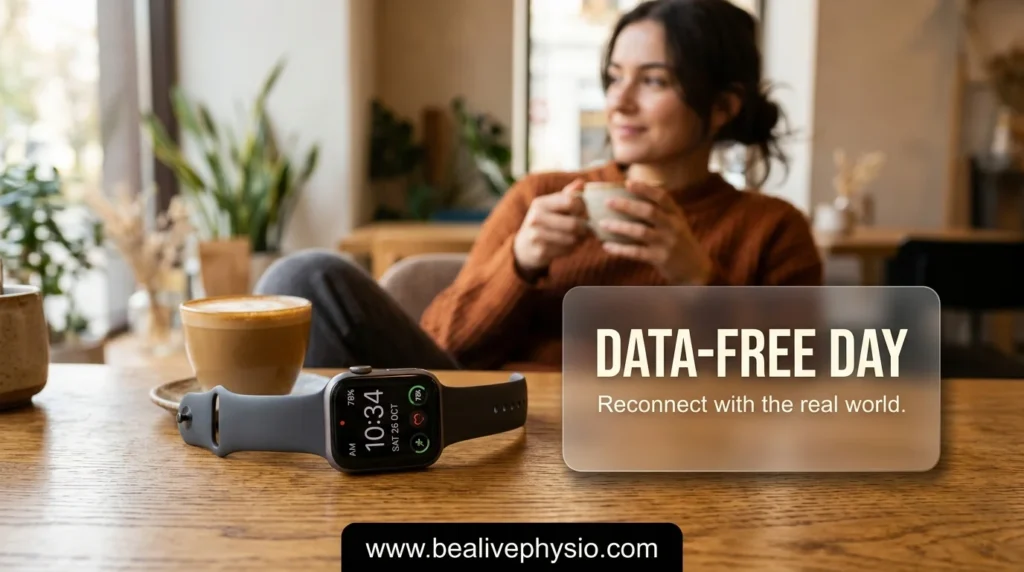
Try:
- One day a week without checking anything
- Turning off continuous monitoring (Apple Watch users love this)
- Removing the ring/watch during social events or rest days
This resets your brain so that tracking becomes intentional, not compulsive.
Example:
Sundays became my “no stats day,” and ironically, my Monday readiness scores improved.
6. Use the Device for Behavior, Not Identity
Some people start defining themselves by their numbers:
- “I’m a 50 HRV person.”
- “I’m only a 72 sleep score sleeper.”
- “I burn 2,000 calories a day, so that’s my baseline.”
This is the fastest path to data obsession.
Instead, treat wearable data as information about your habits, not your identity.
7. Pair Wearables With Real-World Feedback
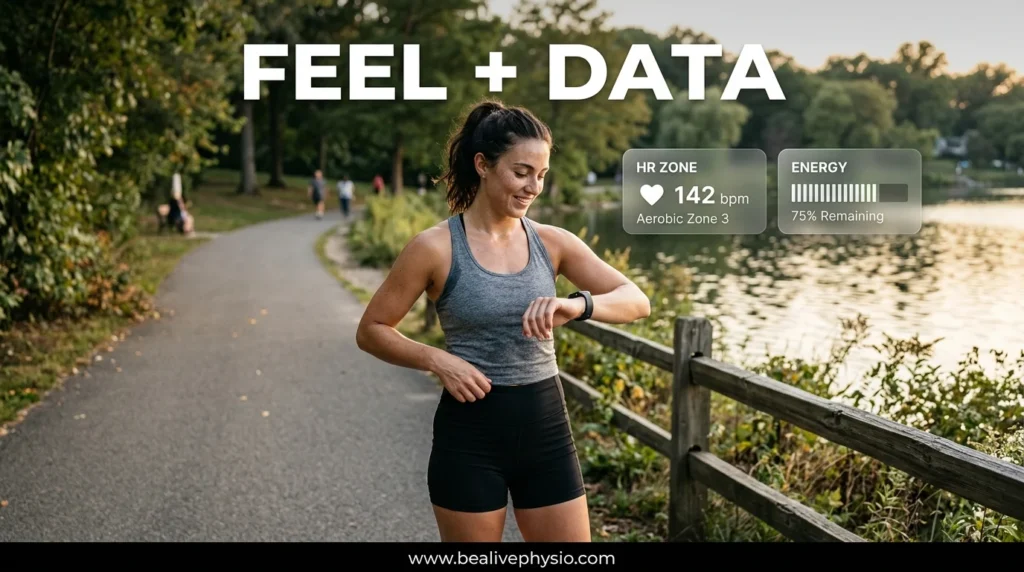
Ask yourself:
- “How do I feel?”
- “Am I energized?”
- “Is my breathing heavy?”
- “Did I recover mentally?”
Sometimes your body knows more than your watch.
Example:
Some days my Whoop score says I’m “yellow recovery,” but I feel strong.
If I had listened only to the device, I’d miss some of my best workout days.
A wearable cannot measure emotion, motivation, or mindset.
8. Customize Notifications & Remove Unnecessary Ones
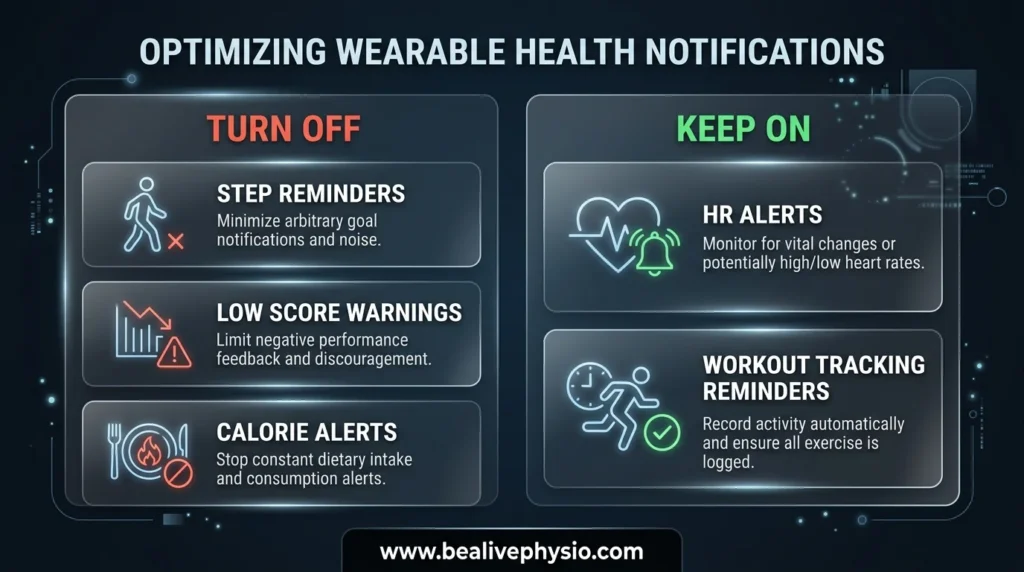
Notifications create pressure.
Turn these OFF unless you absolutely need them:
- “You need 10 more minutes of activity.”
- “You’re behind your sleep goal.”
- “Your HRV dropped.”
- “You didn’t hit your steps.”
Keep only functionally useful alerts like:
- heart rate warnings
- workout tracking reminders
- stand reminders (optional)
Real Devices & How to Use Them Without Obsessing
Below are practical tips based on the devices I’ve personally tested.
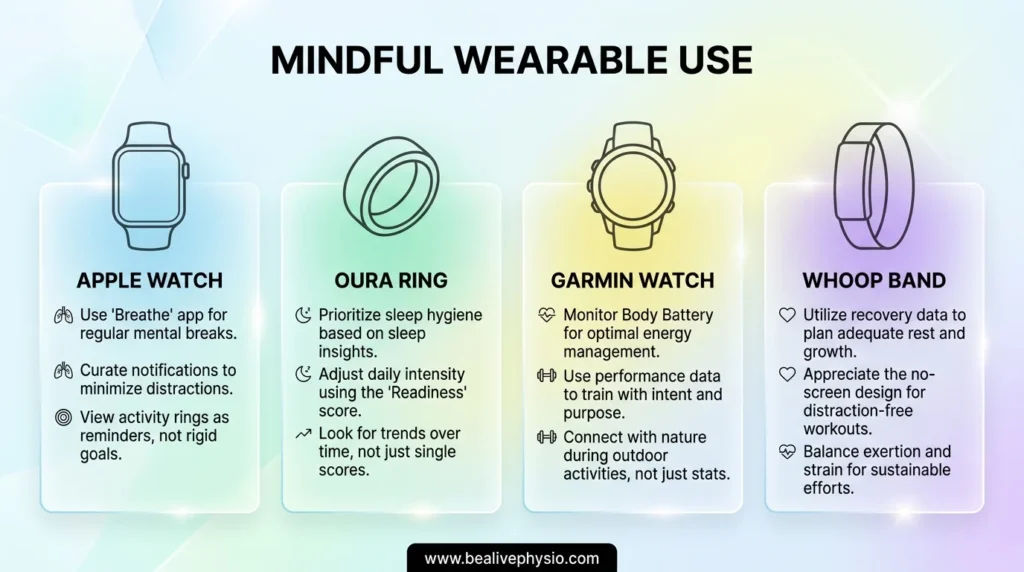
Apple Watch
Apple Watch users often fall into the “closing the rings” obsession.
Healthy settings:
- Turn off streak notifications
- Hide the “calories burned” metric on the main screen
- Use Focus Mode during workouts
- Switch to Heart Rate Zone tracking instead of calories
Oura Ring
Oura gives incredible sleep data — but also easily triggers anxiety.
Healthy usage:
- Ignore nightly “sleep efficiency” fluctuations
- Focus on weekly readiness trends
- Use tags (late meal, stress, screen time) to learn patterns
- Stop checking sleep score first thing in the morning
Garmin Watches
Garmin users often get overwhelmed by:
- Body battery
- Stress score
- Training load
- VO2 max
- Recovery time
Healthy approach:
- Use only 1–2 metrics depending on training goals
- Avoid taking VO2 max too seriously — it’s an estimate
- Check “training load” weekly, not daily
Whoop
Whoop is powerful but can make people feel guilty about recovery scores.
Healthy settings:
- Turn off daily strain notifications
- Focus on weekly trends
- Use Whoop as a guide for habits, not an energy prediction
- Don’t cancel workouts solely because you’re in “red recovery.”
Common Mistakes People Make With Wearable Data
1- Checking stats too often
2- Treating scores as the absolute truth
3- Comparing metrics with friends
4- Using calorie tracking as diet advice
5- Panicking over HRV or sleep drops
6- Letting streaks control behavior
7- Believing every bold claim from the device’s marketing
Wearables are tools, not fortune tellers.
Frequently Asked Questions (FAQs)
No — the problem is checking it emotionally. Daily check-ins are fine if you focus on trends.
They’re reasonable estimates, not medical measurements. Use them as guidelines, not strict rules.
Only sometimes. Use your body’s signals first, data second.
Because sleep is influenced by dozens of small variables — hydration, stress, screen time, temperature, and late meals. Daily changes are normal.
Yes. Many users report stress from low scores or tracking pressure. That’s why intentional usage is essential.
Final Thought

Wearables are powerful, but they’re not supposed to turn you into a walking spreadsheet.
The secret is simple: use data to guide your habits, not your feelings.
When you shift from perfectionism to awareness, your wearable becomes a helpful companion instead of a source of pressure.
You’ll start to enjoy movement more, sleep more naturally, and understand your body more intuitively — without staring at scores all day.
If you use your wearable as a coach, not a judge, you’ll get the best of both worlds.