
Starting a fitness routine sounds easy—until you actually try to stick to one.
I’ve been through the cycle more times than I’d like to admit: joining a gym with full motivation, going hard for two weeks, missing a few days… and then completely falling off. The problem wasn’t laziness. It was trying to do too much, too fast, with no plan that fit real life.
This guide is built from that experience—not theory. If you want something you can actually maintain, not just start, this will help.
Why Most People Quit (And How to Avoid It)

Before jumping into workouts, it’s important to understand what usually goes wrong.
Here’s what I personally did wrong at the beginning:
- Tried to work out 6 days a week
- Followed random YouTube workouts with no structure
- Focused only on motivation (which fades quickly)
- Ignored sleep and diet completely
Result? Burnout within 10–14 days.
What actually works instead:
- Start small and consistent
- Build a routine around your life, not someone else’s
- Focus on habit first, results later
Step 1: Define a Realistic Goal (Not a Fantasy One)

Most beginners say things like:
- “I want to lose 10 kg in a month”
- “I’ll get abs in 6 weeks”
That kind of thinking kills consistency.
Better approach:
Set a goal like:
- “I will work out 3 times a week for the next 4 weeks”
- “I will walk 7,000–10,000 steps daily”
These are behavior goals, not outcome goals.
Real-world example:
Instead of chasing weight loss, I focused on just showing up 3 times a week. After a month, results started naturally.
Step 2: Choose the Right Type of Fitness (Not Just Gym)

You don’t need a gym to start. What matters is consistency.
Options that actually work for beginners:
1. Walking (Underrated but powerful)
- Start with 20–30 minutes daily
- Easy to stick to
- Great for fat loss and mental health
2. Home Workouts
- Push-ups, squats, planks
- No equipment needed
- Perfect if you hate traveling to the gym
3. Gym Training
- Good for structured strength training
- Use machines at first (safer for beginners)
4. Hybrid Approach
- 2 days gym + daily walking
- This is what worked best for me
Step 3: Build a Simple Weekly Plan
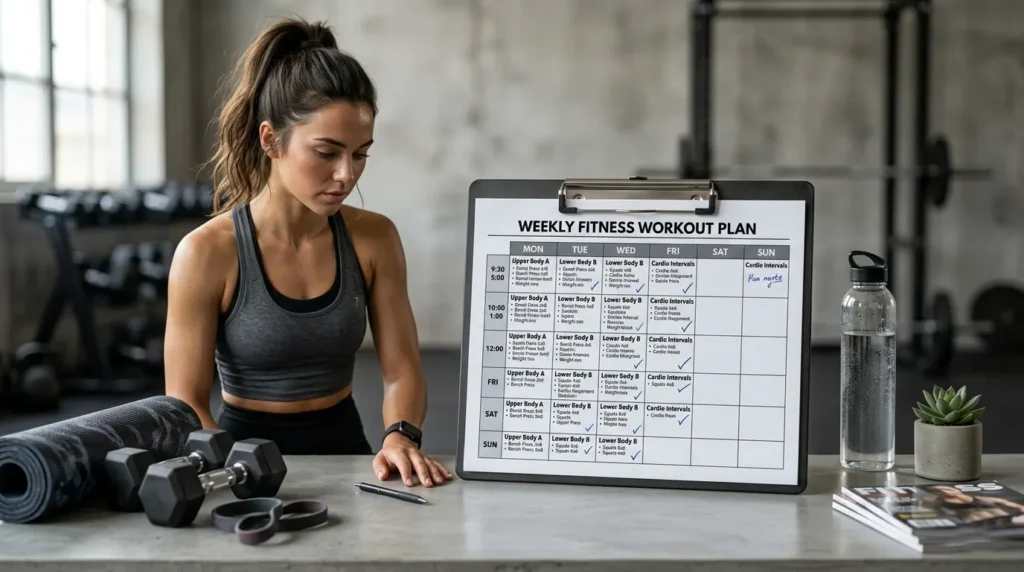
Don’t overcomplicate it. Here’s a beginner-friendly structure:
Week Plan (Example)
Day 1 – Full Body Workout
- Squats (3 sets)
- Push-ups (3 sets)
- Plank (3 rounds)
Day 2 – Rest or Walk
Day 3 – Full Body Workout
- Lunges
- Incline push-ups
- Light dumbbell exercises
Day 4 – Walk / Active Rest
Day 5 – Light Workout or Cardio
Day 6 – Walk
Day 7 – Rest
Key point:
Even on “rest days”, try to stay active.
Step 4: Start Slow (This Is Where Most People Fail)

The biggest mistake is going too hard on Day 1.
What happens if you overdo it:
- Severe muscle soreness
- Loss of motivation
- Skipping workouts
- Quitting completely
Better strategy:
- Leave the gym feeling like you could do more
- Start at 50% intensity
Real example:
On my first week, I limited workouts to 20–25 minutes. It felt “too easy,” but I was able to stay consistent for months.
Step 5: Track Progress (But Not Just Weight)
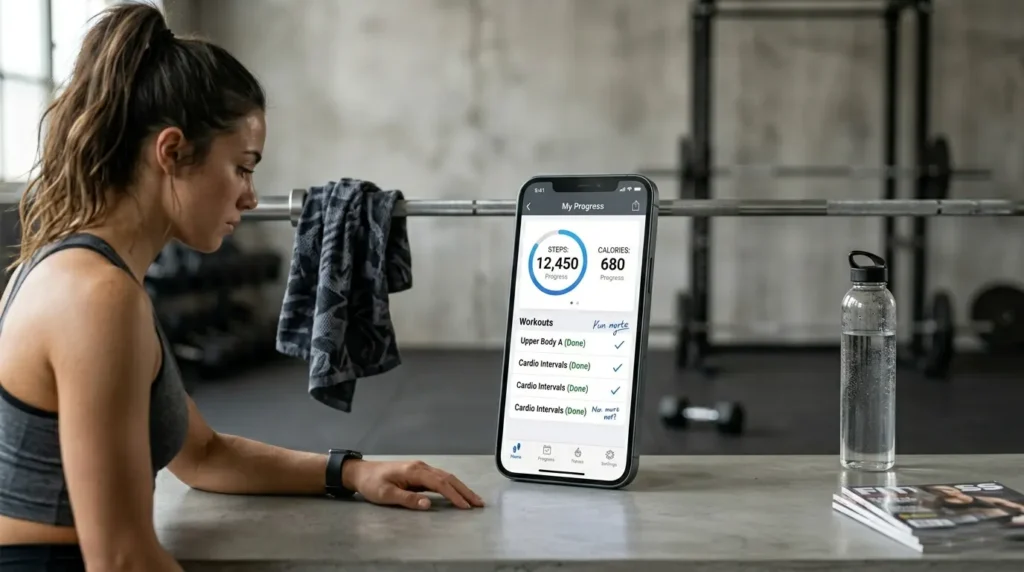
Weight is a misleading metric, especially in the beginning.
Better ways to track progress:
- Energy levels
- Strength improvements (more reps)
- Clothes fitting better
- Daily step count
Tools that help:
- Fitness apps like Strong or Fitbod
- Step tracker apps (Google Fit, Apple Health)
- Simple notebook or notes app
What worked for me:
Tracking workouts completed per week was more motivating than checking weight daily.
Step 6: Fix Your Environment (Make Fitness Easy)
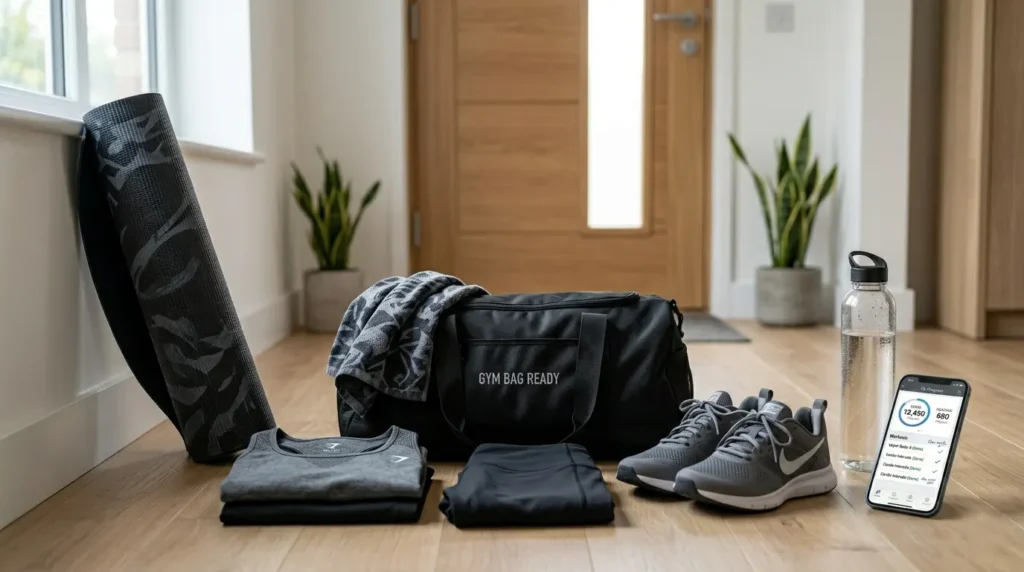
Your environment matters more than motivation.
Small changes that make a big difference:
- Keep workout clothes ready
- Choose a gym close to home or office
- Set a fixed workout time (e.g., after work)
Real-world tip: If your gym is 30 minutes away, you’ll skip workouts more often. Convenience beats motivation every time.
Step 7: Understand Diet (Without Overcomplicating It)

You don’t need a strict diet plan to start.
Simple beginner rules:
- Eat home-cooked meals most of the time
- Increase protein (eggs, chicken, lentils)
- Reduce sugary drinks and junk food
Easy structure:
- Breakfast: Eggs + bread or oats
- Lunch: Rice + chicken/daal + vegetables
- Dinner: Light meal (not heavy junk food)
Mistake I made: Trying extreme diets. It led to cravings and quitting.
What worked: Small improvements, not perfection.
Step 8: Handle Low Motivation Days

Motivation will drop. That’s normal.
What to do when you don’t feel like working out:
- Do a 5-minute version of your workout
- Go for a short walk instead
- Tell yourself: “Just show up”
Most of the time, once you start, you continue.
Step 9: Focus on Habit, Not Perfection
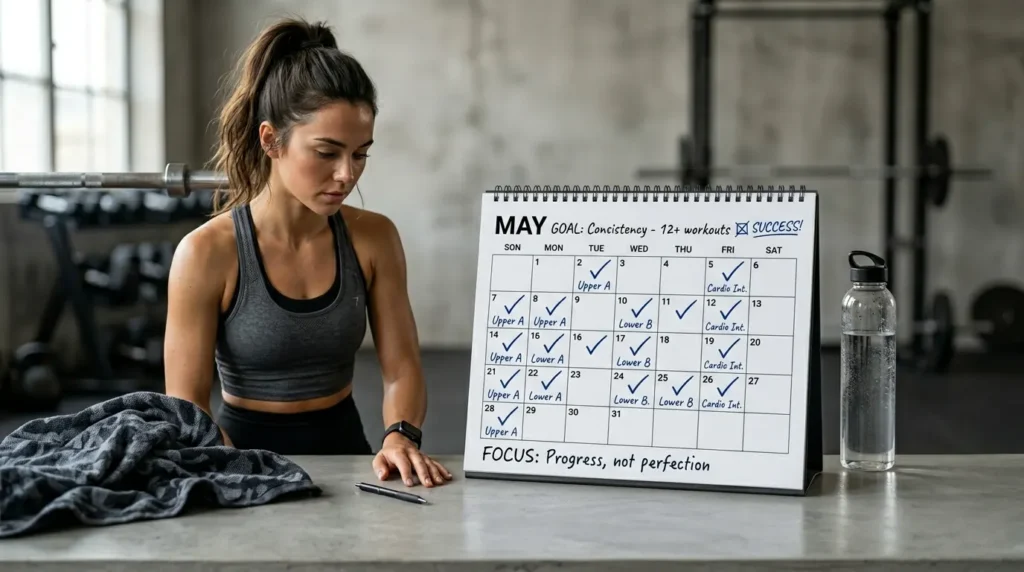
You will miss workouts. Everyone does.
The difference is:
- Consistent people restart immediately
- Beginners quit after missing 2–3 days
Rule to follow: Never miss twice in a row
Step 10: Upgrade Slowly (After 4–6 Weeks)

Once your routine feels normal, you can improve it.
Add:
- More intensity
- Heavier weights
- Better diet structure
- More structured programs
But don’t rush this phase.
Common Beginner Mistakes (Avoid These)
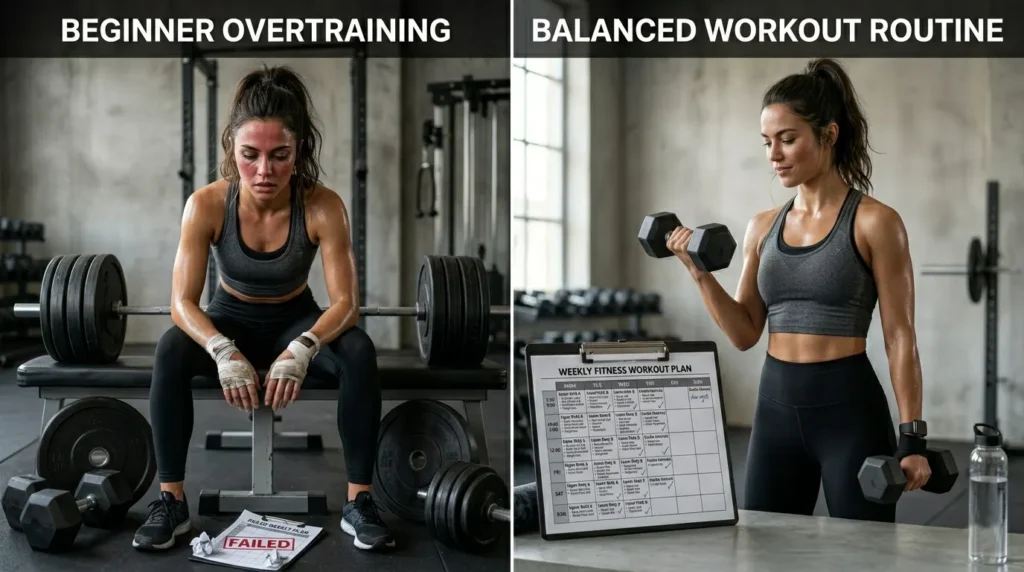
Here are the biggest mistakes I’ve seen (and made):
- Starting too aggressively
- Comparing yourself to others
- Ignoring rest and recovery
- Following random online advice
- Expecting fast results
Fix these early, and you’ll save months of frustration.
What Results Actually Look Like
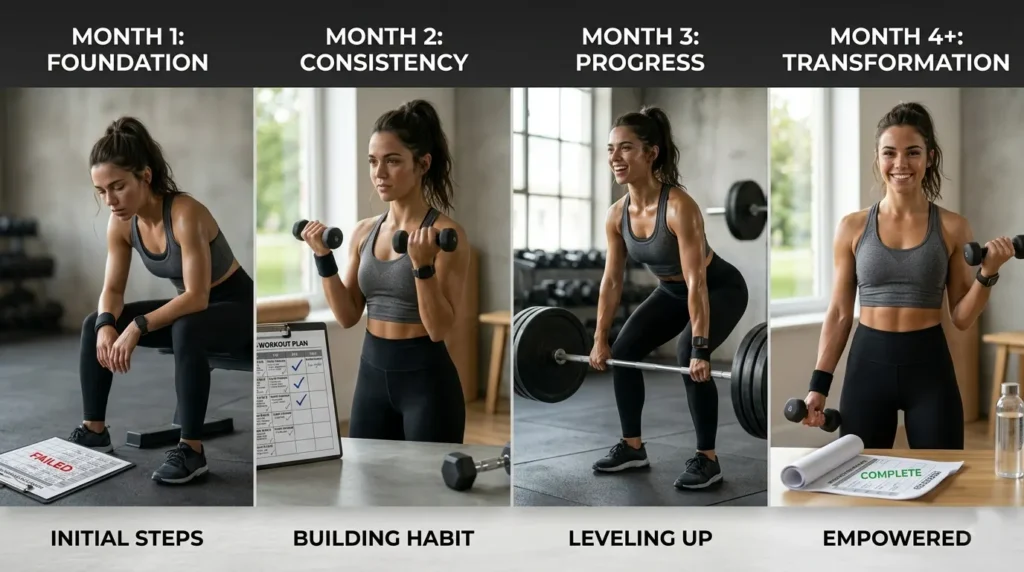
Let’s be real.
In the first month:
- Slight energy improvement
- Small strength gains
- Minimal visible change
After 2–3 months:
- Noticeable fat loss
- Better stamina
- Clothes fitting differently
After 6 months:
- Major transformation (if consistent)
Real takeaway: Fitness is slow—but it compounds.
A Final Thought
A sustainable fitness routine isn’t about discipline alone—it’s about designing a lifestyle you don’t hate.
If your plan feels too hard, too strict, or too time-consuming, it won’t last.
Start small. Stay consistent. Adjust as you go.
That’s how real fitness journeys actually work.