

Creating a morning routine is less about waking up at 5 AM and more about stacking small, intentional habits that help your mind and body switch into “high-function mode.”
I learned this the hard way. For years, I jumped straight from bed to emails, and by noon, my brain already felt worn out. When I shifted toward a fitness-centered morning structure, things looked very different—better energy, better work output, and far fewer mental dips during the day.
Below is a practical, experience-based guide on building a morning routine that actually works—not the Pinterest version, but the real, sustainable kind.
Why Your Morning Routine Matters More Than Motivation
A consistent morning routine removes decision fatigue.
By 10 AM, the average person has already made dozens of micro-decisions—what to eat, when to begin work, which task to start first.
When you automate the first part of your day, those mental calories get saved for workouts, work projects, or anything that requires real concentration. Researchers note that building predictable morning cues helps improve adherence to fitness habits and increases cognitive readiness for the day’s tasks (Harvard Health Publishing).
The Core Principles Behind an Effective Morning Routine
1. It must be easy to repeat
A routine that is too complex dies in a week.
If you try to add meditation, journaling, a cold shower, a smoothie ritual, journaling again, and a 45-minute workout, you’ll burn out.
Start with two anchor habits:
- Move (even 5 minutes)
- Mentally prime (1–3 minutes of planning or reflection)
Everything else is optional.
2. It must serve your real lifestyle—not an idealized one
If your job starts early, or you’re a parent, or you work shifts, your morning routine should flex around your life.
There’s no point forcing a 60-minute circuit workout if you realistically only have 20 minutes.
Design for the real you.
3. The first win of the day should happen within 10 minutes of waking
The human brain loves progress.
A small, early win boosts mood-regulating neurotransmitters and builds momentum.
Some examples:
- Making your bed
- Drinking a glass of water
- Doing 15 bodyweight squats
- Write your top 3 tasks for the day
The win doesn’t need to be big. It just needs to be intentional.
A Fitness-Friendly Morning Routine That Works in Real Life
Below is a routine I refined over months. It’s flexible, not rigid, and it doesn’t require buying anything fancy.
You can follow it exactly or modify it.
Step 1: Prepare Your Morning the Night Before
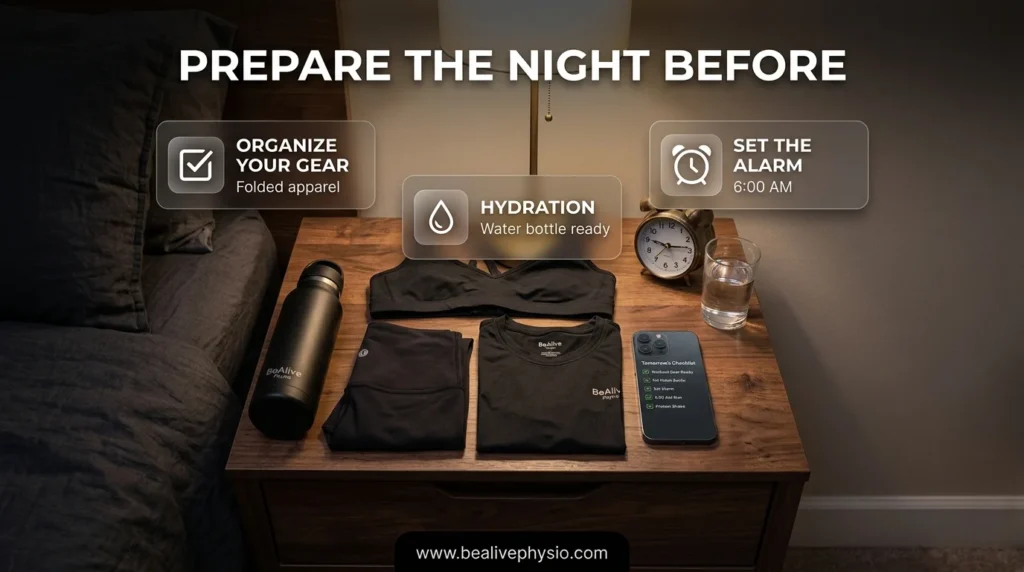
This is the part people skip—and then wonder why their mornings feel rushed.
Here’s what to set up:
- Place your workout clothes next to your bed
(The fewer steps to get moving, the better.) - Fill a water bottle and keep it near your nightstand
- Write tomorrow’s “power three tasks” in a notes app
(I use Google Keep; Apple Notes works too.) - Set your alarm across the room
Not to torture yourself—just to make getting up intentional.
Why it matters:
Morning habits fail not because of motivation, but because of friction. Reduce friction, and your routine becomes almost automatic.
Step 2: Wake Up and Hydrate (1 minute)

Nothing fancy—just drink water.
A dehydrated brain is a sluggish brain. A study from the University of Connecticut links mild dehydration to reduced cognitive performance.
This is the simplest focus hack available.
Step 3: Activate the Body (5–15 minutes)
You don’t need a 45-minute gym session first thing in the morning.
In fact, I found shorter “activation workouts” work better because they wake you up without draining your tank.

Here are three routines you can rotate:
A. The 5-Minute Mobility Flow
Perfect for stiff mornings.
- 20 arm circles
- 10 hip openers
- 10 cat-cow stretches
- 10 glute bridges
- 20-second plank
B. The 10-Minute Strength Primer

For people who want to build fitness consistency.
- 20 squats
- 10 push-ups
- 20 lunges
- 30-second wall sit
- 30-second plank
C. The Mini Cardio Boost (8 minutes)
For fast energy.
- 30 seconds fast march
- 20 jumping jacks
- 20 high knees
- Rest 30 seconds
- Repeat 3 rounds
Tip: Use any timer app—Google Clock, Samsung Health Timer, or the interval timer in Strong App.
Step 4: Mental Focus Setup (3–5 minutes)

Physical activation is only half the equation.
Your mind also needs direction.
I’ve tested multiple approaches, and these three are the ones that realistically stick:
1. The 3-Task Method
Open Notes → Write:
- One fitness-related task
- One work task
- One personal task
This keeps your day balanced and reduces overwhelm.
2. 90-Second Mind Scan
Ask:
- What has my attention right now?
- What will matter the most by tonight?
This clears mental fog faster than long journaling sessions.
3. Mini-Meditation (2 minutes)
Apps like:
- Calm
- Insight Timer
- Headspace
You don’t need 20 minutes. Two minutes is enough to train your brain to focus.
Step 5: Healthy Morning Fuel (Optional but recommended)

Breakfast isn’t mandatory.
Your body doesn’t care about breakfast vs. no breakfast—what matters is how you feel and perform.
Here are three simple options depending on your lifestyle:
If you’re short on time:
A banana + peanut butter
Or
Greek yogurt + honey
If you prefer not to eat early:
A hydration packet (LMNT, DripDrop, or any generic electrolyte mix)
If you need something steady:
Oats with protein powder and cinnamon
Or
Two boiled eggs + fruit
Avoid heavy or sugary breakfasts that crash your focus by 10 AM.
Common Mistakes People Make With Morning Routines
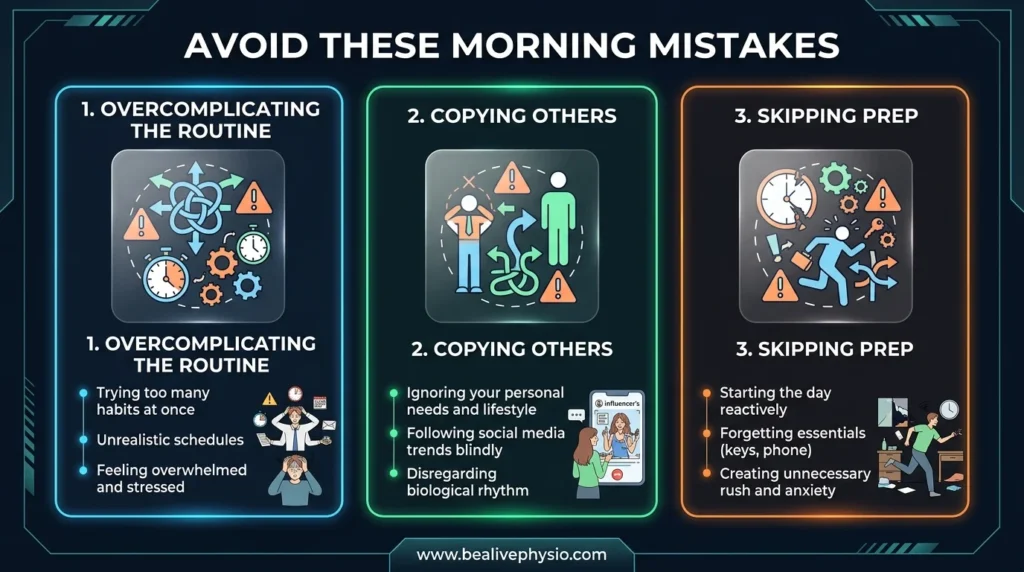
1. Overloading the routine
Trying to do too much turns the routine into a burden.
2. Copying someone else’s lifestyle
What works for a fitness influencer with no kids won’t work for someone with a high-pressure job and a commute.
3. Forcing a waking time
You don’t need to wake up at 5 AM to be productive.
Wake up consistently—that matters more.
4. Working immediately after waking up
Your brain needs a transition period.
Jumping straight into emails increases stress hormones early in the day.
5. Skipping preparation the night before
This is the #1 killer of morning consistency.
Real-World Example: My Updated Morning Routine
This routine took time to refine. Here’s what it looks like now:
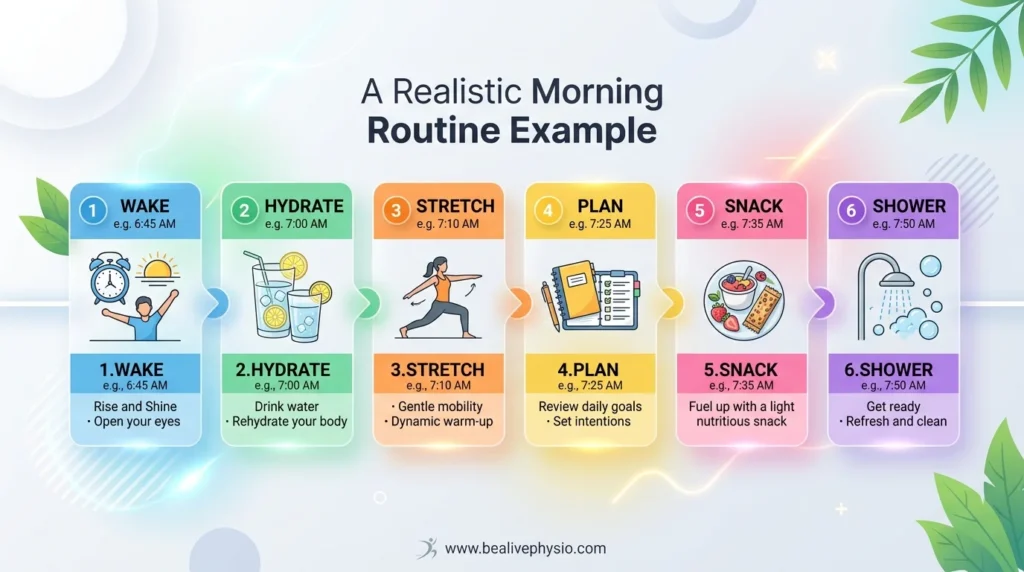
- 6:40 AM – Wake up, drink water
- 6:43 AM – 10-minute mobility & core routine
- 6:55 AM – 3-task planning in Google Keep
- 7:00 AM – Quick protein snack
- 7:10 AM – Shower
- 7:30 AM – Sit at desk and start focused work block
This routine increased my workout consistency from 2–3 times per week to 5–6, and improved my ability to focus in the first half of the day.
It wasn’t magic.
It was structure.
Tips to Stick to Your Routine Long-Term
1. Use technology wisely
Some genuinely useful tools:
- Sleep Cycle (sleep tracking)
- Google Fit / Apple Health (activity tracking)
- Strong App (workout tracking)
- Forest App (focus timer)
2. Have a fallback version
Busy days still happen.
Create a “minimum routine”—mine is:
- Drink water
- 20 squats
- Write 3 tasks
Takes 3 minutes. No excuses.
3. Track your consistency visually
A simple habit-tracking calendar or app keeps motivation alive.
4. Don’t chase perfection
Your routine should support your life—not stress you out.
Frequently Asked Questions (FAQs)
Anywhere from 10–30 minutes. The sweet spot is whatever you can maintain consistently.
Not universally. Morning workouts are better if you struggle with consistency or energy dips later in the day.
Shift the routine gradually—10–15 minutes earlier per week. You don’t need a dramatic lifestyle change.
Not necessarily. A simple 60-second breathing reset can offer similar benefits.
Water + 2 minutes of movement.
This combination wakes up both mind and body.
Final Thought

A strong morning routine isn’t built overnight.
It evolves with your lifestyle, your energy levels, and your goals. What matters most is that the routine makes your day easier—not heavier. Start with one or two changes, refine them, and allow your morning rhythm to grow naturally. Over time, those small wins compound into a healthier body, a clearer mind, and a more focused life.