
If you’ve ever followed a strict diet and workout plan but still felt like your body wasn’t responding the way it should, you’re not alone. Many women hit this wall—not because they lack discipline, but because they’re ignoring one major factor: hormones and the menstrual cycle.
I’ve worked with female clients (and tested this myself) who were doing everything “right”—calorie deficits, cardio, clean eating—but their weight would stall or even increase at certain times of the month. Once we aligned their training and nutrition with their hormonal cycle, results became more consistent, energy improved, and the frustration dropped.
This guide breaks down how women’s hormones affect weight loss, and how to adjust your workouts, nutrition, and lifestyle for real, sustainable results.
How Hormones Affect Weight Loss in Women
Weight loss isn’t just about calories. Hormones control how your body stores fat, uses energy, and manages hunger.
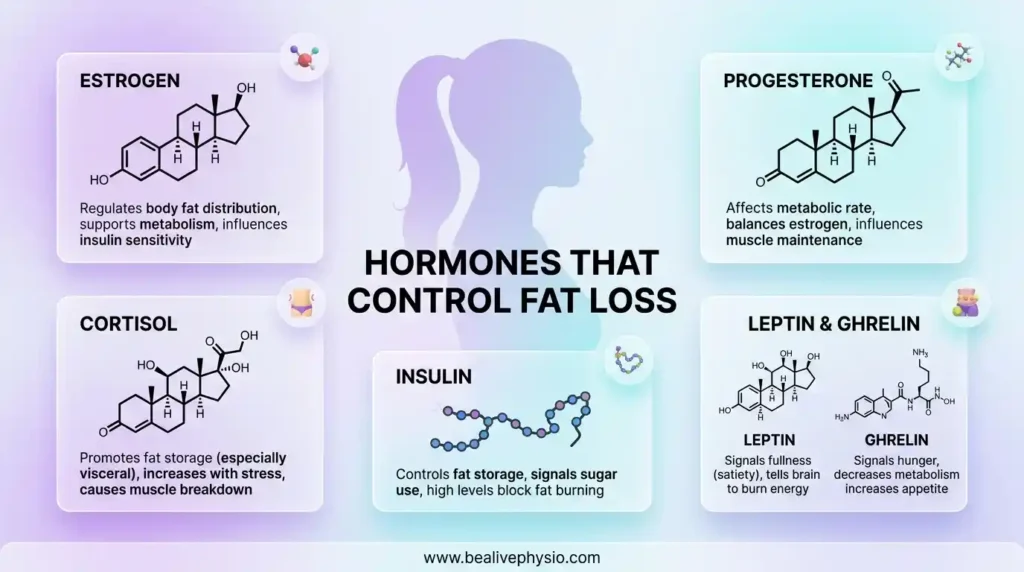
Key Hormones That Impact Fat Loss
- Estrogen – Supports fat metabolism and insulin sensitivity
- Progesterone – Affects appetite and water retention
- Cortisol – Stress hormone that promotes fat storage (especially belly fat)
- Insulin – Regulates blood sugar and fat storage
- Leptin & Ghrelin – Hunger and satiety hormones
A common mistake I see: women blaming themselves for “lack of willpower” when, in reality, their hormones are driving cravings and fatigue.
Understanding the Menstrual Cycle for Fat Loss
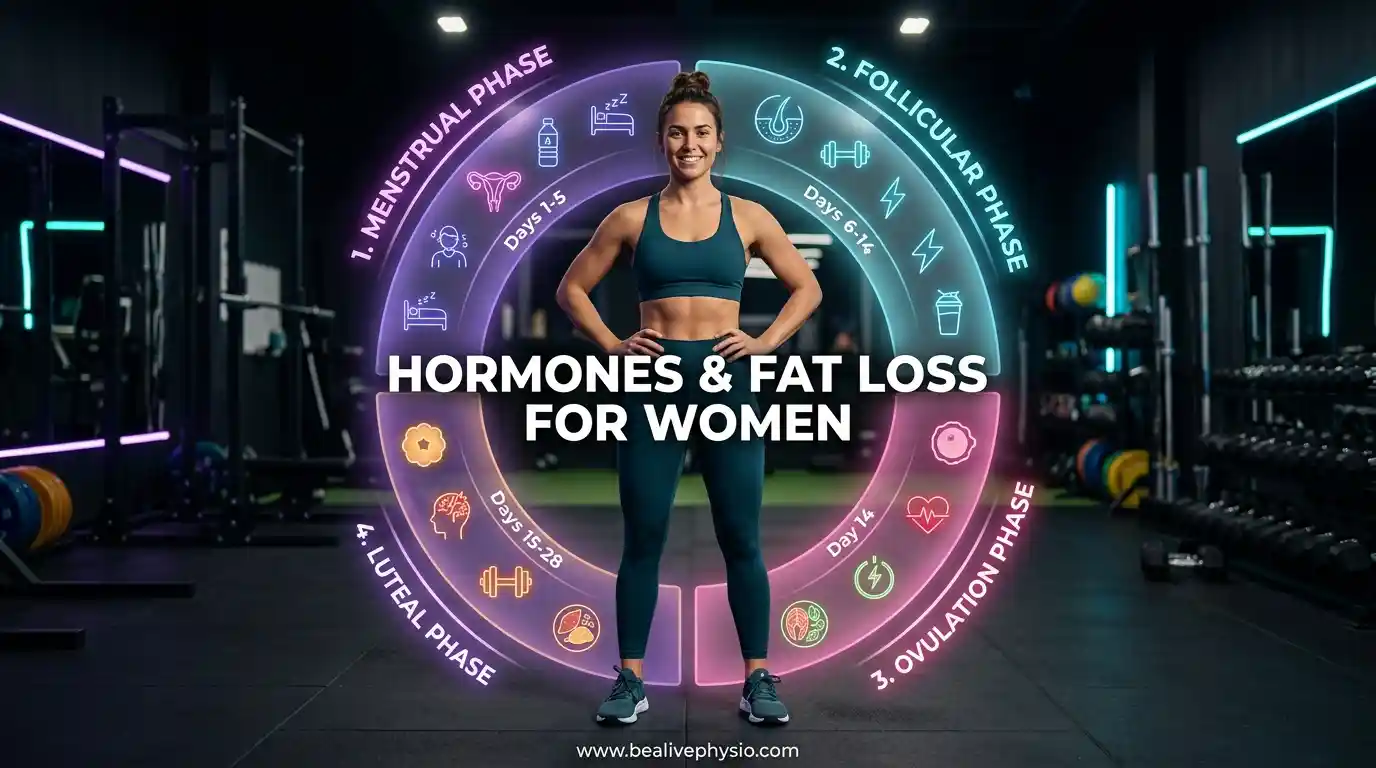
Your body doesn’t perform the same way every day of the month. The menstrual cycle has four phases, and each affects energy, metabolism, and performance differently.
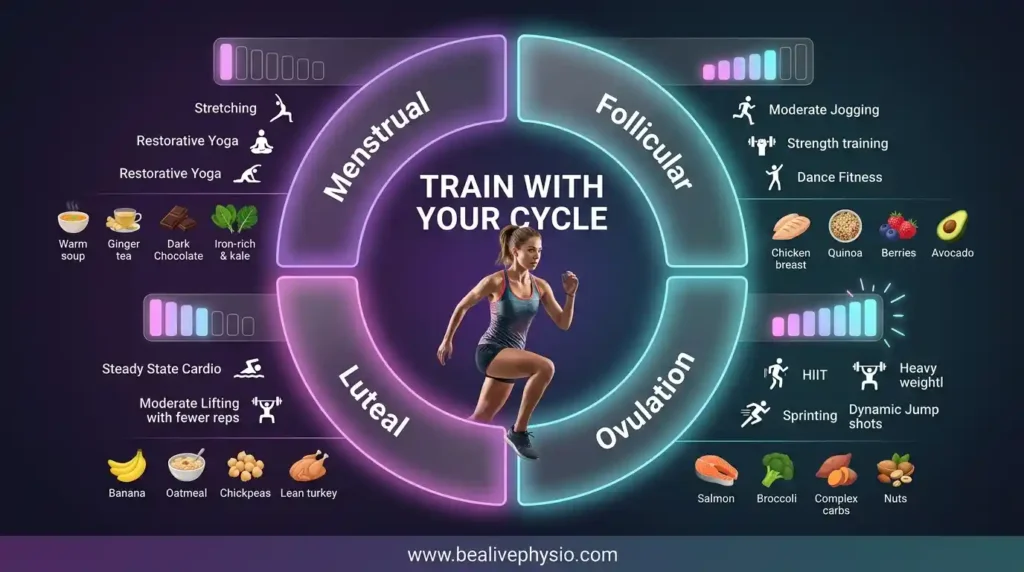
1. Menstrual Phase (Days 1–5)
This is when your period starts.
What happens:
- Hormones are at their lowest
- Energy is reduced
- Recovery capacity is lower
What actually works:
- Light workouts: walking, stretching, yoga
- Focus on recovery instead of pushing intensity
Real-world example:
One client insisted on doing HIIT during this phase and felt exhausted for days. When she switched to light movement, her consistency improved—and so did her results.
2. Follicular Phase (Days 6–14)
This is one of the best phases for fat loss and training.
What happens:
- Estrogen rises
- Energy and motivation increase
- Insulin sensitivity improves
Best strategy:
- Strength training
- High-intensity workouts
- Try new exercises or increase weights
Practical tip:
This is the phase where I personally push progressive overload—adding weight, reps, or intensity.
3. Ovulation Phase (Around Day 14)
This is your peak performance window.
What happens:
- Estrogen peaks
- Strength and endurance are highest
Best approach:
- Heavy lifting
- Challenging workouts
- Personal records (PRs)
Mistake to avoid:
Skipping intense workouts during this phase means missing your strongest window.
4. Luteal Phase (Days 15–28)
This is where many women struggle with weight fluctuations.
What happens:
- Progesterone rises
- Cravings increase
- Energy gradually declines
What works best:
- Moderate workouts (strength + low-intensity cardio)
- Reduce training intensity toward the end
Real-world issue:
Many women think they’re gaining fat here—but it’s often water retention and hormonal shifts, not actual fat gain.
Cycle Syncing Workouts for Weight Loss
Instead of forcing one routine all month, adjust your training based on your cycle.
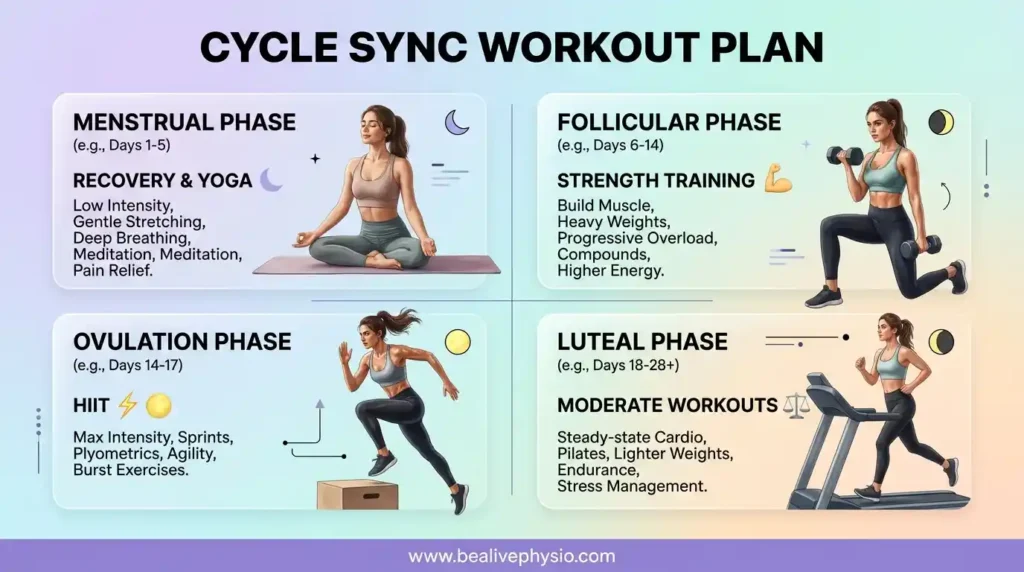
Simple Weekly Structure
- Week 1 (Menstrual): Recovery + light movement
- Week 2 (Follicular): Strength + HIIT
- Week 3 (Ovulation): Peak intensity training
- Week 4 (Luteal): Moderate workouts + deload
This approach helps avoid burnout and improves consistency—something most generic fitness plans ignore.
Hormone-Friendly Nutrition for Female Weight Loss
Diet plays a massive role in balancing hormones and supporting fat loss.
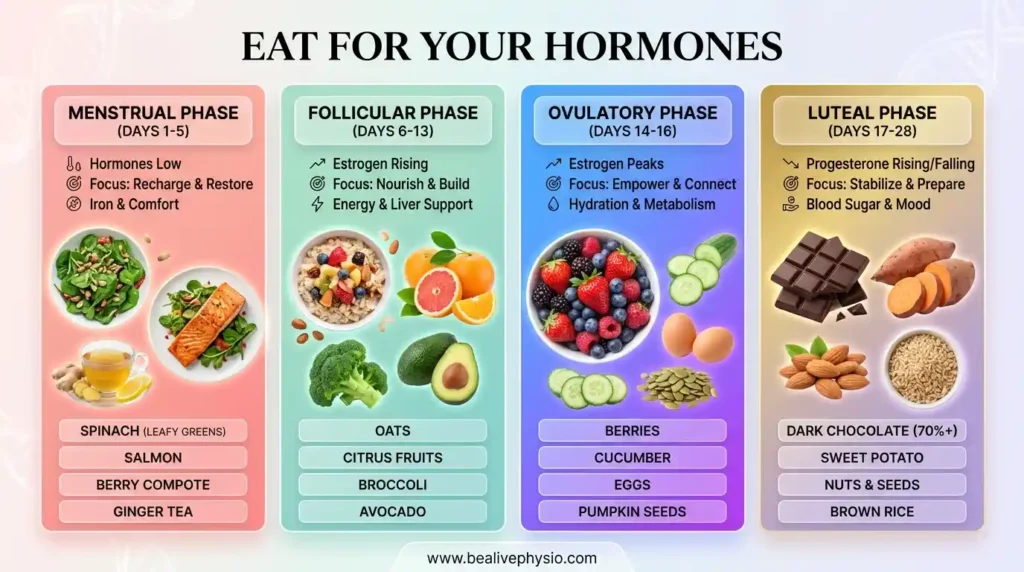
Eating for Each Phase of the Cycle
Menstrual Phase
- Iron-rich foods (spinach, red meat, lentils)
- Hydration is key
Follicular Phase
- Lean protein (chicken, eggs, fish)
- Light, fresh foods
Ovulation Phase
- Fiber-rich foods (vegetables, fruits)
- Balanced macronutrients
Luteal Phase
- Complex carbs (oats, sweet potatoes)
- Magnesium-rich foods (dark chocolate, nuts)
Macronutrient Balance Matters
From experience, most women under-eat protein.
Ideal approach:
- Protein: supports muscle and metabolism
- Healthy fats: essential for hormone production
- Carbs: fuel energy and reduce cortisol
Common Hormonal Weight Loss Mistakes
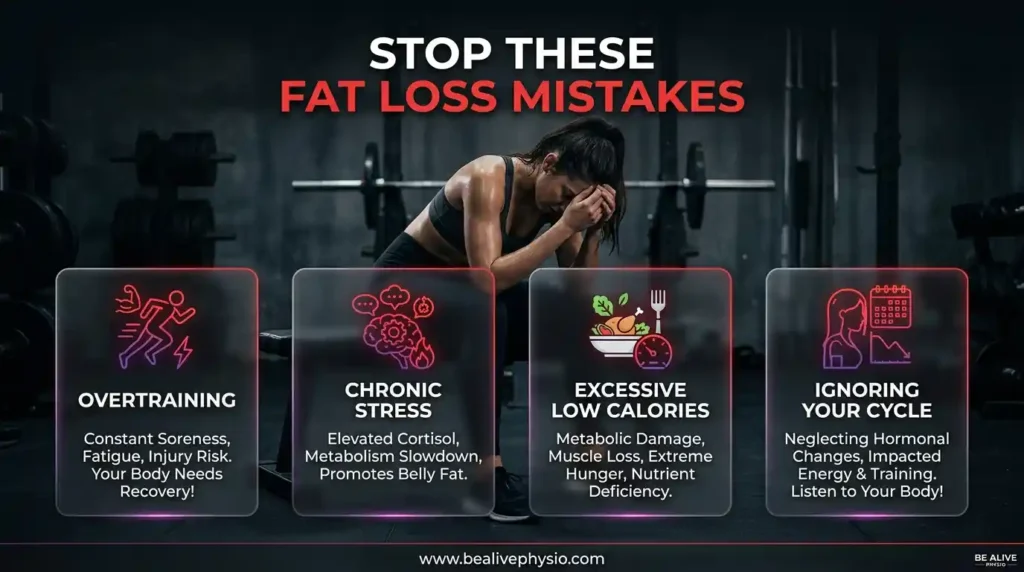
1. Doing the Same Workout Every Day
Your body isn’t static—your plan shouldn’t be either.
2. Ignoring Stress (Cortisol)
Chronic stress = fat storage.
Fix:
- Sleep 7–8 hours
- Add walking or breathing exercises
3. Cutting Calories Too Aggressively
This disrupts hormones and slows metabolism.
4. Not Tracking the Menstrual Cycle
Apps like Clue or Flo help identify patterns in energy, cravings, and performance.
Real-Life Case Study
A 32-year-old client struggled with hormonal weight gain despite consistent dieting.
What we changed:
- Adjusted workouts based on cycle phases
- Increased protein intake
- Reduced HIIT during the luteal phase
Results after 8 weeks:
- Lost 4 kg
- Reduced bloating
- Improved energy levels
No extreme diets. Just smarter alignment with hormones.
Supplements for Hormone Balance (Optional Support)
Not mandatory, but sometimes helpful:
- Magnesium (for sleep and stress)
- Omega-3 fatty acids
- Vitamin D
Always consult a professional before starting supplements.
Frequently Asked Questions (FAQs)
Hormones like estrogen, progesterone, and cortisol affect fat storage, hunger, and metabolism, making weight loss inconsistent if not managed properly.
Yes. Training according to your hormonal phases improves performance, recovery, and fat loss efficiency.
Usually, no. It’s mostly water retention and hormonal changes.
A balanced diet with protein, healthy fats, and complex carbs works best. Avoid extreme calorie restriction.
Not necessarily. Light movement is beneficial, but intense workouts may feel harder.
Final Thoughts

Weight loss for women isn’t just about working harder—it’s about working smarter with your body. Once you understand how your hormones and cycle influence energy, hunger, and performance, everything becomes more predictable and manageable.
You don’t need a perfect plan. You need a flexible system that adapts to your body.
When you align your training, nutrition, and lifestyle with your hormonal rhythm, fat loss stops feeling like a constant battle—and starts feeling sustainable.