
If you’ve ever tried to lose weight seriously—not just for a week before an event—you’ve probably realized something frustrating: calories alone don’t explain everything.
I learned this the hard way. For months, I tracked calories using apps like MyFitnessPal, hit my protein goals, and still felt bloated, hungry, and stuck at the same weight. What finally moved the needle wasn’t eating less—it was fixing my gut.
This article is not a theory. It’s based on what actually worked (and what failed) when I focused on gut health through fiber, probiotics, and simple food swaps.
Why Gut Health Affects Weight More Than You Think
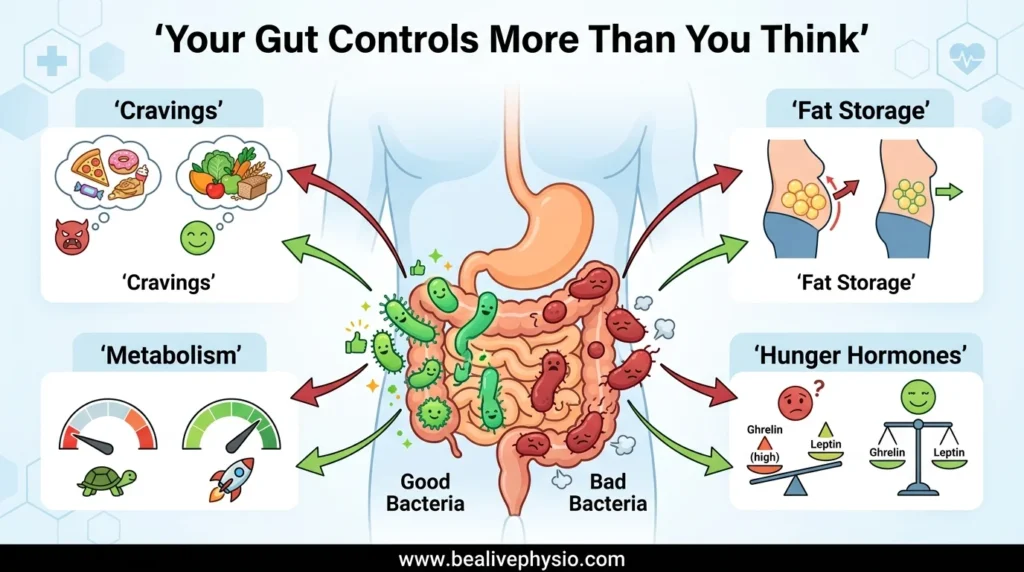
Your gut isn’t just about digestion—it’s a control center for:
- Hunger hormones (ghrelin & leptin)
- Blood sugar stability
- Inflammation
- Cravings
Inside your digestive system live trillions of bacteria (the gut microbiome). Some help you stay lean. Others push your body toward fat storage and cravings.
When your gut is off, you might notice:
- Constant hunger even after eating
- Sugar cravings at night
- Bloating or irregular digestion
- Weight plateaus despite effort
I had all four.
Once I started feeding the right bacteria, things changed within weeks—not overnight, but noticeably.
Fiber: The Most Underrated Weight Loss Tool
My biggest mistake
I thought I was eating “healthy”—chicken, rice, eggs, protein shakes.
But my fiber intake? Around 10g per day. That’s less than half of what most adults need.
What happened when I fixed it
I gradually increased fiber to 25–30g daily. Within 10 days:
- My hunger dropped
- I stopped snacking late at night
- Digestion improved
- Weight started moving again
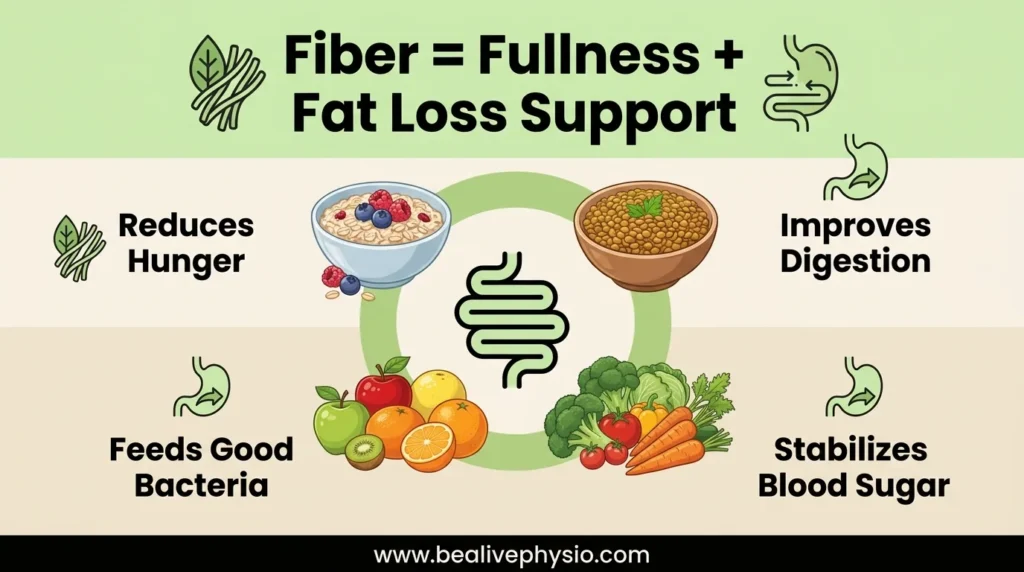
Why fiber works
Fiber feeds good gut bacteria. In return, they produce compounds (short-chain fatty acids) that:
- Reduce inflammation
- Improve metabolism
- Help you feel full longer
Practical Fiber Food Swaps (That Actually Work)
These are real swaps I still use daily—not “perfect diet” ideas.
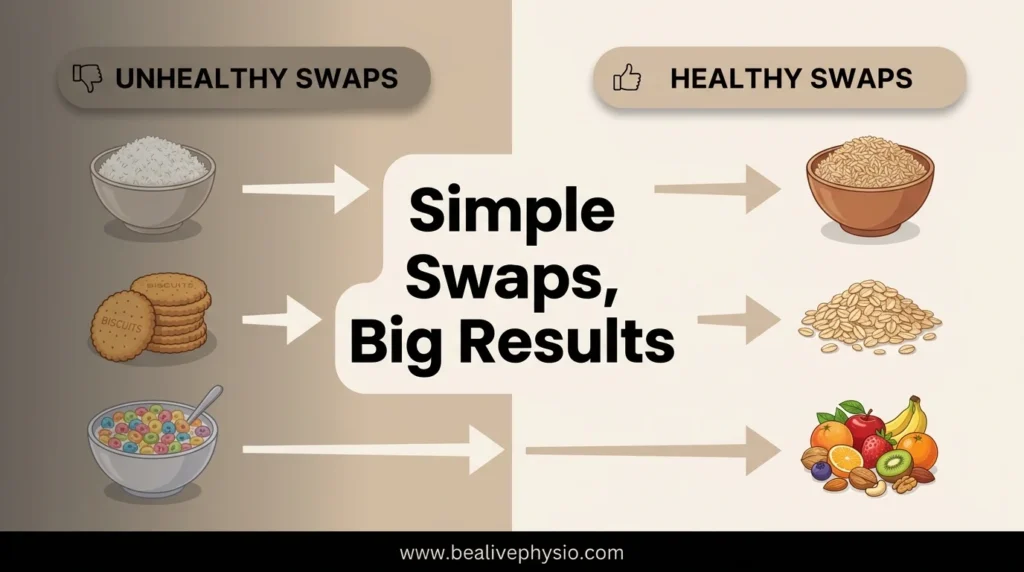
1. White rice → Mixed grains or brown rice
Before: Plain white rice with every meal
After: Half brown rice + half lentils
Result: More fullness, less overeating
2. Breakfast cereal → Oats + seeds
Before: Sugary cereal
After: Oats with chia seeds + banana
Result: No mid-morning crash
3. Snacks → Fruit + nuts instead of biscuits
Before: Tea with biscuits
After: Apple + almonds
Result: Reduced sugar cravings
4. Plain roti → Add fiber boost
Add things like:
- Flaxseed powder
- Chia seeds
- Bran flour
Small tweak, big difference
Step-by-Step: How to Increase Fiber Without Digestive Problems
Don’t make the mistake I did—jumping straight to high fiber caused bloating.
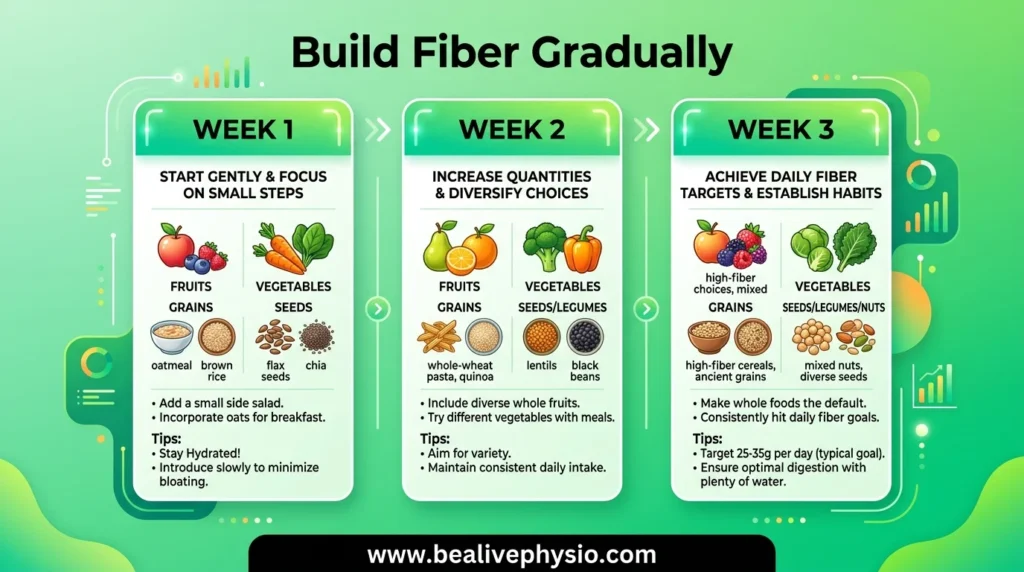
Week-by-week approach:
Week 1
- Add 1 fruit daily
- Replace 1 refined grain
Week 2
- Add vegetables to lunch & dinner
- Start oats or whole grains
Week 3
- Introduce seeds (chia/flax)
- Add legumes (lentils, beans)
Important tip
Drink more water. Fiber without water = constipation.
Probiotics: The Missing Piece
Fiber feeds bacteria. Probiotics add good bacteria.
My turning point
Even after improving fiber, I still had bloating. Adding probiotic foods fixed that.
Within 2 weeks:
- Less bloating
- Better digestion
- More stable appetite
Best Natural Probiotic Foods (Simple and Affordable)
You don’t need expensive supplements.

1. Yogurt (dahi)
- Easily available
- Supports digestion
I started eating a bowl after lunch daily
2. Fermented foods
- Pickles (natural, not vinegar-heavy processed ones)
- Homemade fermented vegetables
3. Buttermilk (lassi without sugar)
- Light on the stomach
- Good for hot climates
When Probiotic Supplements Make Sense
I tested a few probiotic supplements after reading reviews online.
What I learned:
- Not all supplements work the same
- Some caused more bloating
- Refrigerated ones worked better for me
Practical advice:
If you:
- Have frequent digestive issues
- Recently used antibiotics
- Feel constant bloating
Then a short trial (2–4 weeks) might help.
But don’t rely on supplements alone—food matters more.
The Gut–Craving Connection (This Surprised Me)
One thing nobody talks about enough:
Your gut bacteria can influence what you crave.
When I ate more sugar and processed food:
- I craved more sugar
When I switched to fiber + probiotics:
- Cravings reduced naturally
No “discipline hacks”—just biology working differently.
Real Daily Meal Example (What I Actually Eat Now)
Not perfect. Not strict. Just consistent.
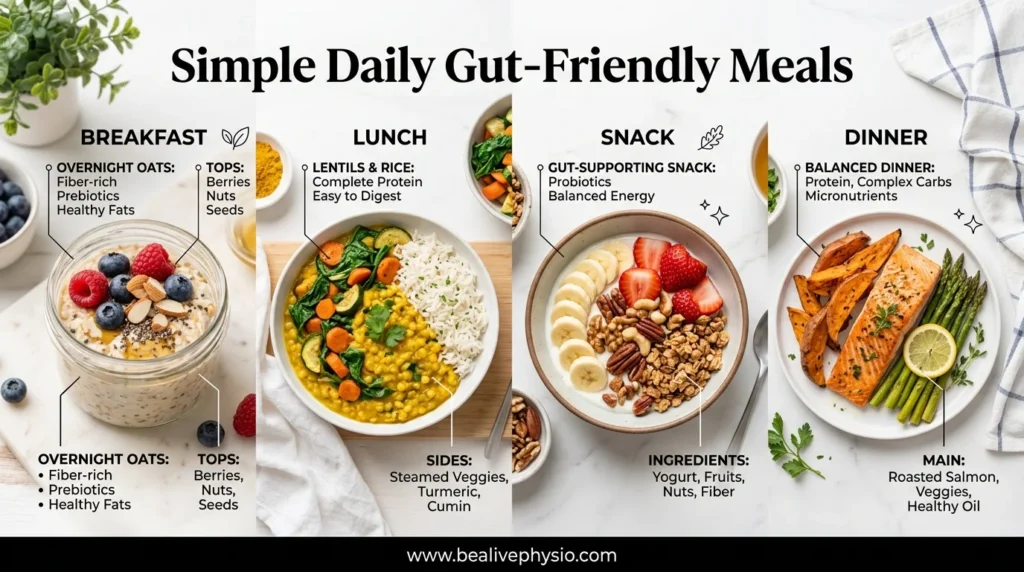
Breakfast
- Oats with chia seeds + banana
- Tea (less sugar than before)
Lunch
- Brown rice + lentils
- Vegetables
- Yogurt
Evening
- Fruit + handful of nuts
Dinner
- Roti (with added fiber)
- Chicken or vegetables
- Salad
Result after 6–8 weeks
- Weight dropped slowly but steadily
- Energy levels improved
- No extreme hunger
Tools That Helped Me Stay Consistent
You don’t need fancy gadgets, but these helped:
1. Food tracking apps
- MyFitnessPal
- HealthifyMe
Helped me realize how low my fiber was
2. Kitchen basics
- Measuring cups
- Digital kitchen scale
Prevents guesswork
3. Simple habit tracking
I used Google Keep to track:
- Fiber intake
- Water
- Daily meals
Common Mistakes to Avoid
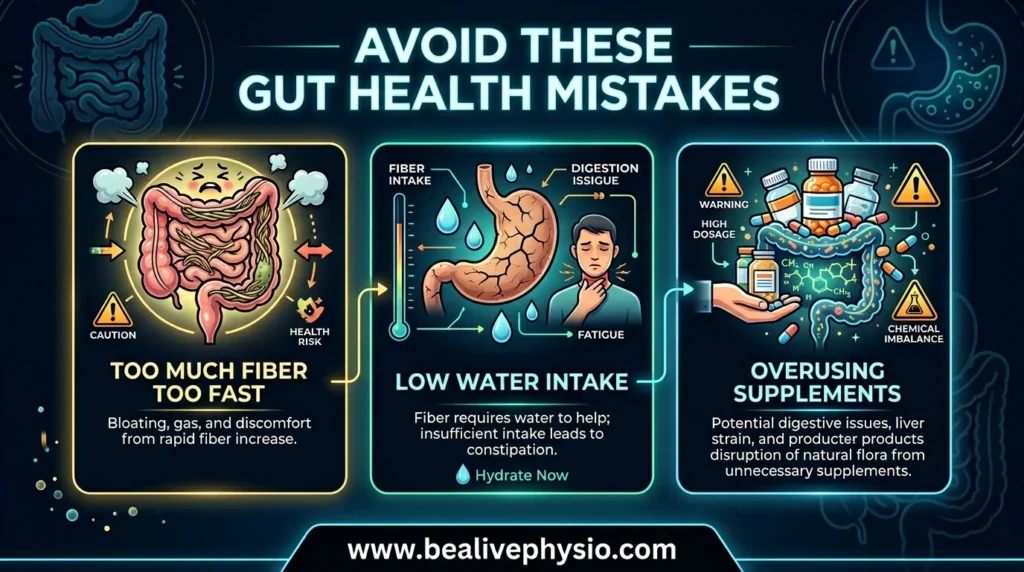
1. Increasing fiber too fast
Leads to gas and discomfort
2. Ignoring hydration
Fiber needs water to work
3. Relying only on supplements
Food quality matters more
4. Expecting instant results
Gut health improves gradually
What Science Says (Simplified)
Research in nutrition and microbiome science shows:
- High-fiber diets support beneficial gut bacteria
- Diverse gut bacteria are linked to a healthier body weight
- Fermented foods improve digestion and gut balance
Studies in journals like Nature Reviews Gastroenterology & Hepatology and Cell Metabolism have explored how gut microbes influence metabolism and fat storage.
Frequently Asked Questions (FAQs)
You may notice changes in 1–2 weeks, but real improvement takes 4–8 weeks.
Not directly—but it makes weight loss easier by controlling hunger, cravings, and digestion.
Both matter. Protein builds muscle; fiber controls appetite and gut health.
Not always. Many people get enough from yogurt and fermented foods.
Yes. Excess fiber without water can cause bloating or constipation.
Start with:
– One fruit daily
– Replace refined grains
– Add yogurt
Simple changes work best.
Final Thoughts

Fixing gut health didn’t feel like dieting—it felt like removing friction. Hunger became manageable, cravings faded, and weight loss stopped feeling like a constant fight.
You don’t need extreme diets or expensive plans. Start small: add fiber, include probiotic foods, and make better swaps instead of chasing perfection.
If you stay consistent, your gut will do more of the work than you expect—and that’s when weight management finally starts to feel sustainable