

I didn’t start paying attention to how I eat until I realized something uncomfortable: I was finishing meals without remembering them. Lunch would disappear while I scrolled, dinner would vanish in front of a screen, and I’d still feel oddly unsatisfied. Not hungry exactly—but not done either.
That’s when I started experimenting with mindful eating. Not in a “perfect lifestyle” way, but in a practical, trial-and-error way—figuring out what actually works in real life, with busy days, distractions, and cravings.
This guide isn’t theory-heavy. It’s based on what actually helped me (and others I’ve worked with) reconnect with hunger and fullness—without strict dieting or complicated rules.
What Mindful Eating Really Means (In Real Life)
Mindful eating is not about eating all the time slowly or avoiding “bad foods.” It’s about noticing what your body is telling you—and responding instead of reacting.
Most of us eat on autopilot:
- While working
- While watching videos
- While stressed or bored
The result? You lose track of hunger cues and fullness signals.
Mindful eating helps you rebuild that connection.
Why You Might Feel “Out of Sync” With Hunger
Before jumping into the practices, it helps to understand why this disconnect happens:
- Constant snacking habits → hunger signals get blurred
- Emotional eating → you eat for comfort, not hunger
- Fast eating → fullness signals don’t catch up in time
- Diet rules → you ignore your body and follow external rules
I personally struggled most with fast eating. I could finish a full plate in under 5 minutes—and then wonder why I felt heavy later.
7 Practical Mindful Eating Practices That Actually Work
These are not “perfect habits.” They’re practical tools you can start using today.
1. The “Pause Before You Eat” Habit

This sounds simple, but it’s surprisingly powerful.
Before taking your first bite, pause for 10–15 seconds and ask:
- Am I actually hungry?
- What kind of hunger is this? (physical, emotional, boredom)
Real Example:
I used to grab snacks while working—even right after a meal. When I started pausing, I realized half the time I wasn’t hungry… just distracted.
How to Practice:
- Sit down with your food
- Take one deep breath
- Ask yourself the hunger question
- Then start eating
That’s it. No overthinking.
2. Use a Simple Hunger Scale (No Apps Needed)
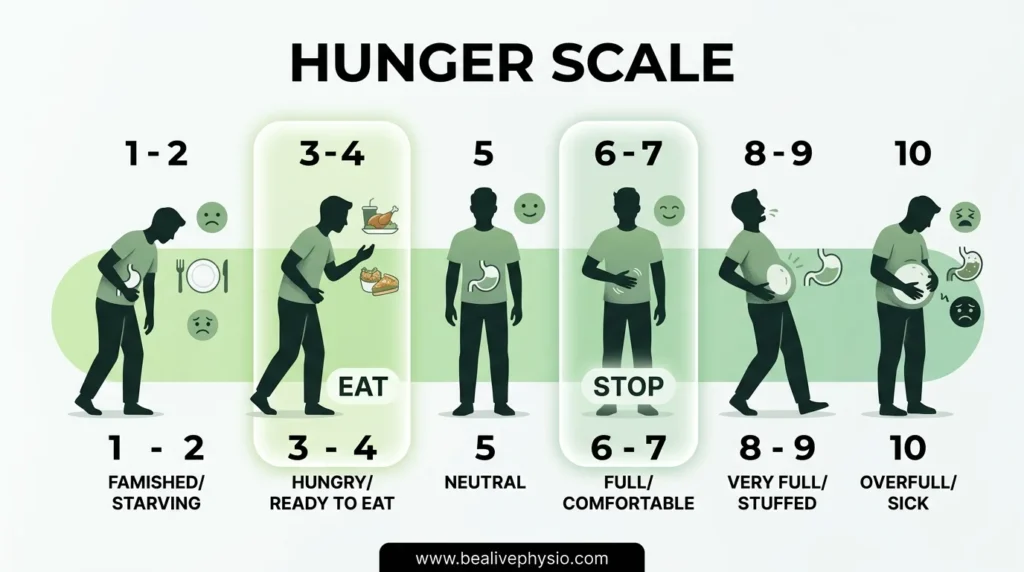
Instead of guessing, use a basic 1–10 hunger scale:
- 1–2: Extremely hungry
- 3–4: Hungry, ready to eat
- 5–6: Comfortable
- 7–8: Full
- 9–10: Overfull
What worked for me:
I aim to eat at 3–4 and stop at 6–7.
Not perfect every time—but consistent enough to notice a difference.
Mistake to Avoid:
Don’t try to hit exact numbers. This isn’t math—it’s awareness.
3. Eat Without Screens (At Least Once a Day)

This one was hard for me.
I was used to eating with YouTube or scrolling. But when I removed screens—even for one meal—I noticed:
- I ate slower
- I felt satisfied sooner
- I remembered what I ate
Practical Setup:
- Keep your phone out of reach
- Sit at a table (not your bed or desk)
- Focus only on the meal
Real Result:
After a week of doing this once daily, I naturally reduced overeating—without trying.
4. Slow Down—But Do It Realistically

You don’t need to count every chew. That advice never worked for me.
Instead, use these real-world tricks:
- Put your spoon down between bites
- Take a sip of water every few bites
- Talk to someone if you’re not eating alone
What changed for me:
Slowing down helped my body “catch up” with fullness. I stopped going from hungry → stuffed in minutes.
5. Notice the First Signs of Fullness

Most people stop eating when they feel full… but by then, it’s often too late.
Your body actually gives early signals:
- Food doesn’t taste as exciting
- You start eating more slowly, naturally
- You feel “comfortable,” not hungry
Try This:
Halfway through your meal:
- Pause
- Check how you feel
- Decide if you need the rest
Real Example:
I used to always finish my plate. Now, I stop when I feel satisfied—even if food is left. That took time to accept.
6. Identify Emotional Eating Without Judging Yourself

This one matters more than people think.
Sometimes you’re not eating because of hunger—you’re eating because:
- You’re stressed
- You’re bored
- You need a break
What helped me:
Instead of trying to “stop emotional eating,” I started noticing it.
Example:
“I’m not hungry—I just don’t want to do this task.”
That awareness alone reduced unnecessary eating.
Alternative Actions:
When you notice emotional eating:
- Take a short walk
- Drink water
- Step away from your screen
Not as rules—just options.
7. Reflect After Eating (30 Seconds Only)

You don’t need a journal. Just a quick mental check:
- Am I satisfied?
- Did I eat too fast?
- What would I do differently next time?
Why this works:
It builds awareness over time. You start learning your patterns.
Real Result:
Within 2–3 weeks, I could predict when I’d overeat—and adjust before it happened.
Tools That Can Actually Help (Without Overcomplicating Things)
You don’t need fancy apps—but a few tools can support mindful eating:
1. Timer Apps
Use apps like:
- Google Clock
- Apple Clock
Set a 15–20 minute eating window to remind yourself to slow down.
2. Notes App for Awareness
Use:
- Google Keep
- Notion
Write quick notes like:
- “Ate too fast today.”
- “Wasn’t hungry, just bored.”
This builds awareness faster than you expect.
3. Simple Plate Strategy
Use smaller plates. It sounds basic, but it works in real life—especially if you tend to over-serve yourself.
Common Mistakes People Make (I Made These Too)
1. Trying to Be Perfect
You won’t eat mindfully every meal. That’s normal.
Consistency beats perfection.
2. Turning It Into a Diet Rule
Mindful eating is not:
- “Never eat fast food.”
- “Always eat slowly.”
It’s about awareness, not restriction.
3. Ignoring Hunger Signals Too Long
Waiting until you’re starving leads to overeating.
Eat when you’re moderately hungry—not desperate.
4. Overthinking Every Bite
If it feels stressful, you’re doing too much.
Keep it simple.
Real-World Use Case: Busy Workdays
Let’s be honest—most people don’t have time for “perfect meals.”
Here’s what worked for me during busy days:
Scenario:
Working on a laptop, tight deadlines
What I changed:
- Ate one meal without my laptop
- Paused before snacking
- Used a hunger check before ordering food
Result:
- Less random snacking
- Better focus
- More stable energy
No drastic lifestyle change—just small adjustments.
Frequently Asked Questions (FAQs)
Most people notice small changes within 1–2 weeks—like reduced overeating or better awareness. Bigger changes take consistency over time.
It can support weight management indirectly by reducing overeating. But it’s not a strict weight-loss method.
That’s normal. Just return to it at your next meal. No need to “restart.”
es. The goal isn’t to eliminate it completely—just reduce how often it happens.
No. You can practice it with any type of food.
Final Thoughts
Mindful eating didn’t change my life overnight. But it did something more useful—it made eating feel normal again.
No strict rules. No guilt. Just awareness.
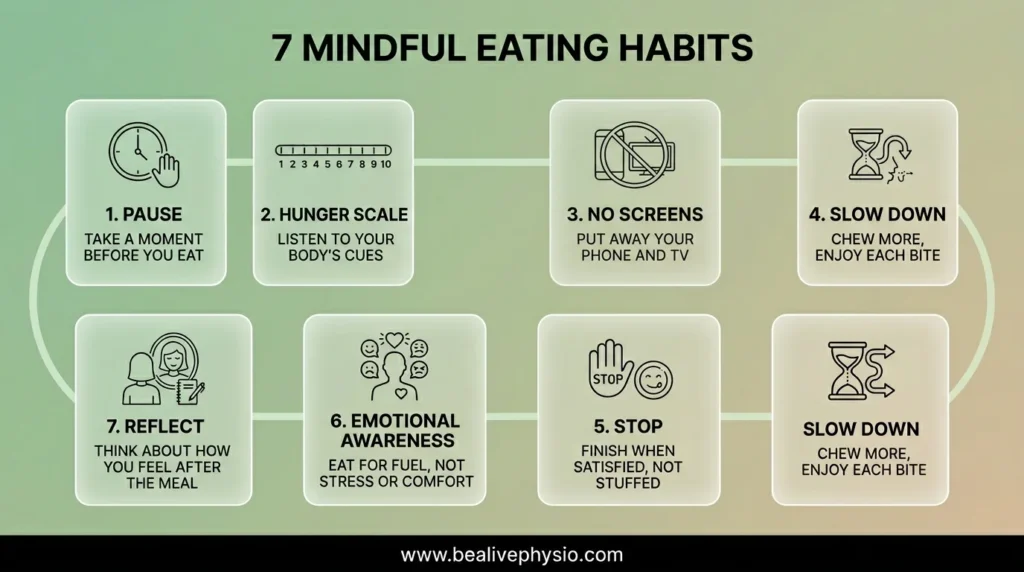
You don’t need to apply all 7 practices at once. Start with one:
- Pause before eating
- Remove distractions for one meal
- Check your hunger
That’s enough to begin.
Over time, you’ll start noticing something subtle but important—you’re no longer guessing when to eat or when to stop.
And that’s where real change starts.