
Walk into any supplement store (or scroll through an online marketplace), and it feels like you need a PhD just to pick a protein powder. I’ve been there—spending money on things I didn’t need, chasing trends, and learning the hard way what actually works.
This guide is not about hyped promises. It’s about what might help, what’s often a waste, and how to make smart decisions based on real-world use—not marketing.
Why Supplements Are So Confusing
The supplement industry thrives on two things: hope and confusion.
Most people don’t realize that supplements are meant to supplement your diet—not replace it. If your sleep is poor, your diet is inconsistent, and you rarely move, no pill will fix that.
I learned this after spending months trying fat burners and “energy boosters” while sleeping 5 hours a night. Nothing worked—until I fixed basics.
What Actually Helps (When Used Correctly)
Let’s start with the small group of supplements that consistently show results when used properly.
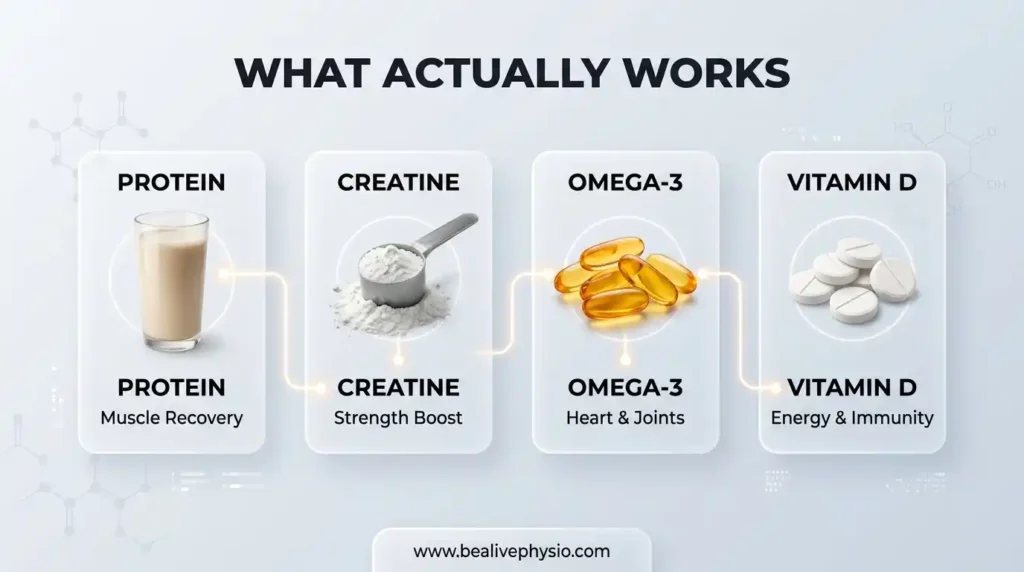
1. Protein Powder – Convenient, Not Magical
If you struggle to hit your daily protein intake, protein powder is helpful. That’s it.
Real use case:
I used to skip breakfast and rely on random snacks. Adding a simple whey protein shake in the morning helped me stay full longer and improved my workout recovery.
How to use it:
- Calculate your protein needs (roughly 0.8–1g per pound of body weight if active).
- Use protein powder only to fill gaps—not replace meals.
- Mix with water, milk, or blend with oats and fruit.
Common mistake:
Overusing protein shakes while ignoring real food. Whole foods still matter.
2. Creatine – One of the Most Proven Supplements
Creatine is one of the few supplements backed by decades of research.
What it does:
- Improves strength and power
- Helps with muscle recovery
- May support brain function
Real experience:
After consistent use (5g daily), I noticed improved performance in the gym within 2–3 weeks—especially in compound lifts like squats and bench press.
How to use it:
- Take 3–5g daily (no need for loading phase).
- Mix with water or your shake.
- Stay hydrated.
What people get wrong:
- Expecting instant results
- Cycling on/off unnecessarily
3. Omega-3 Fatty Acids – Good for Overall Health
Omega-3 fatty acids are essential fats that many diets lack.
Benefits:
- Supports heart health
- Reduces inflammation
- May improve joint comfort
Real use case:
When I had joint discomfort from frequent workouts, adding fish oil helped reduce stiffness over time.
How to use:
- 1–3g daily of combined EPA + DHA
- Take with meals for better absorption
Alternative:
Eat fatty fish like salmon 2–3 times per week.
4. Vitamin D – Especially If You’re Indoors
Vitamin D deficiency is more common than people think, especially if you spend most of your day indoors.
Signs you might need it:
- Low energy
- Frequent illness
- Minimal sun exposure
Real experience:
After getting a blood test showing low levels, I started supplementing. Within a few weeks, my energy felt more stable.
How to use:
- Get a blood test if possible.
- Typical dose: 1000–2000 IU daily (varies by need).
- Take with a fat-containing meal.
Supplements That Are Often Overhyped
Now let’s talk about the stuff that sounds impressive—but rarely delivers.
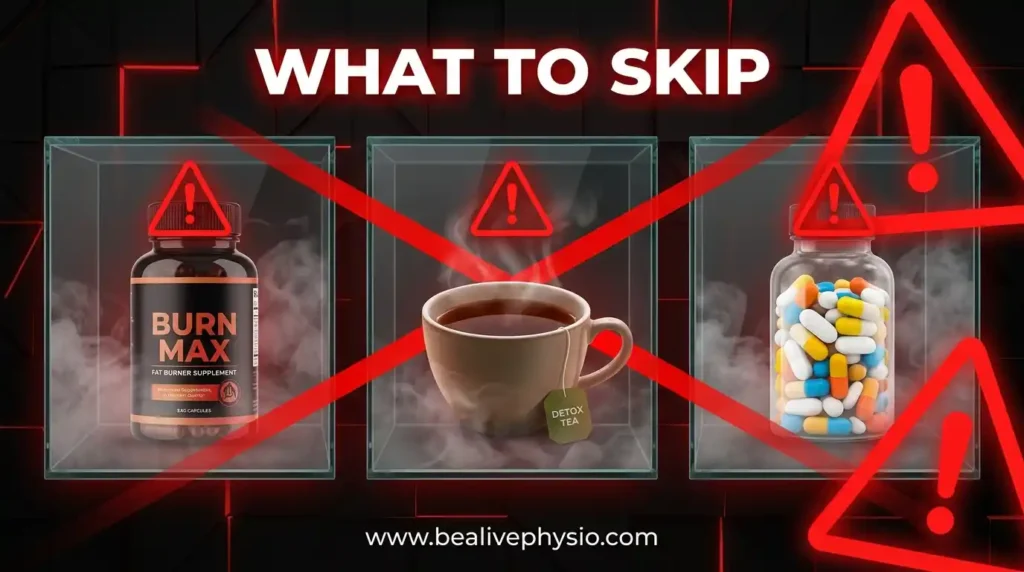
1. Fat Burners – Mostly Marketing
These usually contain caffeine and herbal extracts.
What actually happens:
- Slight increase in heart rate
- Temporary energy boost
What doesn’t happen:
- Significant fat loss without diet changes
Mistake I made:
Relying on fat burners while ignoring calorie intake. Result? Zero real progress.
2. Detox Teas and Cleanses
Your body already has a detox system: your liver and kidneys.
Reality:
- Most detox products just act as laxatives
- Any weight loss is temporary (water weight)
Better approach:
- Drink more water
- Eat whole foods
- Sleep properly
3. BCAAs – Not Needed for Most People
Branched-chain amino acids are often marketed as essential for muscle growth.
Truth:
If you’re already consuming enough protein, you’re getting plenty of BCAAs.
When they might help:
- Training fasted
- Very low protein diet
Otherwise, save your money.
4. Testosterone Boosters
These are heavily marketed but rarely effective unless you have a medical deficiency.
What actually works better:
- Sleep (7–9 hours)
- Strength training
- Balanced diet
How to Decide If a Supplement Is Worth It
Here’s the exact process I now use before buying anything:
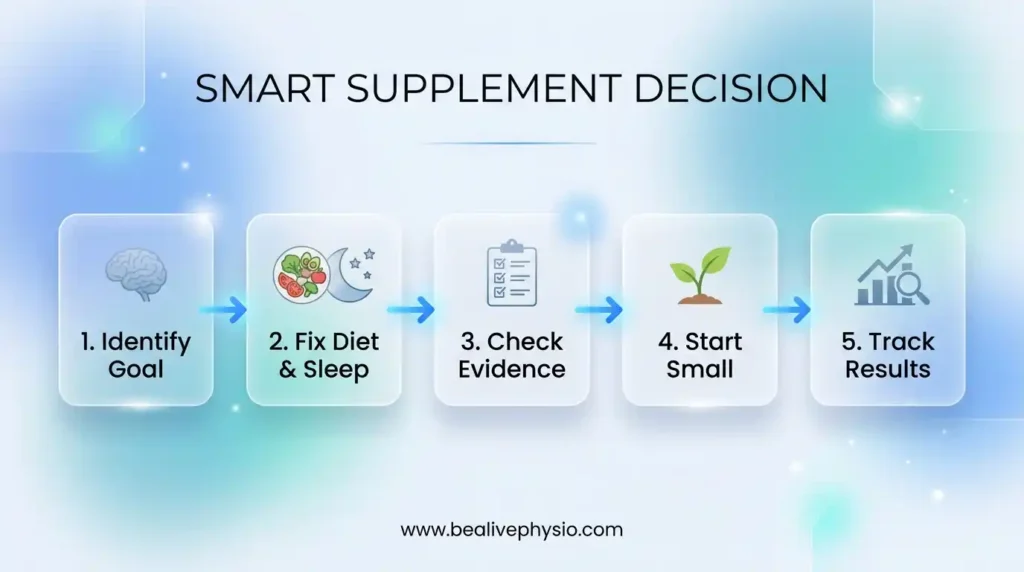
Step 1: Identify the Problem
Ask yourself:
- What am I trying to improve?
- Is this a lifestyle issue or a supplement issue?
Example:
Low energy? Could be sleep—not a supplement.
Step 2: Fix the Basics First
Before buying anything:
- Improve diet
- Sleep better
- Stay consistent with exercise
If these aren’t in place, supplements won’t help much.
Step 3: Look for Evidence, Not Hype
Check if the supplement has:
- Multiple studies
- Long-term usage data
- Real-world success stories
Avoid:
- “Miracle” claims
- Before/after photos without context
Step 4: Start Small
Don’t stack 5–6 supplements at once.
Instead:
- Start with one (e.g., protein or creatine)
- Use it consistently for 4–6 weeks
- Track results
Step 5: Track Results Like a Pro
Use simple tools:
- Notes app
- Fitness apps like MyFitnessPal
- Workout logs
Track:
- Energy levels
- Strength progress
- Body weight
Common Mistakes People Make
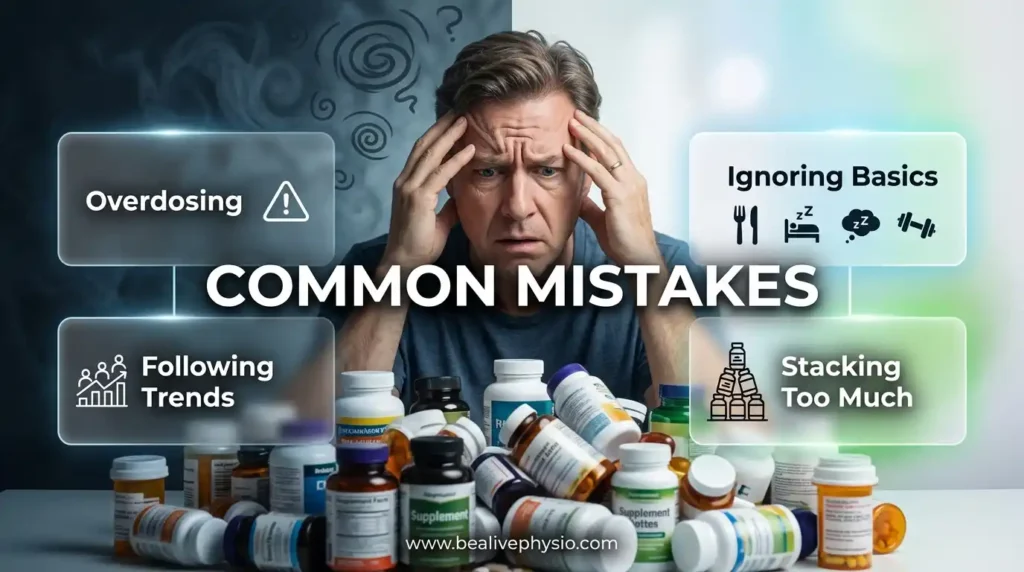
Buying Based on Trends
Just because something is popular doesn’t mean it works for you.
Ignoring Dosage
More is not better. Stick to recommended doses.
Expecting Instant Results
Most effective supplements take weeks—not days.
Mixing Too Many Products
You won’t know what’s working (or causing side effects).
A Simple Starter Stack (For Most People)
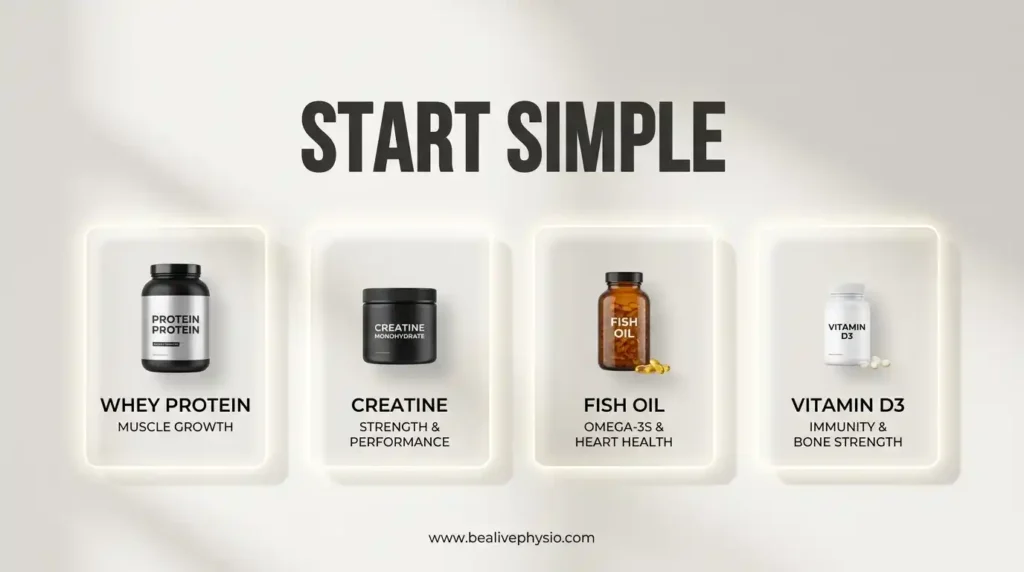
If you’re just starting and want something practical:
- Protein powder (if needed)
- Creatine (5g daily)
- Vitamin D (if deficient)
- Omega-3 (if diet lacks fish)
That’s it. No need to overcomplicate.
Frequently Asked Questions (FAQs)
No. You can make great progress with just diet, exercise, and sleep. Supplements only help fill gaps.
It depends:
– Creatine: 2–4 weeks
– Vitamin D: a few weeks to months
– Protein: immediate (if filling a deficiency)
Not necessarily. Many affordable options work just as well. Focus on ingredients, not branding.
Yes, but start slowly. Add one at a time to see how your body reacts.
Some supplements can interact with medications or cause side effects. If unsure, consult a healthcare professional.
Final Thoughts
After years of trial and error, I’ve learned that supplements are tools—not shortcuts.
The ones that work are usually simple, well-researched, and boring. The flashy ones? Often disappointing.
If you focus on your basics and use a few proven supplements wisely, you’ll get far better results than chasing every new trend.
Start simple, stay consistent, and let your results—not marketing—guide your decisions.