
I’ve tested just about every hydration trend you can imagine — giant motivational water bottles, hydration reminder apps, electrolyte powders that taste like candy, even the old-school “eight glasses a day.”
Some of those experiments worked. Some didn’t. And a few left me feeling like I was either drowning myself or drinking so little that even my smartwatch started judging me.
The truth is: your body doesn’t need an Instagram-approved gallon of water every day.
But it does need smart, consistent hydration based on your actual lifestyle.
This guide breaks down the hydration essentials I learned the hard way — with real examples, mistakes, and strategies you can start using today.
Why the Old “8 Glasses a Day” Rule Doesn’t Work for Everyone
The 8-glasses rule is easy to remember, which is probably why it stuck around.
But here’s the problem: it ignores your environment, body size, activity, diet, and health.
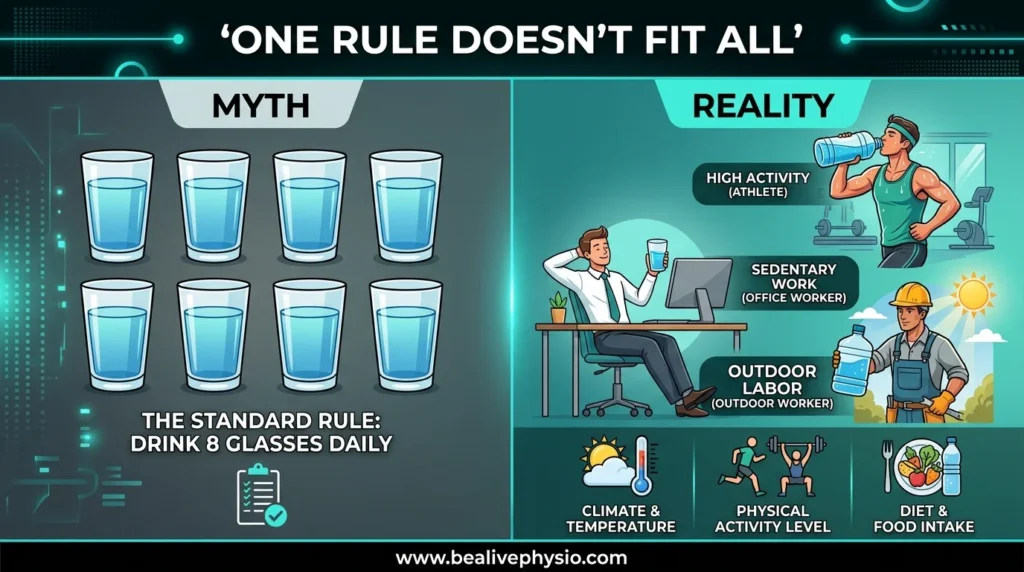
Examples where 8 glasses won’t cut it:
- You live in a hot climate (Florida, Texas, Southeast Asia). Sweat loss is higher.
- You work outdoors — construction, delivery, landscaping.
- You exercise more than 20–30 minutes a day.
- You drink lots of coffee (which increases your fluid needs slightly).
- Your diet is salty or high in protein.
Examples where 8 glasses may be too much:
- You barely sweat and spend most of the day indoors.
- You have a diet rich in fruits and veggies (which contain water).
- You’re petite and inactive.
Your water needs shift daily, and your body sends signals — but most of us ignore them.
So, How Much Water Do You Actually Need?
There’s no one-size-fits-all rule, but a more accurate guideline that works for most people is:
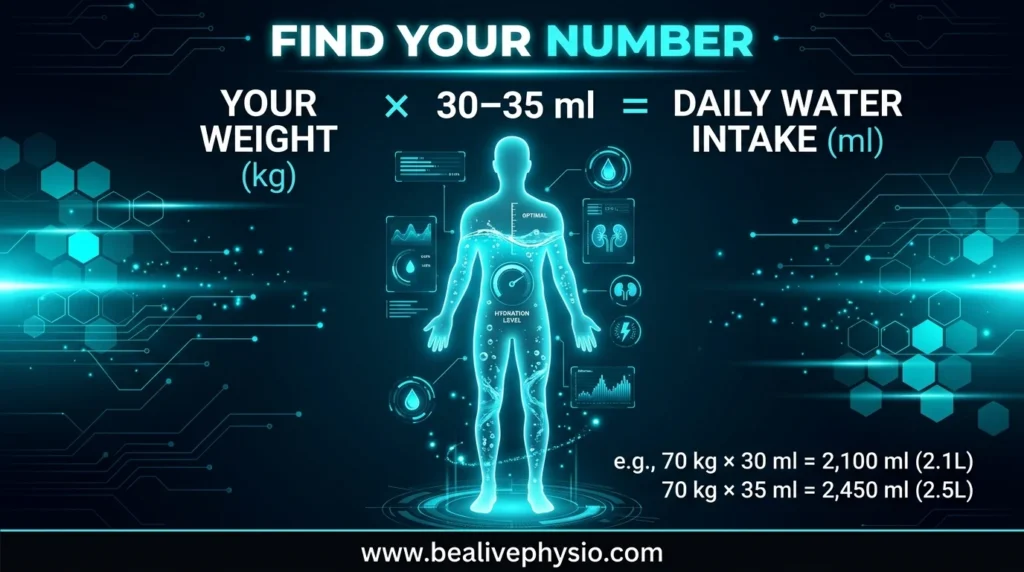
Simple Formula:
Your weight (in kg) × 30–35 ml
Example (my routine for a while):
- I weigh 72 kg
- 72 × 30 = 2,160 ml per day (~2.1 liters)
- On workout days, I add 500–700 ml
This matched what my body felt like it needed, unlike the random 3–4 liters I was forcing before.
You can also use health apps that auto-adjust based on weather and activity:
- Samsung Health
- Apple Health
- Hydro Coach
- MyFitnessPal water tracker
They’re not perfect, but they help you stop guessing.
How to Tell if You’re Drinking Too Little or Too Much
I learned this from trial and error — especially when I tried that ridiculous “one gallon a day” TikTok challenge.
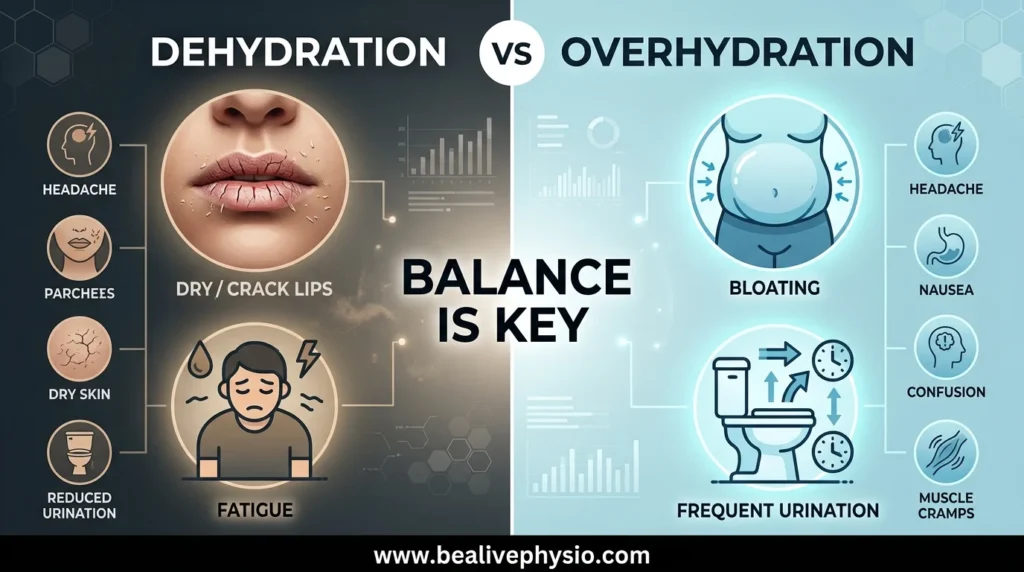
Signs you’re underhydrated
- Dry lips or mouth
- Headaches that come from nowhere
- Dark yellow urine
- Afternoon fatigue even with sleep
- Muscle cramps
- Strong cravings for salty food
Signs you’re overhydrated (yes, it happens)
- Clear urine every time
- Frequent bathroom trips
- Feeling bloated
- Headache (ironically, dehydration and overhydration feel similar)
- Weakness or dizziness
Most people only pay attention to dehydration, but drinking too much can flush out important minerals — especially sodium.
That’s when electrolytes come in.
Do You Really Need Electrolytes? (My Honest Take)
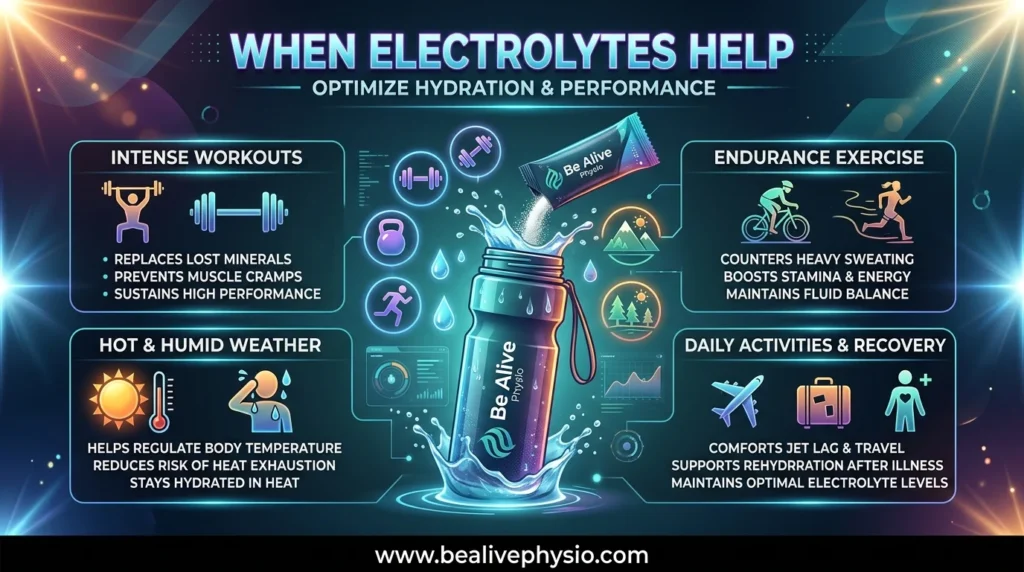
Electrolytes are not mandatory every day.
But they’re helpful in these cases:
- You sweat heavily (gym, running, hiking)
- You work long hours outdoors
- You drink a lot of water, but still feel thirsty
- You’re recovering from a stomach bug
- You’re keto (which flushes sodium faster)
I tested several brands, including LMNT, Liquid I.V., and Hydrant.
What I learned:
- LMNT is strong — great for intense workouts or very hot days.
- Liquid I.V. tastes good and works well for moderate use.
- Hydrant is mild and good for daily hydration.
For everyday use, it’s better not to rely on them too much. They aren’t magic.
Use them strategically, not like a daily multivitamin.
Hydration Hacks That Actually Work
These are the hacks that made the biggest difference in my hydration and daily energy levels.
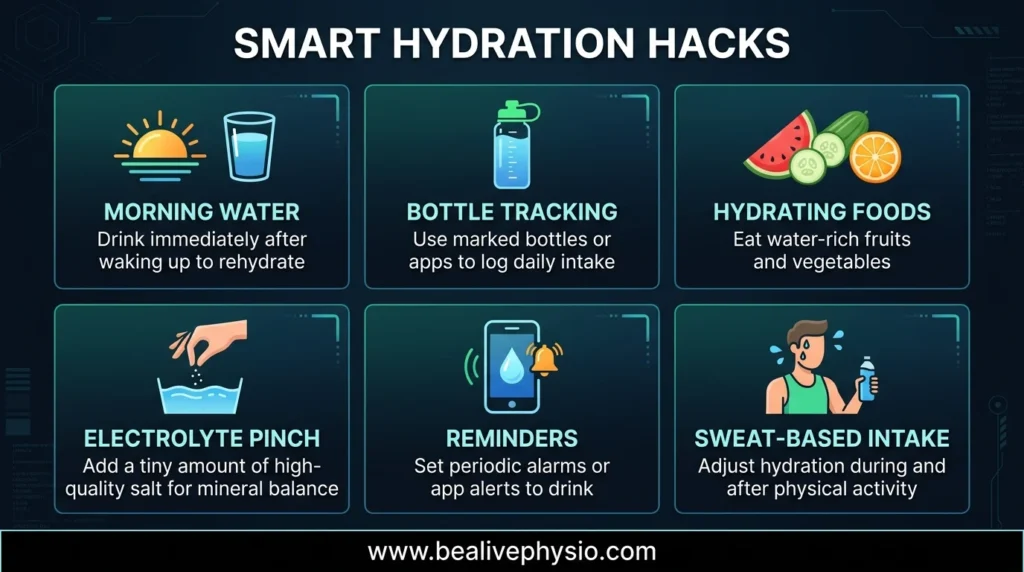
1. The “Morning 300 ml” Habit
Instead of chugging a full bottle on waking (which felt awful), I started drinking 300 ml right after brushing my teeth.
It wakes up your digestive system, reduces morning grogginess, and gets your hydration rolling early so you don’t have to play catch-up later.
2. Use a Water Bottle With Measurements
I resisted this one for years, thinking it was just trendy.
But the markings help more than you think because you SEE your progress.
Two I still use:
- Hydro Flask 32 oz
- Nalgene 1L
Avoid bottles that say things like “You got this!” every hour. Trust me — they get annoying fast.
3. Add a Pinch of Salt on Hot Days
A tiny pinch of sea salt (literally a pinch) in your water helps you stay hydrated when sweating heavily.
Not enough to taste salty
Not enough to mess with your blood pressure
Just enough to help water absorption
This trick saved me during summer hikes.
4. Eat Your Water (It Counts!)
Foods with high water content:
- Watermelon
- Cucumbers
- Oranges
- Strawberries
- Grapes
- Soup
- Smoothies
On days I eat fruit-heavy meals, I naturally drink less water without feeling dehydrated.
5. Set “Situational Reminders,” Not Timed Ones
Timed alarms (“drink water now”) made me ignore them.
Situational reminders work better:
- After every bathroom break → drink 3–4 sips
- Before each meal → take 5 sips
- After every work session → drink 2–3 sips
These micro-sips add up without feeling forced.
6. Match Your Water Intake to Your Sweat Level
This is the simplest trick I learned:
If my shirt is sweaty = add 500 ml.
If it’s drenched = add 700–800 ml.
Not scientific, but amazingly accurate.
7. Don’t Overhydrate Before Bed
I used to drink half a bottle before sleeping, thinking it was healthy.
Result:
Waking up at 3 a.m. every single night.
Now I stop heavy drinking 1.5 hours before bed. Problem solved.
A Realistic Daily Hydration Routine (Tested and Adjusted)
Here’s the schedule that works for me and many of my clients:
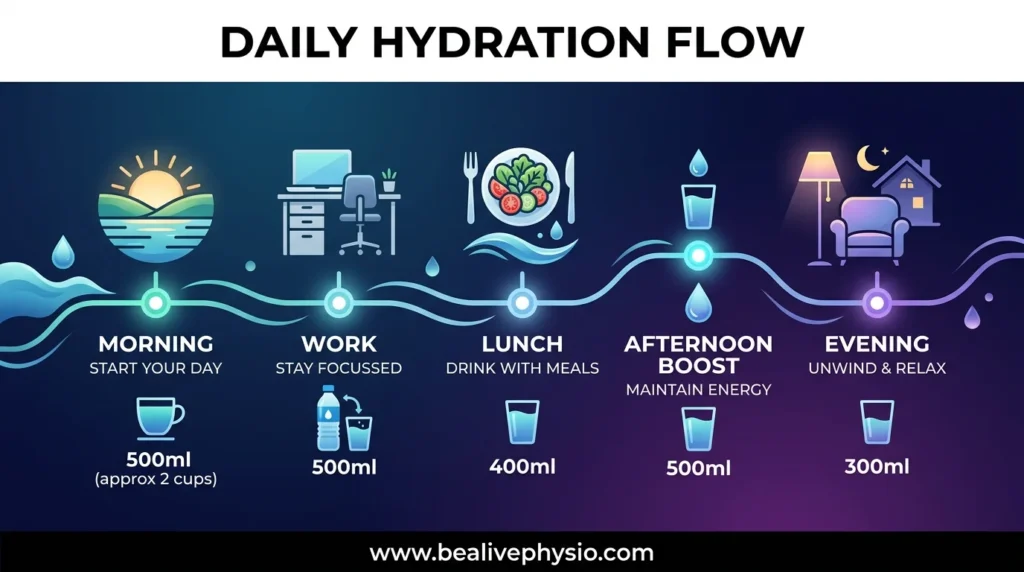
- 7:00 AM — 300 ml
After brushing teeth - 9:00 AM — 200–300 ml
During work setup - 11:00 AM — 200 ml
Light sip before a snack - 12:30 PM — 200 ml
Before lunch - 2:00 PM — 250 ml
Small refill - 4:00 PM — 250 ml
Afternoon slump prevention - 6:00 PM — 200 ml
Before dinner - 8:00 PM — 150 ml
Final sip of the day
Workout days: +500–700 ml
Hot weather: +300 ml
Total: ~1.8–2.2 liters daily
No forcing, no gulping, no stress.
Hydration Mistakes I Made (So You Don’t Have To)
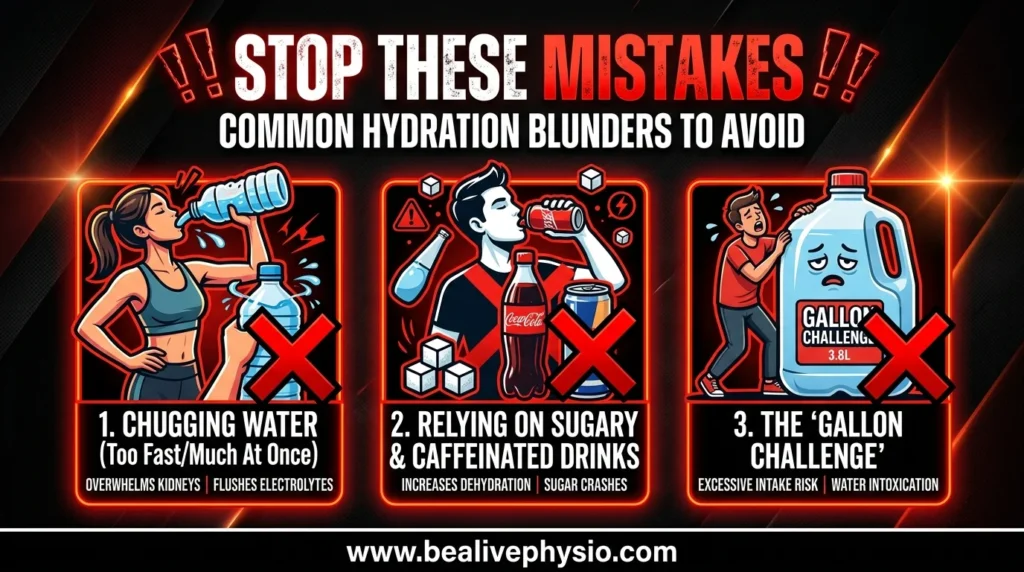
Mistake 1: Chugging water only when thirsty
Thirst is a late signal. By the time you feel it, you’re already behind.
Mistake 2: Drinking huge amounts after workouts
This caused stomach cramps. Smaller, frequent sips are better.
Mistake 3: Using sugary sports drinks
They gave me energy spikes and crashes. Electrolytes ≠ sugar.
Mistake 4: Believing in gallon challenges
Drinking 4 liters a day did nothing but send me to the bathroom 20 times.
Signs You’ve Finally Found Your Ideal Hydration Level
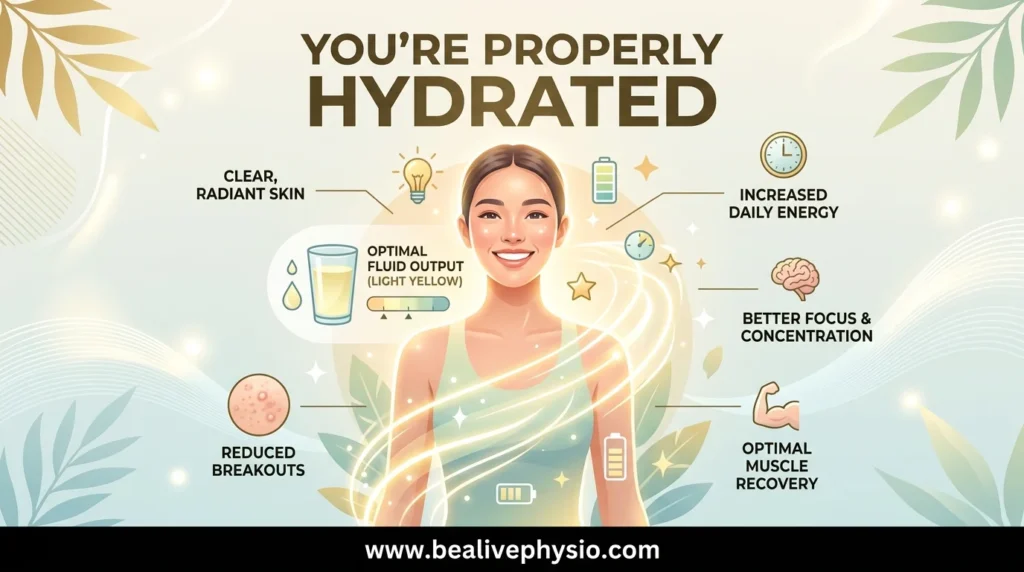
You’ll notice:
- Steadier energy throughout the day
- Fewer cravings
- Better skin hydration
- Clearer thinking
- Normal urine color (light yellow)
- Less headache frequency
And most importantly:
You stop thinking about water all the time.
FAQs — Questions People Ask About Hydration
Not much. Coffee is mildly diuretic but still contributes to hydration.
No. A normal bottle with measurements works better for most people.
Not recommended — too much sugar, which increases dehydration risk.
Light yellow.
Clear = too much water
Dark yellow = not enough
Yes, unless it’s heavily flavored with sodium.
Not always. It’s slower in hot weather and during exercise.
Yes. Overhydration dilutes sodium and can be dangerous.
Final Thoughts
Your ideal water intake isn’t a magic number — it’s a balance between what you eat, where you live, how much you sweat, and what your daily rhythm looks like. Once you figure out your personal hydration pattern, it becomes effortless.
Hydration isn’t about drinking more.
It’s about drinking smart.