
If you’ve ever searched for ways to lose weight or burn fat faster, you’ve probably come across bold claims about “metabolism boosters.” Pills, powders, detox drinks, fat-burning teas — all promising to speed up your metabolism and melt fat with minimal effort.
I’ve tried a fair share of these myself over the years. From green tea extracts to “thermogenic” capsules, I’ve been down that road — and I’ve learned (sometimes the hard way) what’s real and what’s just marketing.
Let’s break it down honestly: what metabolism really is, why most “boosters” don’t work the way you think, and what actually makes a measurable difference.
What Your Metabolism Really Does
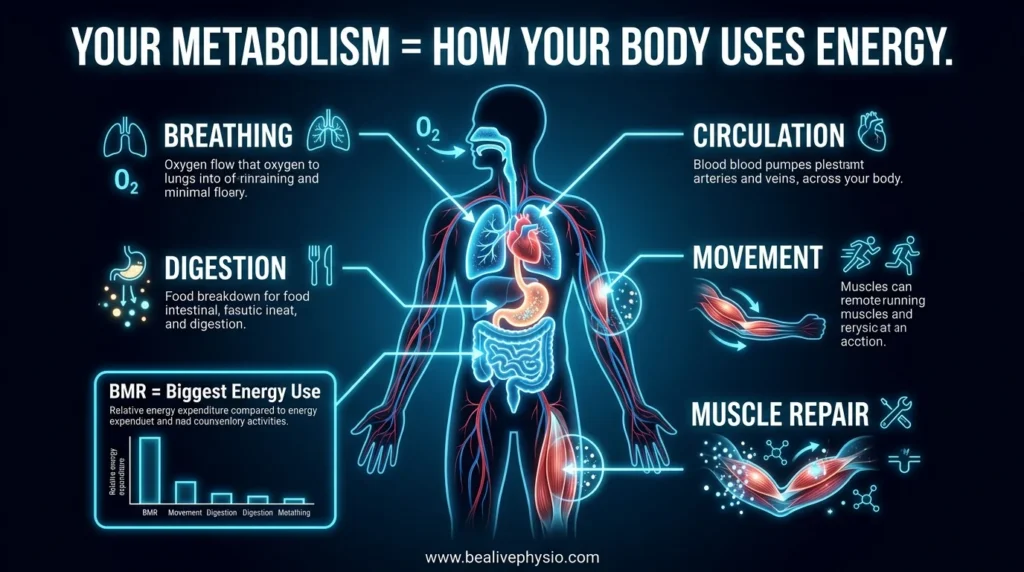
Your metabolism is simply how your body uses energy (calories) to keep you alive and moving. It includes:
- Breathing
- Digestion
- Circulating blood
- Physical activity
- Muscle repair
The biggest portion is your basal metabolic rate (BMR) — the calories your body burns just to function.
Here’s the important part:
You don’t have a “slow” metabolism unless there’s a medical condition involved. Most people just have habits that reduce how many calories they burn.
The Problem With “Metabolism Boosters”
Let’s be direct — most metabolism boosters are overhyped and underwhelming.
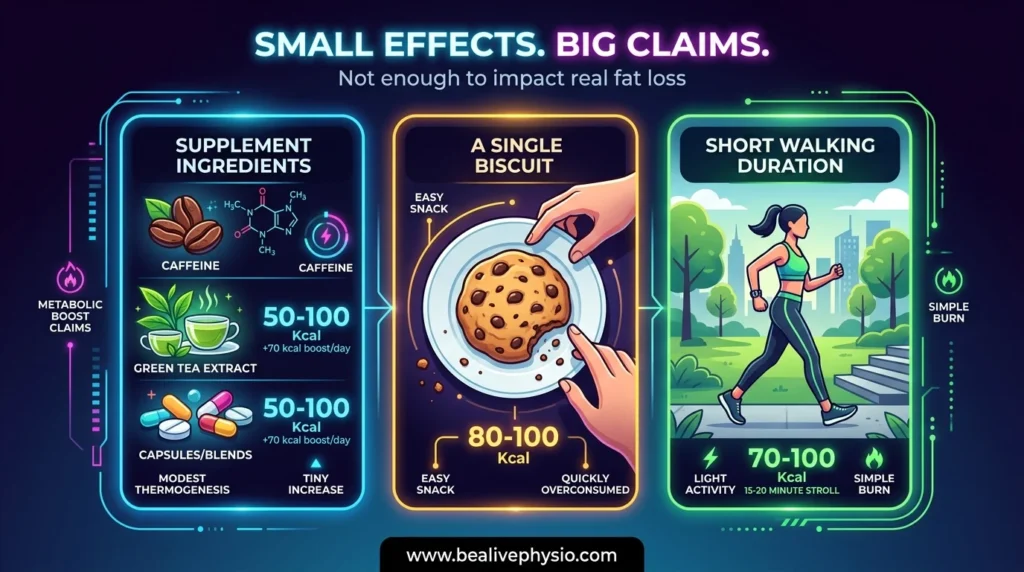
What they usually contain:
- Caffeine
- Green tea extract
- Capsaicin (chili extract)
- L-carnitine
- Random herbal blends
What they actually do:
Some of these ingredients can slightly increase calorie burn… but we’re talking about very small effects.
For example:
- A strong dose of caffeine might increase calorie burn by 50–100 calories per day
- Green tea extract? Often even less
That’s roughly equivalent to:
- One small biscuit
- Or a few minutes of walking
Not exactly the “fat-melting” effect you were promised.
My Experience With Fat Burners (And Why I Stopped)
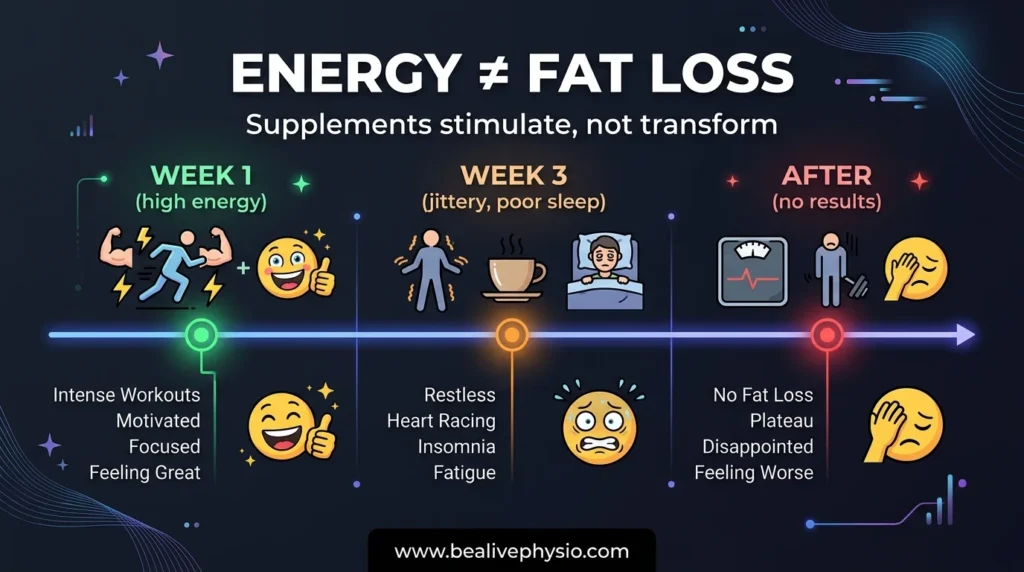
A few years ago, I tried a popular thermogenic supplement while trying to lose weight.
Week 1:
- Felt energetic
- Sweated more during workouts
- Appetite slightly reduced
Week 3:
- Sleep got worse
- Started feeling jittery
- No real difference in weight loss compared to before
After stopping:
- Realized my progress came more from consistent eating habits and workouts, not the pills
That’s when it clicked:
Most boosters just stimulate you, not transform your metabolism.
What Actually Works (Backed by Real Results)
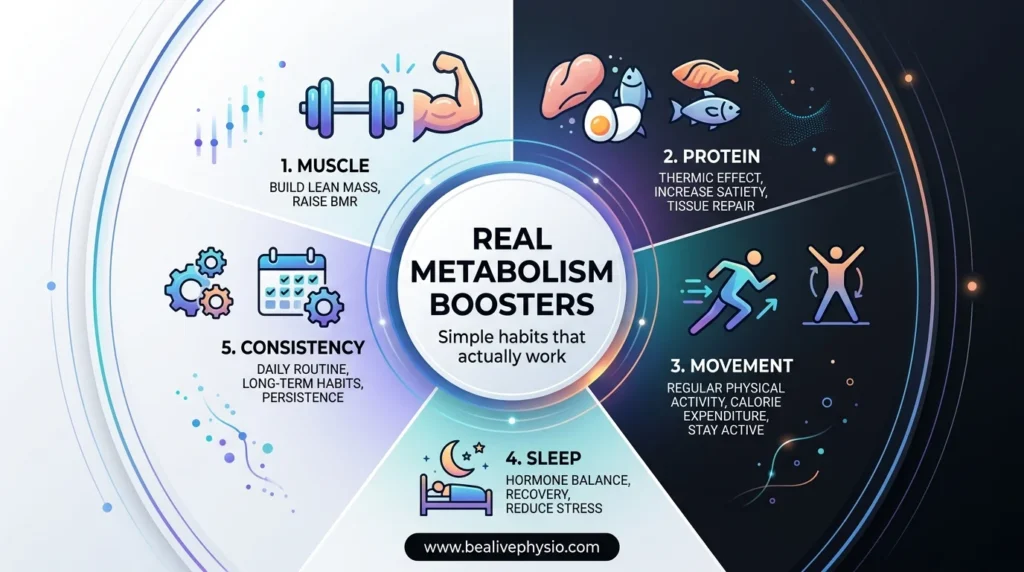
Instead of chasing shortcuts, these are the strategies that consistently make a real difference.
1. Building Muscle (The Most Underrated “Booster”)
Muscle tissue burns more calories than fat — even at rest.
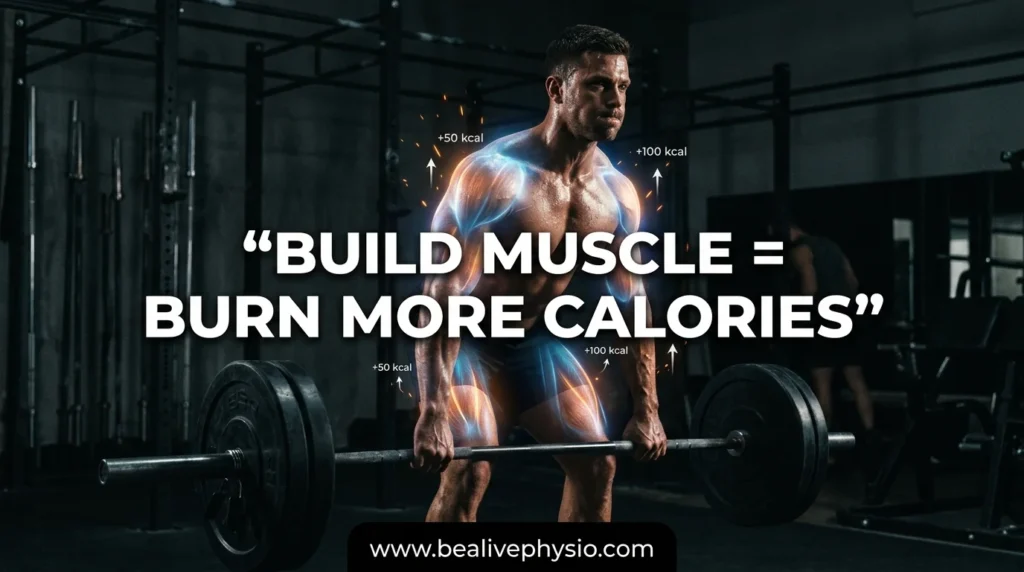
Practical example:
When I started strength training 3–4 times a week:
- My weight didn’t drop fast
- But my body composition improved
- I could eat more without gaining fat
Why it works:
More muscle = higher daily calorie burn
How to start:
- Focus on compound movements:
- Squats
- Push-ups
- Deadlifts
- Rows
- Train 3–4 times per week
- Track progress (reps or weight)
2. Protein Intake (Simple but Powerful)
Protein has a high thermic effect, meaning your body burns more calories digesting it.
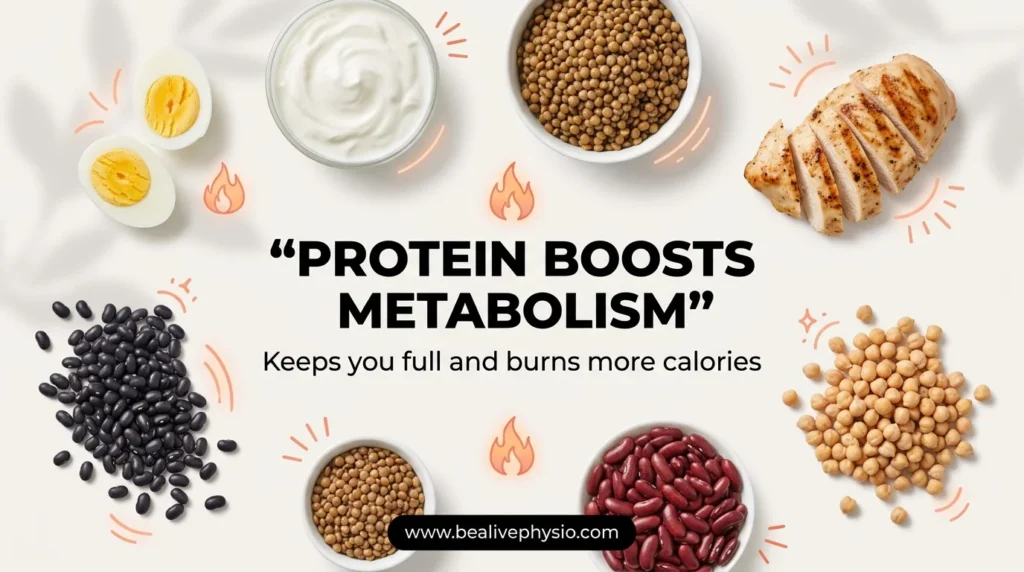
Real-world change:
Switching from a low-protein breakfast (like bread + tea) to:
- Eggs + yogurt
Result:
- Felt fuller longer
- Snacked less
- Energy stayed stable
Easy rule:
Aim for protein in every meal:
- Eggs
- Chicken
- Lentils (daal)
- Yogurt
- Beans
3. Daily Movement (Not Just Gym Time)
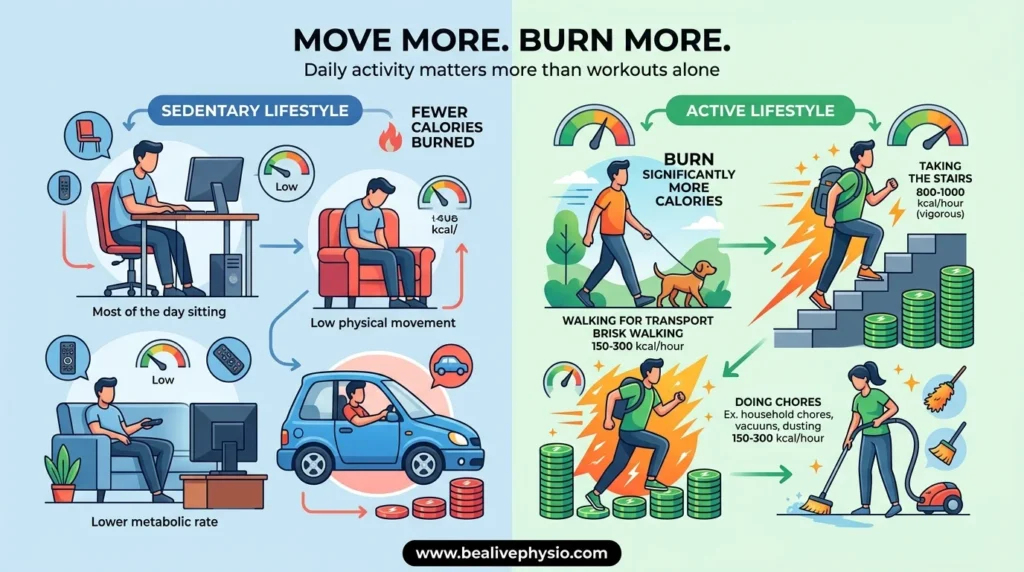
One of the biggest mistakes I made was thinking 1 hour in the gym = enough.
It’s not.
Your daily movement outside workouts matters more than you think.
Example:
Two people both work out:
- Person A sits all day
- Person B walks, moves, and does chores
Person B burns hundreds more calories daily.
Simple upgrades:
- Walk after meals (10–15 minutes)
- Take stairs when possible
- Stand up every hour if you work on a computer
4. Sleep (The Hidden Metabolism Killer)
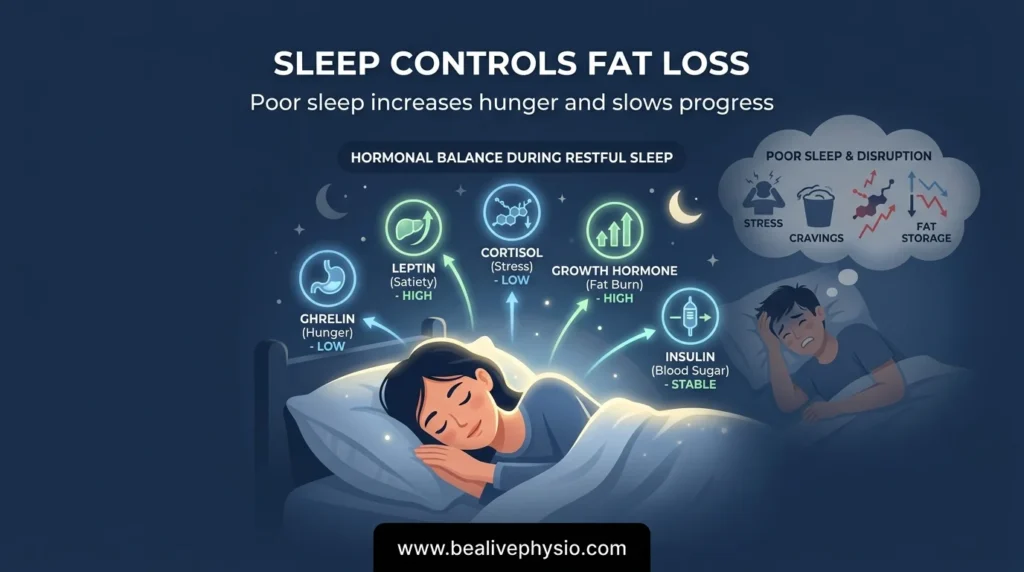
This one surprised me the most.
When I was sleeping 5–6 hours:
- Cravings increased
- Energy dropped
- Weight loss stalled
After fixing sleep (7–8 hours):
- Hunger stabilized
- Better workouts
- More consistent fat loss
Why it matters:
Poor sleep messes with:
- Hunger hormones
- Energy levels
- Fat storage signals
5. Consistent Eating (Not Starving)
Crash dieting is one of the worst things for metabolism.
What I tried before:
- Skipping meals
- Eating very little
Result:
- Felt tired
- Lost muscle
- Regained weight later
What worked better:
- Eating balanced meals regularly
- Not letting myself get extremely hungry
Your body adapts to extreme restriction by slowing down energy use — the opposite of what you want.
6. Caffeine (Useful, But Not Magic)
Caffeine does help — but only slightly.
Smart use:
- Before workouts
- When energy is low
Mistake to avoid:
Relying on it all day
Too much caffeine:
- Disrupts sleep
- Increases stress
- Cancels out benefits
Common Myths That Waste Time
“Detox drinks boost metabolism.”
Your liver already detoxes your body. Most drinks just hydrate you.
“Eating every 2 hours speeds metabolism.”
Meal timing matters less than total daily intake.
“Spicy food burns fat.”
It may increase calorie burn slightly, but not enough to matter long-term.
“Supplements are necessary.”
They’re optional at best — not essential.
A Simple Daily Routine That Actually Works
If you want something practical, here’s what has worked consistently for me and many others:
Morning:
- Protein-based breakfast (eggs, yogurt, or lentils)
- Light movement (walk or stretch)
Afternoon:
- Balanced meal (protein + carbs + vegetables)
- Stay active (don’t sit for long hours)
Evening:
- Strength training (3–4 days/week)
- Walk after dinner
Night:
- Avoid heavy caffeine late
- Aim for 7–8 hours of sleep
Tools That Help (Without Overcomplicating Things)
You don’t need fancy gadgets, but a few basics help:
- Step counter (phone or smartwatch) → keeps you aware of movement
- Simple food tracking app → helps you understand eating habits
- Basic weighing scale → track trends, not daily fluctuations
The goal is awareness, not obsession.
The Real Truth (No Hype)
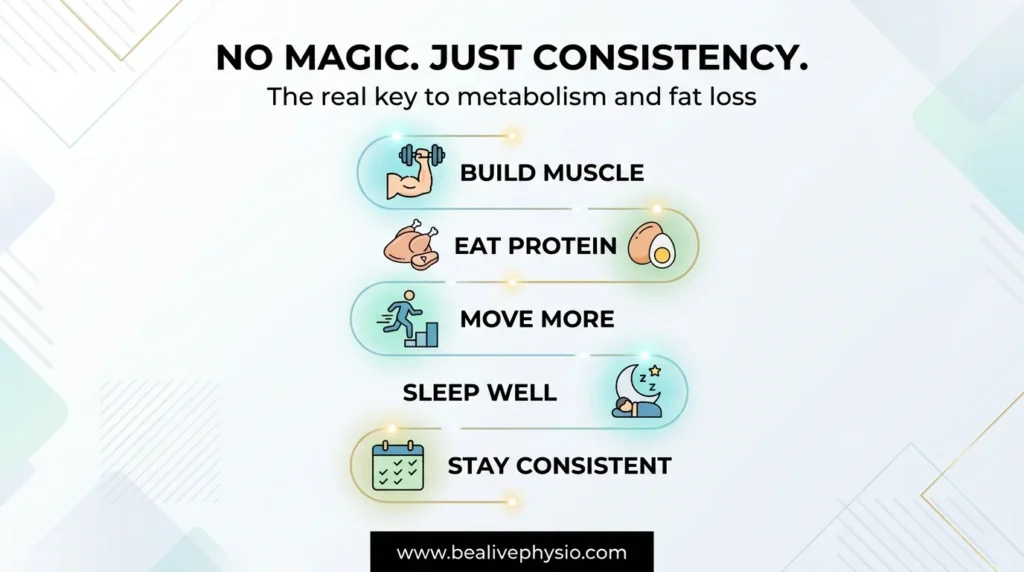
No pill, tea, or shortcut will dramatically boost your metabolism.
What actually works is less exciting, but far more reliable:
- Build muscle
- Eat enough protein
- Move more throughout the day
- Sleep properly
- Stay consistent
It’s not about doing something extreme — it’s about doing the basics well, every day.
FAQs
Only slightly, if at all. Most effects are too small to make a real difference compared to diet and activity.
There’s no instant method. The most effective approach is building muscle and staying physically active daily.
Some are safe in moderation, but many contain high caffeine or unregulated ingredients. Always be cautious and avoid long-term reliance.
Drinking water helps overall health and may slightly increase calorie burn, but it’s not a major fat-loss tool.
Yes, but mostly because people lose muscle and move less over time — not just because of age itself.
Both help, but weight training has a longer-lasting effect because it builds muscle