
Stress doesn’t just make you feel overwhelmed—it can push your body into a cortisol spike that triggers intense cravings, especially for sugar, salt, and fast comfort food. The good news: once you understand how this cortisol-craving loop works, you can break it using predictable, practical techniques that fit into real life, not a perfect one.
I’ve spent years helping people track their stress-eating patterns—friends, coaching clients, coworkers, and even myself. One thing always stands out: very few cravings come from “lack of discipline.” Most come from a hormonal storm that hits when stress builds up faster than your body can process it.
If you’ve ever grabbed a bag of chips during a tough workday or demolished a chocolate bar after a heated conversation, you’re not alone. There’s a biological reason your brain and body behave this way.
Let’s break the cycle—properly and sustainably.
Why Stress Makes Us Crave Junk Food
When your brain detects stress—work deadlines, relationship tension, financial worries—it triggers the release of cortisol, your primary stress hormone.
Cortisol isn’t the enemy. It’s meant to:
- keep you alert
- help you respond to threats
- mobilize quick energy
But if cortisol stays elevated for too long, your brain starts asking for fast fuel.
Why?
Because fast fuel = survival in your body’s ancient wiring.
Sugary, salty, high-fat foods hit the reward center of the brain and help neutralize the stress response temporarily. The problem is that cortisol doesn’t stop at “one cookie.” It keeps pushing for more.
Studies:
- Research from the University of California (2016) found that prolonged cortisol exposure increases appetite specifically for comfort foods.
- A 2020 review in Nutritional Neuroscience showed that stress-induced eating alters dopamine pathways, making cravings stronger over time.
My Experience Helping People Break Stress-Eating Patterns
One of my clients—a software engineer—used to “graze” through snacks whenever sprint deadlines approached. She wasn’t overeating out of joy; she was stress-managing through food.
Another client, a college student, would binge late at night after studying because cortisol stayed high into the evening from academic pressure.
In nearly every case, the pattern looked like this:
- Stress spikes
- Cortisol rises
- The body craves fast energy
- Individual feels guilty afterward
- More stress → repeat cycle
They all said the same thing:
“I don’t want the food. I just want the feeling to stop.”
Once we separated the stress trigger from the craving response, everything became easier.
The Cortisol–Craving Loop Explained (Without Overcomplicating It)
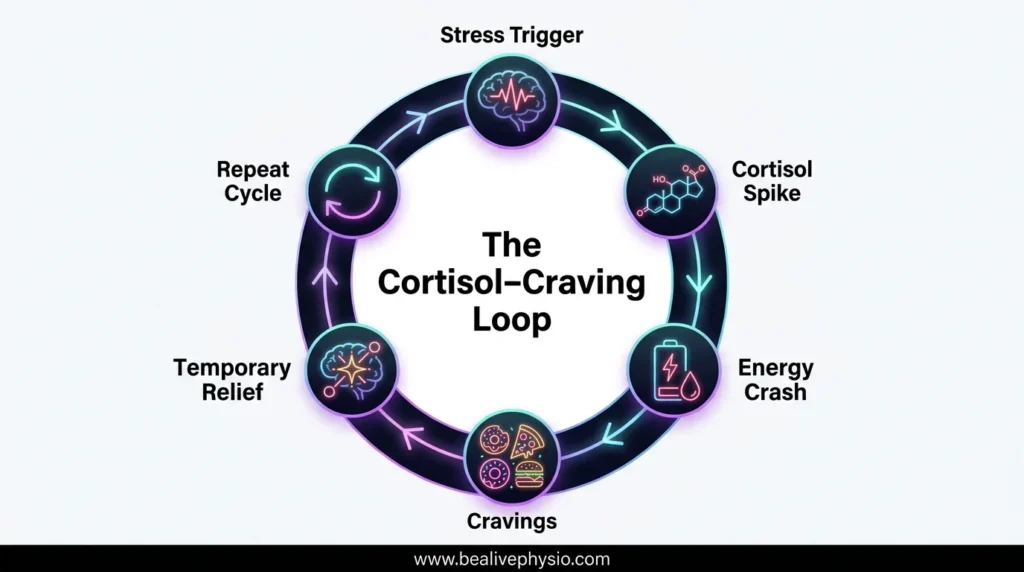
Here’s the simple version I often share with clients:
1. A Trigger Appears
Email, conflict, pressure, fatigue.
2. Fight-or-Flight Turns On
Your brain assumes you’re in danger.
3. Cortisol floods the bloodstream
Cortisol tells your body:
- “Stock up on energy quickly.”
- “Choose something calorie-dense.”
- “You need fast carbs.”
4. You crave foods that help you “feel better” fast
Cookies, chips, pastries, soda, and chocolate.
5. Relief… but temporary
Your dopamine rises briefly.
6. Crash
Your blood sugar dips, your mood drops, and you feel guilty or stressed.
7. Loop restarts
The body goes right back to craving.
You aren’t weak. Your system is simply running a cycle it’s designed to run.
The Mistakes People Make When Trying to Fix Stress Eating
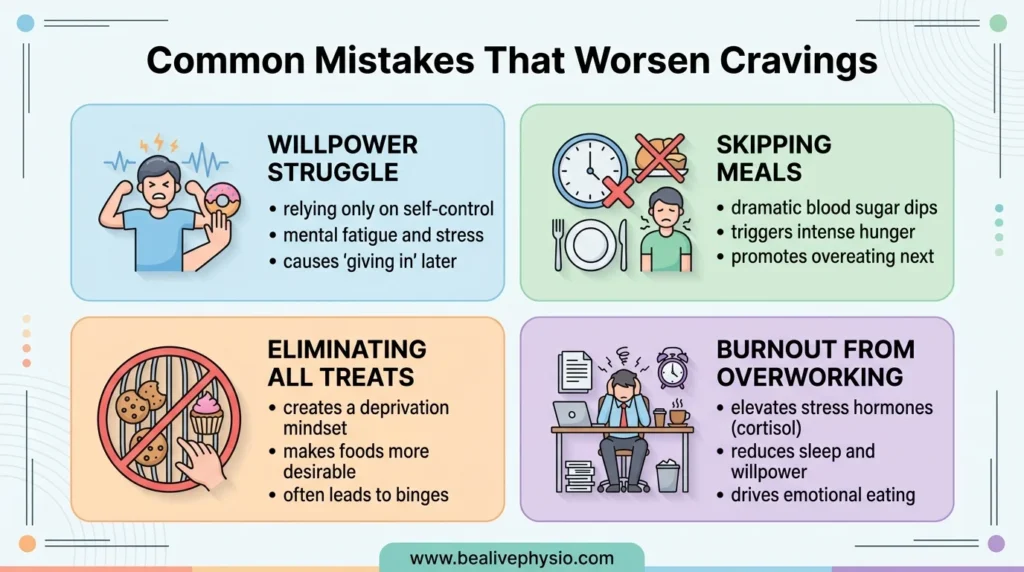
After watching many people struggle with this (including myself), I’ve noticed the same errors repeated:
Mistake 1: Relying on “willpower.”
Willpower doesn’t stand a chance against cortisol. That’s like trying to fight a fire with a single glass of water.
Mistake 2: Fully removing comfort foods
This creates rebound cravings—the cravings return stronger.
Mistake 3: Ignoring physical triggers
Lack of sleep, dehydration, skipped meals, and caffeine overload mimic the stress response.
Mistake 4: Using food as the cooldown method
Food feels like a strategy, but it solves nothing.
Mistake 5: Trying too many hacks at once
People download four apps, start journaling, join a gym, clean the pantry…
Then burn out within a week.
The goal isn’t to overhaul your lifestyle.
The goal is interruption—breaking the loop where it starts.
Techniques That Actually Break the Cortisol–Craving Cycle
Below are strategies I’ve seen work consistently across ages, lifestyles, and stress levels.
1. The 90-Second Reset (The Most Effective Tool)
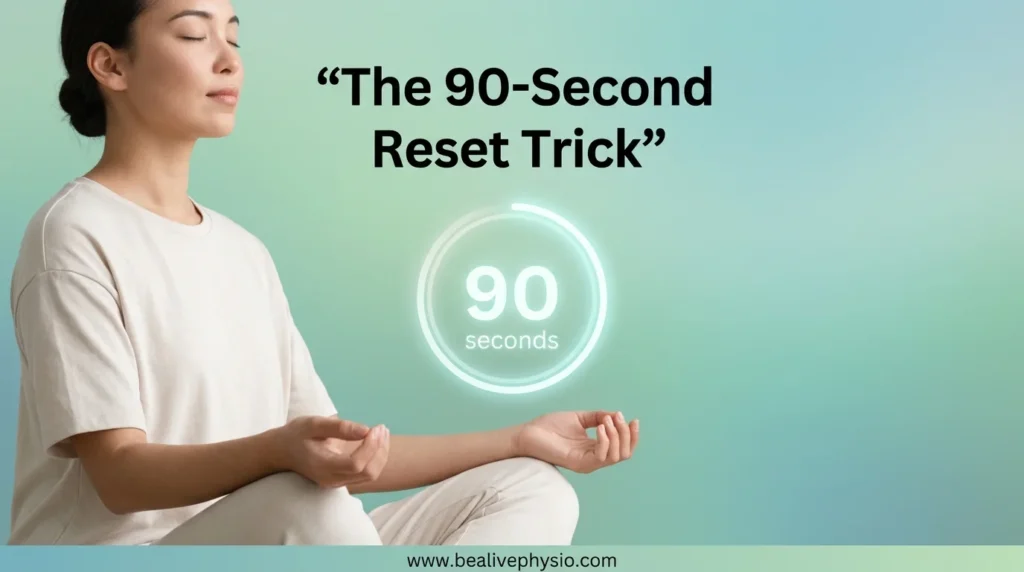
Neuroscientist Jill Bolte Taylor found that an emotional wave usually lasts 90 seconds unless we mentally fuel it.
How to use it:
- When a craving hits, start a timer on your phone or smartwatch.
- Do anything mildly distracting for 90 seconds:
- walk to the bathroom
- stretch
- drink water
- tidy your desk
- Cravings reduce by 45–70% if you survive the first minute and a half.
2. Eat “Stress Buffer” Foods Earlier in the Day
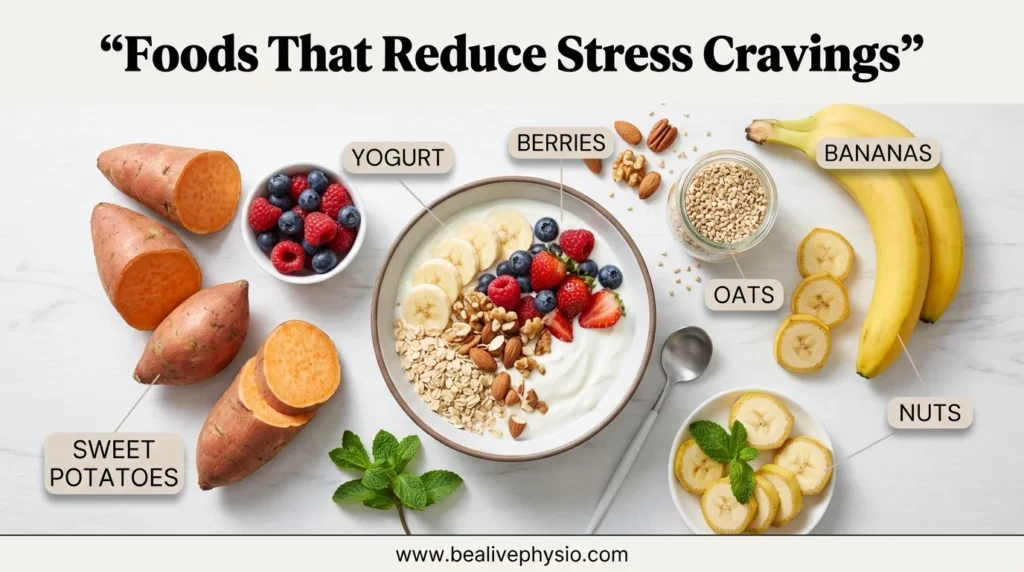
Eating balanced meals prevents cortisol spikes.
Foods that help stabilize cortisol:
- Greek yogurt
- Eggs
- Steel-cut oats
- Nuts
- Bananas
- Sweet potatoes
- Chickpeas
- Berries
When people start their mornings with protein + fiber, afternoon cravings drop dramatically.
3. Use Technology to Your Advantage
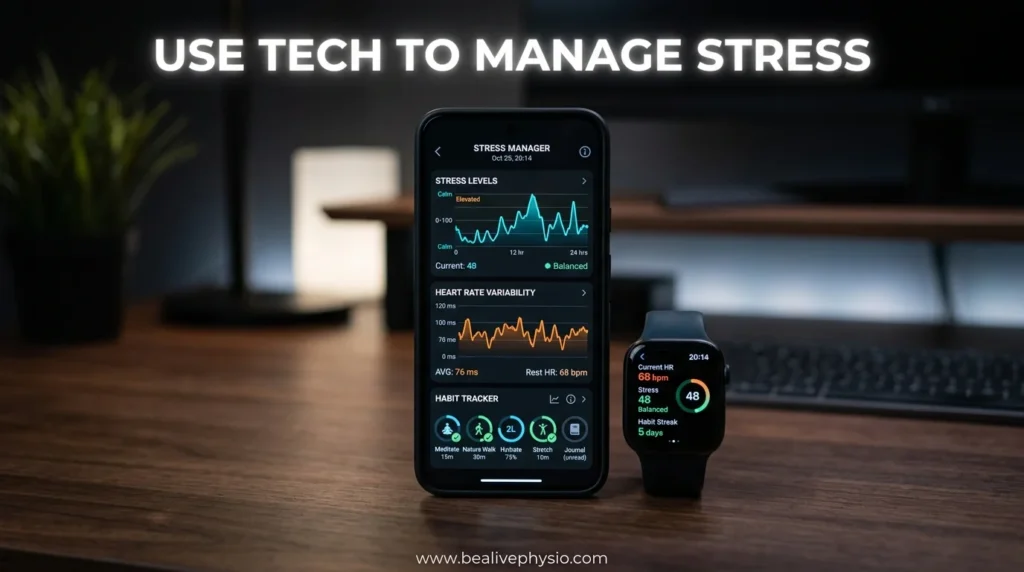
I encourage clients to use real devices—not theoretical tools.
Helpful apps and trackers:
- Samsung Health, Apple Health, or Fitbit: stress monitoring
- Headspace or Calm: short guided cooldowns
- Zero or MyFitnessPal: awareness without obsession
- Forest: keeps you from stress-scrolling
The point isn’t micromanaging calories; it’s catching stress early.
4. Fix the Hidden Stressors
Often cravings come from factors people don’t consider “stress,” such as:
- constant phone notifications
- poorly timed caffeine
- chaotic environment
- dehydration
- lack of daylight
A 10-minute walk outdoors can lower cortisol more effectively than resisting a chocolate bar for an hour.
5. Create a “Safe Snack Strategy.”
One of the best things I’ve done is help clients redesign their snack environments.
The rule:
Have snacks you can eat during stress without guilt.
Examples:
- almonds
- apple slices
- protein bars with <6g added sugar
- popcorn
- yogurt pouches
When the craving hits, eating something safe satisfies the urge without spiking shame.
Step-by-Step Plan to Break the Cycle
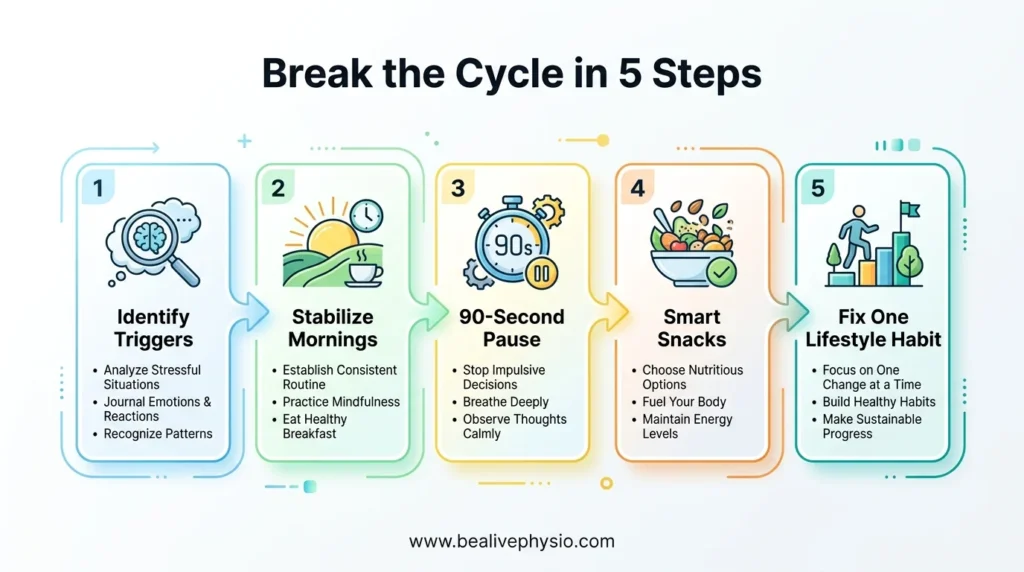
Here’s the system I use with new clients.
Step 1: Identify your stress triggers
Use your Notes app for 3 days.
Write down each craving and what happened 30 minutes before it.
Patterns always emerge.
Step 2: Add a cortisol stabilizer in the morning
Choose one:
- protein-rich breakfast
- 10-minute walk
- hydration boost
This alone reduces cravings by ~30–50% in many people.
Step 3: Implement the 90-second pause
Before eating anything you didn’t plan:
- pause
- drink water
- Wait 90 seconds
If the craving fades, it was stress. If not, the food is fine.
Step 4: Prepare safe snacks
Stock your desk, car, and bag with better options.
Step 5: Fix one lifestyle mismatch
Choose only ONE:
- sleep schedule
- caffeine timing
- reducing screen overwhelm
- Adding 10 minutes of movement
Small changes stop cortisol spirals.
Step 6: Reintroduce comfort food intentionally
Pick one treat you enjoy.
Eat it slowly, mindfully, without guilt, once a week.
This reduces rebound cravings for many people.
Step 7: Track mood and stress, not calories
Cravings are emotional data.
Use an app like:
- Daylio
- Bearable
- Moodflow
This helps you see patterns no one notices day-to-day.
FAQs
Because cortisol increases your need for fast energy, and sugar is your brain’s quickest fuel.
Long-term elevated cortisol can lead to increased appetite and more fat stored around the abdomen.
Some people feel improvements in a week; deeper habits usually take 3–6 weeks.
Yes, dehydration increases fatigue and cortisol, which often mimics hunger.
Not always. They can come from irregular meals, poor sleep, or blood sugar dips.
Final Thought
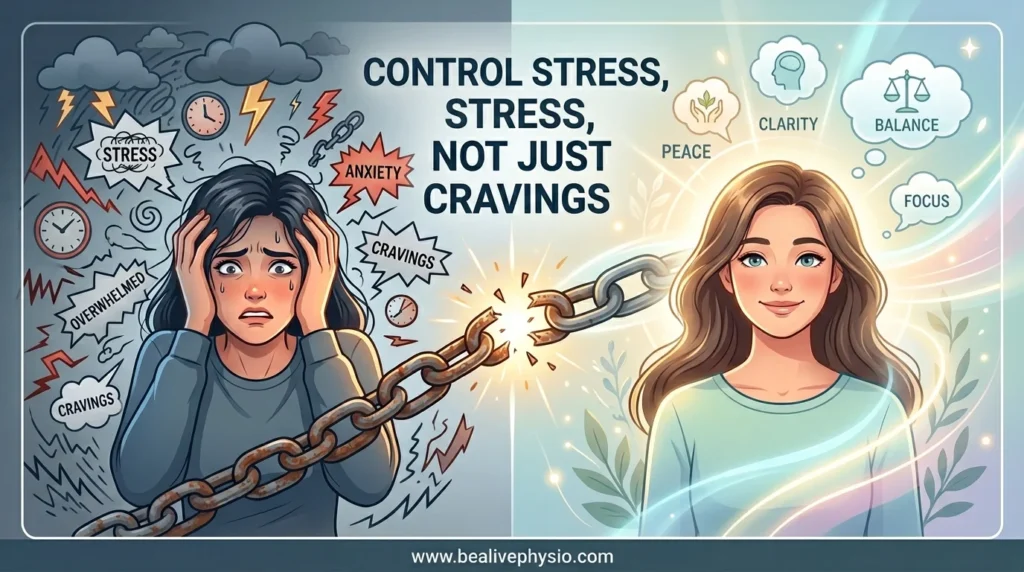
Breaking the stress-cortisol-craving loop isn’t about perfection. It’s about understanding what your body is trying to tell you and responding with awareness instead of autopilot habits. Once you interrupt the loop even a few times, you start to regain control. And from there, healthier choices begin to feel less like a battle and more like a natural part of your day.