
Sleep directly affects fat loss by regulating hunger hormones, metabolism, and recovery. Poor sleep increases cravings, slows calorie burning, and raises stress hormones, making it harder to lose weight—even with proper diet and exercise.
Why Sleep Matters More Than You Think
Most people trying to lose fat focus on two things: eating less and moving more. That’s what I did for years. I tracked calories using apps like MyFitnessPal, followed structured workout plans, and even experimented with intermittent fasting.
But nothing really worked long-term.
The missing piece? Sleep.
Once I started consistently getting 7–8 hours of quality sleep, fat loss became noticeably easier. Not effortless—but finally predictable.
This isn’t just personal experience. Research backs it up.
- A study published in Annals of Internal Medicine found that sleep-deprived individuals lost 55% less fat compared to well-rested participants—even when calories were the same.
- Another study from the University of Chicago showed that poor sleep increases hunger hormones significantly.
Sleep isn’t just recovery—it’s part of the fat loss equation.
The Science Behind Sleep and Fat Loss
1. Hormones Get Completely Disrupted
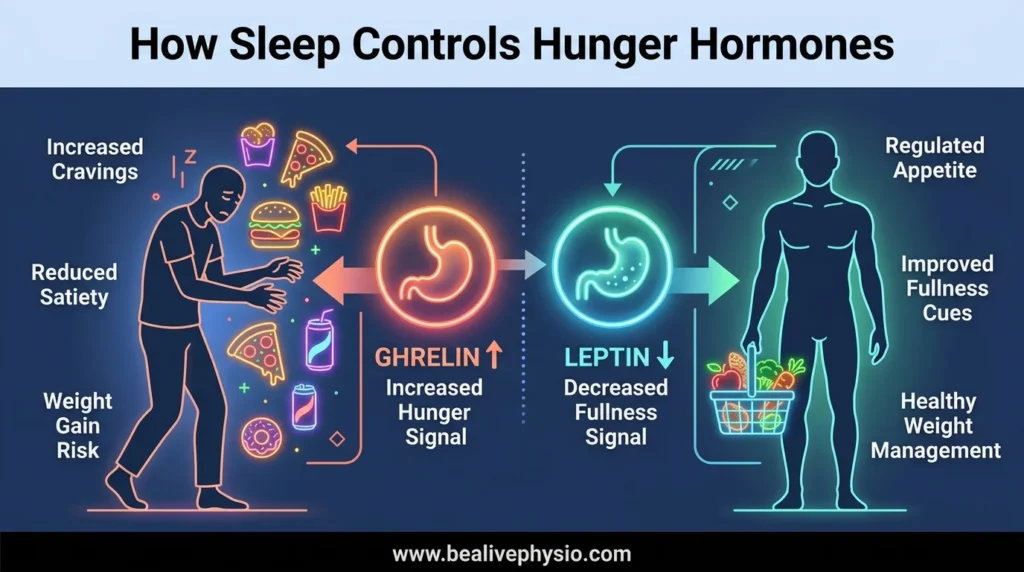
When you don’t sleep enough, your body behaves like you’re starving.
- Ghrelin (hunger hormone) goes up → you feel hungrier
- Leptin (fullness hormone) drops → you don’t feel satisfied
- Cortisol (stress hormone) rises → fat storage increases, especially around the belly
I’ve personally noticed this. After a bad night of sleep, I crave junk food—especially sugary snacks. It’s not a lack of discipline; it’s biology.
2. Your Metabolism Slows Down
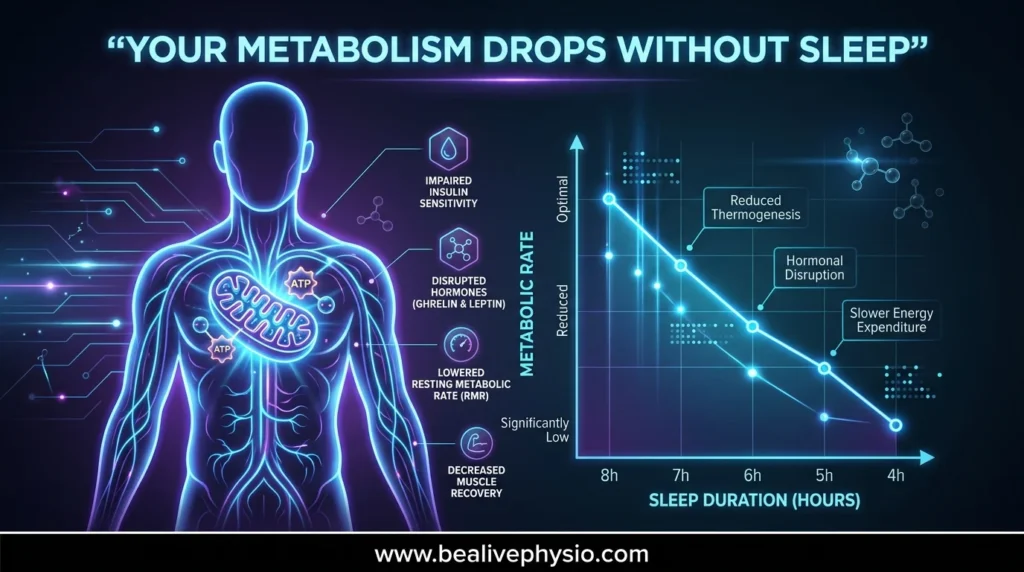
Sleep deprivation signals your body to conserve energy.
That means:
- Fewer calories are burned at rest
- Lower workout performance
- Reduced muscle recovery
If you’re lifting weights or doing cardio while sleep-deprived, you’re basically working against your own body.
3. Fat Storage Becomes Easier
Higher cortisol + poor insulin sensitivity = easier fat storage.
This is why people who sleep poorly often gain fat even without eating significantly more.
Real-life Example: When Diet and Gym Aren’t Enough
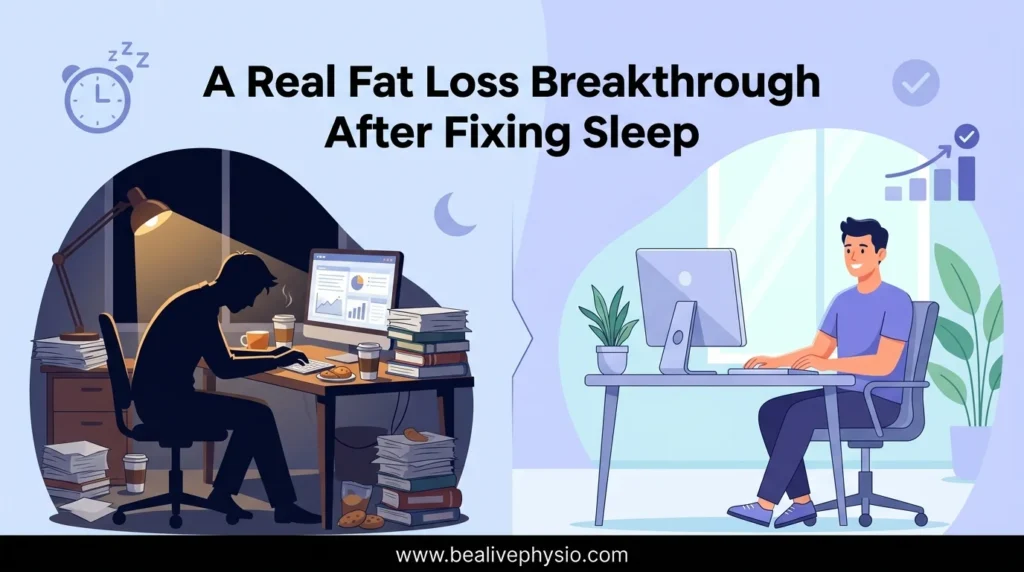
A friend of mine was doing everything right:
- 5 days a week at the gym
- High-protein diet
- Calorie tracking
But progress stalled for months.
The issue? He was sleeping 4–5 hours per night due to late-night scrolling and work stress.
Once he fixed his sleep:
- Lost 3–4 kg in 6 weeks
- Energy levels improved
- Cravings dropped significantly
Nothing else changed.
Common Mistakes That Kill Fat Loss Progress
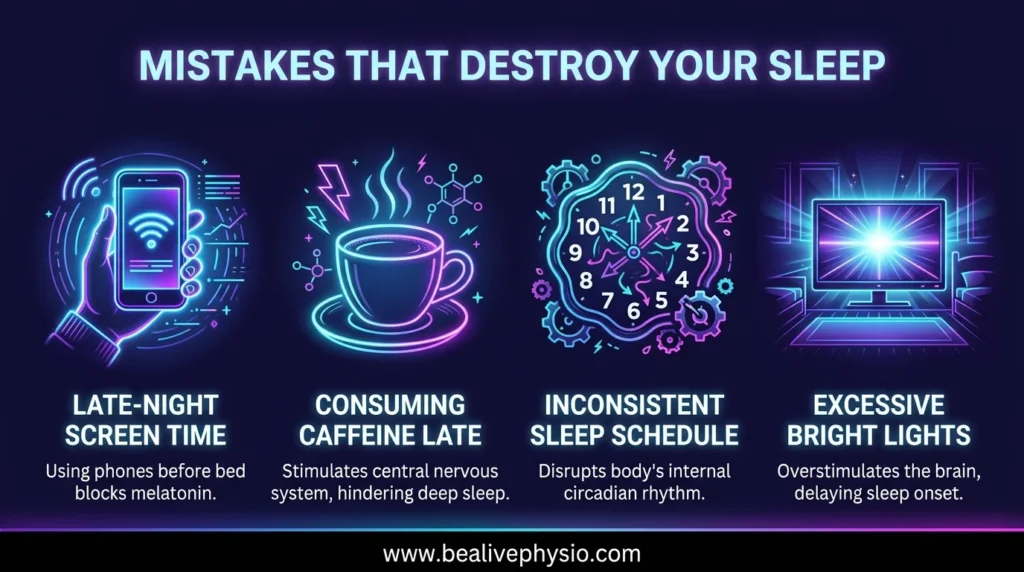
❌ 1. Treating Sleep as Optional
People sacrifice sleep to wake up early for workouts. Ironically, this often slows progress.
❌ 2. Late-Night Screen Exposure
Phones, Netflix, and laptops delay melatonin production.
❌ 3. Overusing Caffeine
Coffee after 3–4 PM can ruin sleep quality—even if you fall asleep easily.
❌ 4. Irregular Sleep Schedule
Sleeping at 2 AM one day and 10 PM the next confuses your body clock.
Signs Your Sleep Is Blocking Your Results
- You feel hungry even after meals
- You crave sugar or fast food frequently
- Your weight fluctuates without reason
- You feel tired despite eating well
- Gym performance is inconsistent
If this sounds familiar, sleep might be the bottleneck.
Step-by-Step: How to Fix Sleep for Better Fat Loss
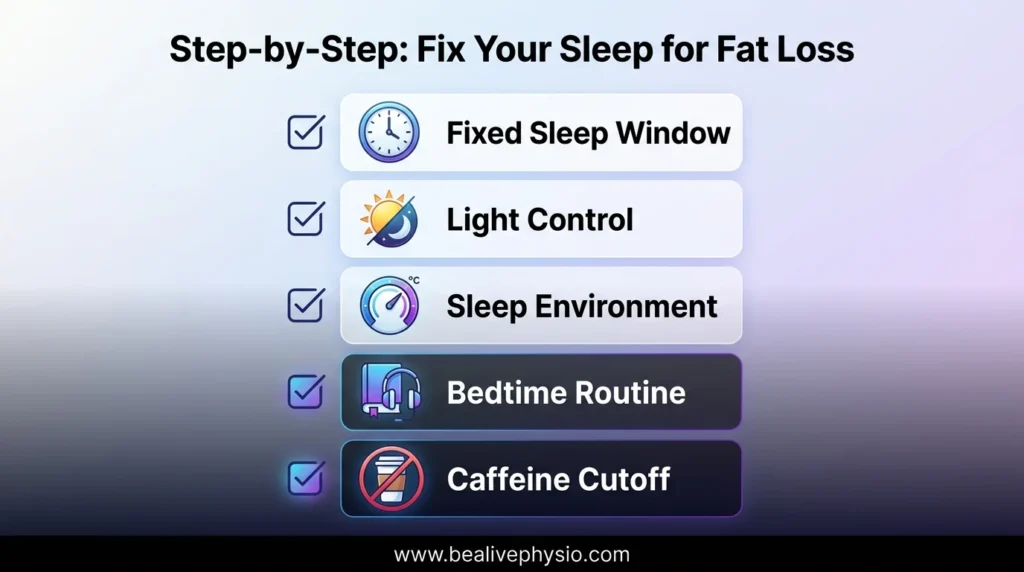
Step 1: Set a Fixed Sleep Window
Go to bed and wake up at the same time daily—even on weekends.
Example:
- Sleep: 11 PM
- Wake: 7 AM
Consistency trains your body.
Step 2: Control Light Exposure
- Morning: Get sunlight within 30 minutes of waking
- Night: Reduce screen exposure 1 hour before bed
If needed, use:
- Blue light filter apps
- Night mode on devices
Step 3: Optimize Your Sleep Environment
Make your room:
- Dark (blackout curtains help)
- Cool (18–22°C works best)
- Quiet
I personally noticed better sleep just by lowering the room temperature.
Step 4: Fix Your Night Routine
Instead of scrolling:
- Read a book
- Stretch lightly
- Listen to calm music
This signals your brain to wind down.
Step 5: Manage Caffeine Smartly
- Avoid caffeine after 2–3 PM
- Watch hidden sources (energy drinks, pre-workouts)
Step 6: Track Your Sleep
Use tools like:
- Apple Watch
- Fitbit
- Oura Ring
Tracking helps you identify patterns and improve gradually.
Tools and Devices That Actually Help
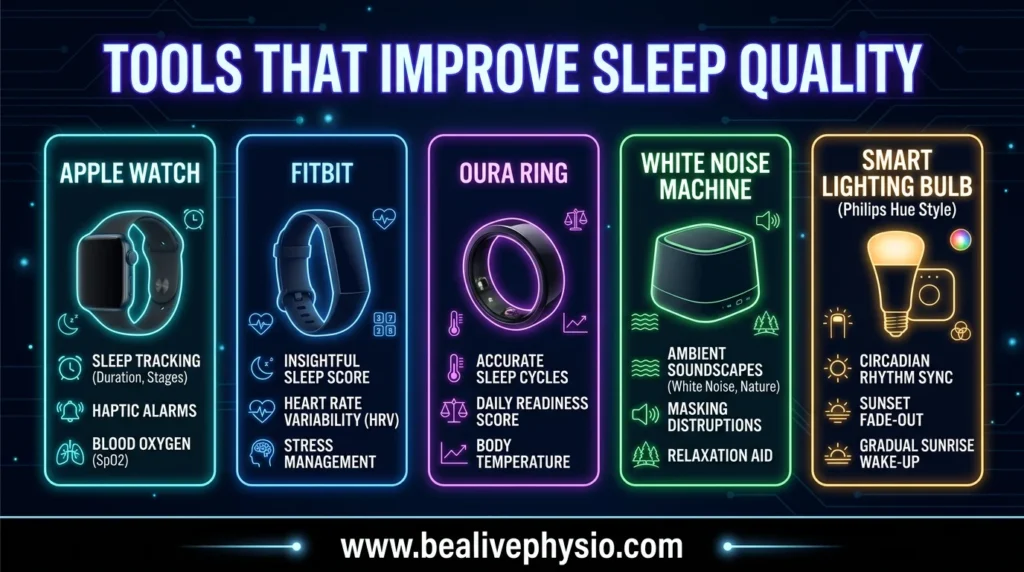
These aren’t magic solutions, but they support better habits:
- Sleep tracking apps (Sleep Cycle, Whoop)
- Smart lighting (Philips Hue for dimming lights at night)
- White noise machines for better sleep consistency
- Mattress quality (often overlooked but critical)
I upgraded my mattress once, and it made a bigger difference than any supplement.
Nutrition and Sleep Timing Connection
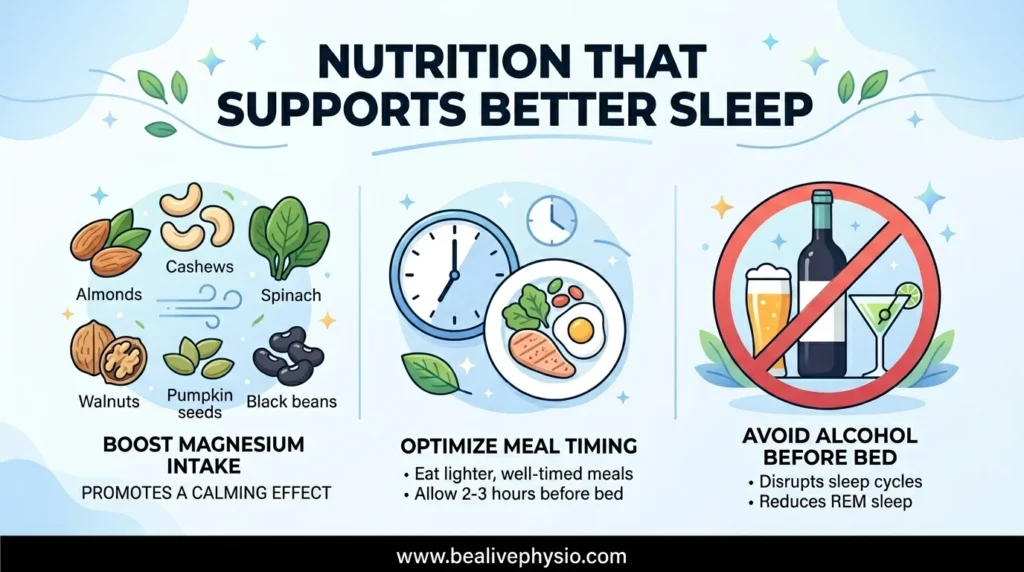
What you eat affects how you sleep.
Helpful habits:
- Avoid heavy meals right before bed
- Include magnesium-rich foods (nuts, spinach)
- Limit alcohol—it disrupts deep sleep
A simple change that worked for me:
Eating dinner 2–3 hours before bed improved sleep quality noticeably.
FAQs
You might lose some weight short-term, but fat loss will be slower and harder to sustain due to hormonal imbalance and increased cravings.
7–9 hours per night is optimal for most adults.
Not directly, but proper sleep improves hormone balance and metabolism, which supports fat loss.
Sleep deprivation increases ghrelin and reduces leptin, making you feel hungrier and less satisfied.
Short naps (20–30 minutes) can help with recovery but shouldn’t replace proper nighttime sleep.
Final Thoughts

Fat loss isn’t just about discipline—it’s about alignment.
You can eat clean, train hard, and still struggle if your sleep is off. Once sleep improves, everything else starts working better: hunger, energy, consistency, and recovery.
Most people don’t need a more aggressive diet. They need better recovery.
Sleep isn’t a bonus—it’s a foundation.