
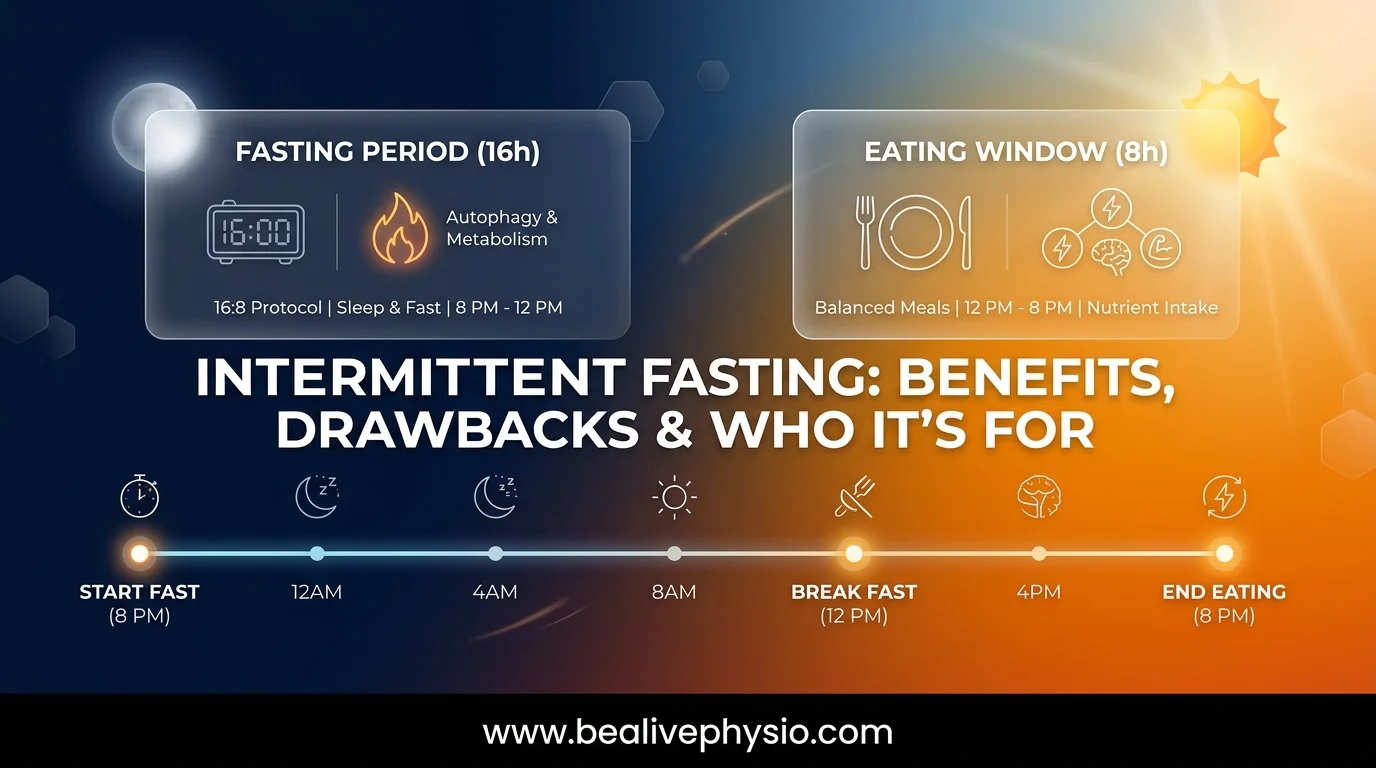
Intermittent fasting (IF) isn’t just a weight-loss trend—it’s a simple eating pattern that many people use to improve energy, reduce cravings, and gain better control over their daily routine. But it’s not perfect for everyone. After trying several fasting methods myself and coaching others through their first few weeks, I’ve seen both the surprisingly positive results and the common mistakes that can make IF feel impossible.
This guide breaks down what actually happens during fasting, who benefits most, who should skip it, and how to start without feeling miserable.
What Intermittent Fasting Actually Is (From Real Experience)
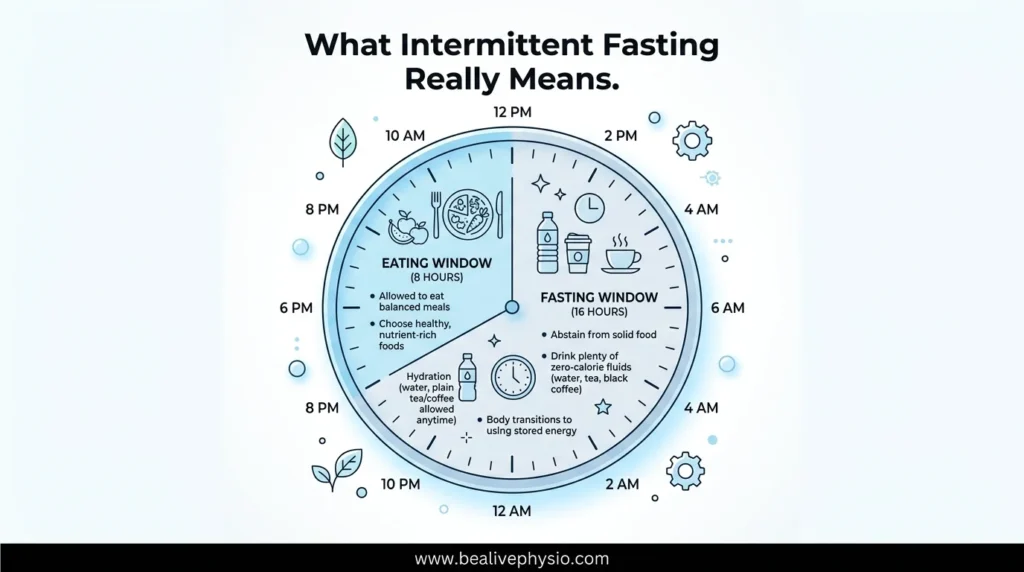
Intermittent fasting simply means you choose when to eat and when not to eat.
You’re not counting calories on an app all day or measuring every bite. The structure itself does half the work.
When I first tested IF, I didn’t change what I ate—I just moved breakfast to noon. I expected to feel tired and foggy. Instead, the first change I noticed was fewer random cravings. The “breakfast hunger” I always assumed was biological turned out to be routine.
For many, IF is easier than traditional dieting because it reduces decisions. You just have a window where eating is allowed, and you stick to it.
Why People Start IF: The Practical Benefits
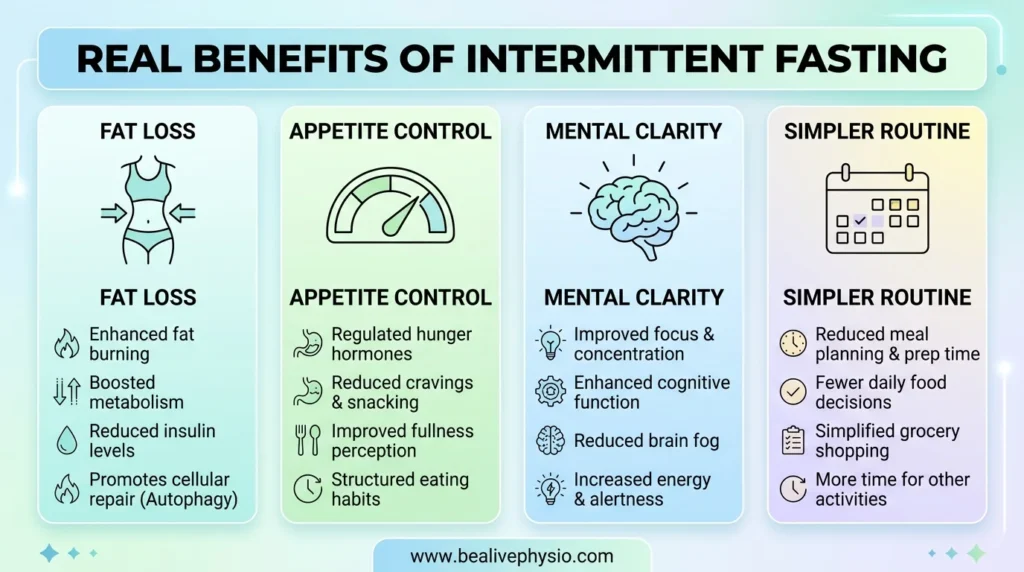
Most blogs talk about IF in abstract terms. Here’s what people actually feel day to day.
1. Fat Loss Without Constant Tracking
One of the reasons IF works for weight loss is simple:
Less time eating usually leads to less overall intake—without needing strict discipline.
Real-world example:
When I shifted to a 16:8 schedule, I naturally cut out late-night snacking. That alone removed hundreds of calories from my week.
Supporting research:
- A 2020 study in JAMA Internal Medicine found that time-restricted eating led to modest weight loss for adults with overweight (JAMA Intern Med. 2020;180(11):1491–1499).
- A 2019 review in The New England Journal of Medicine found that intermittent fasting improved metabolic markers such as glucose control and inflammation (NEJM 2019;381:2541–2551).
2. Better Appetite Control
After the first week, hunger spikes often drop.
You train your body to expect food at certain times.
For me, the biggest shift was losing the “constant grazing” habit. By day 10, I noticed I could work through the morning without thinking about food.
3. Mental Clarity and Better Focus
This one surprised me. On fasting mornings, my brain felt noticeably sharper.
A lot of readers have told me the same—especially people in tech who like deep-work sessions.
You’re not digesting heavy meals early in the day, so energy stays stable.
4. Simpler Daily Routine
Instead of planning 3–5 meals a day, you only plan 1–2.
This saves:
- Time
- Money
- Stress
I used to prep breakfast every morning. Now I grab water, coffee, and get to work.
Drawbacks Most Beginners Don’t Expect
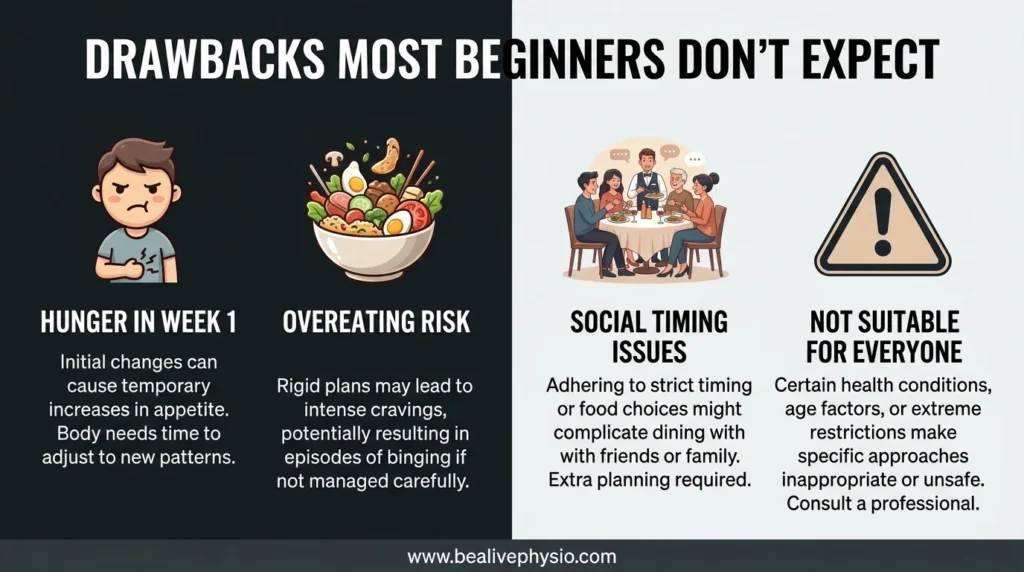
Not everything about IF is easy. Here are the real downsides I’ve faced or watched others struggle with.
1. The First Week Can Be Rough
Your body will probably protest.
Symptoms may include:
- Morning hunger pangs
- Mild headaches
- Low energy
- Irritability
Hydration helps more than people think.
Most beginners confuse thirst for hunger.
2. Social Events Get Tricky
Dinners start late. Friends want brunch. Family gatherings have dessert.
You won’t want to be the person explaining intermittent fasting every time.
My solution:
I shift my eating window on event days. IF should fit your life—not the other way around.
3. Overeating During the Eating Window
This is the #1 mistake.
A lot of beginners get so hungry during the first few days that they overeat once the eating window opens.
This cancels out the benefit.
Tip: Eat high-protein meals early in the window.
Protein makes fasting easier later.
4. Not Ideal for Everyone
We’ll cover this next, but IF isn’t safe for certain conditions or lifestyles.
Who Intermittent Fasting Is For (And Who Should Avoid It)
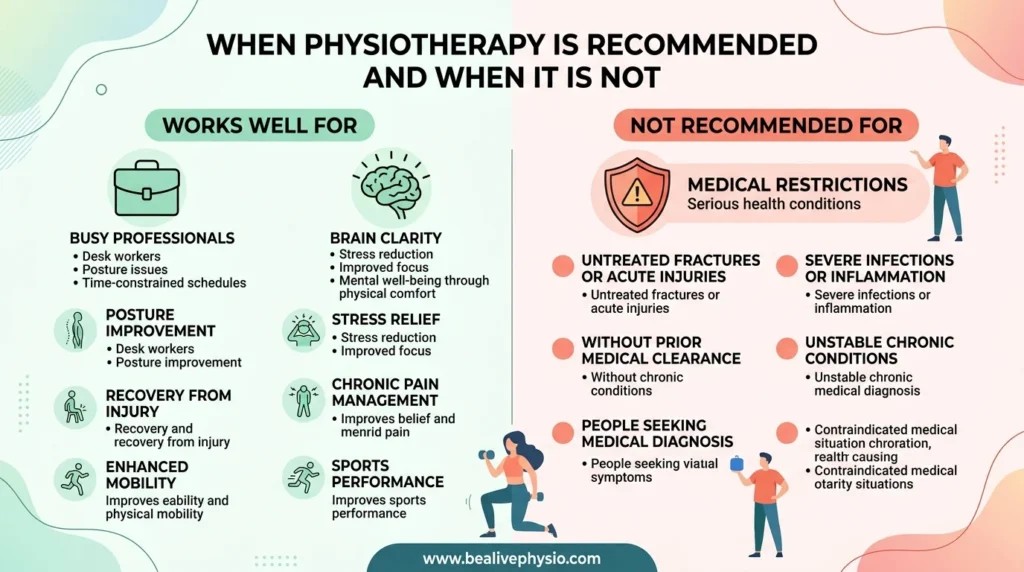
IF may work well for people who:
✔ Have busy mornings
✔ Want fewer calories without strict diets
✔ Prefer bigger, satisfying meals over constant snacking
✔ Work long, uninterrupted shifts
✔ Sleep late or skip breakfast naturally
Many tech workers, students, fitness enthusiasts, and shift workers fall into this category.
IF may NOT be suitable for:
✘ Pregnant or breastfeeding individuals
✘ People with a history of eating disorders
✘ Individuals with diabetes (unless medically supervised)
✘ Those sensitive to blood sugar drops
✘ People taking certain medications that require food
When unsure, speak to a doctor or registered dietitian—especially if you have chronic conditions.
Common IF Methods Explained With Real Examples
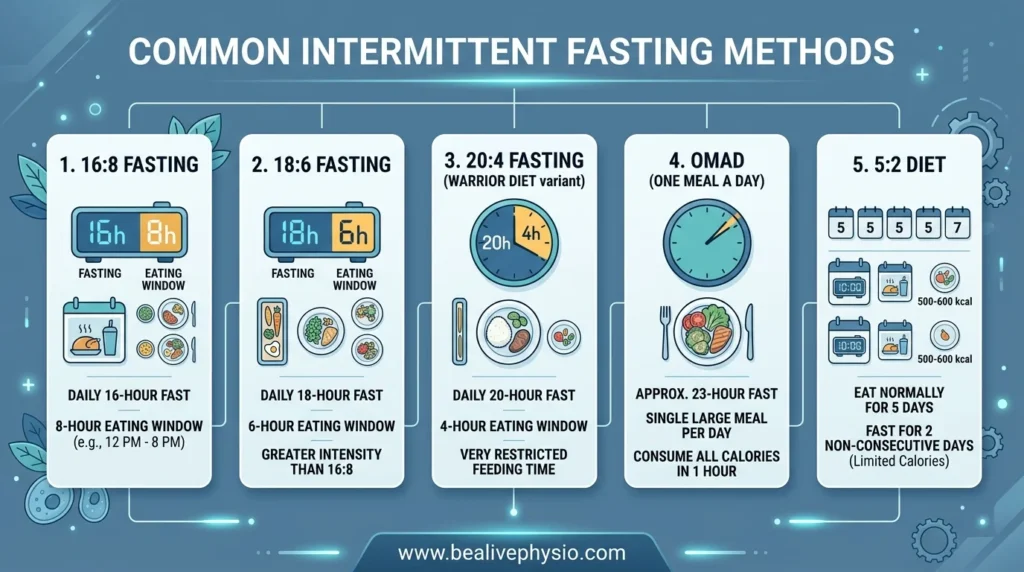
Here are the fasting styles I’ve personally tried or coached people with:
16:8 — The Starter Method
Eat for 8 hours, fast for 16 hours.
Example schedule:
12 PM to 8 PM eating window.
Most people find this the easiest because it fits normal lunch and dinner times.
18:6 — Slightly More Challenging
Eat for 6 hours, fast for 18 hours.
Example:
12 PM to 6 PM.
Better appetite control, but beginners may struggle the first week.
20:4 — The “Warrior” Style
Only one main meal plus small snacks.
Usually used by people deep into fitness or cutting phases.
OMAD — One Meal A Day
Not recommended for beginners.
Good for people who like very big meals or have extremely busy schedules.
5:2 Method
Eat normally for 5 days, calorie-restrict (500–600 calories) for 2 days.
Good for people who hate strict schedules.
My First 30 Days on IF: What Actually Happened
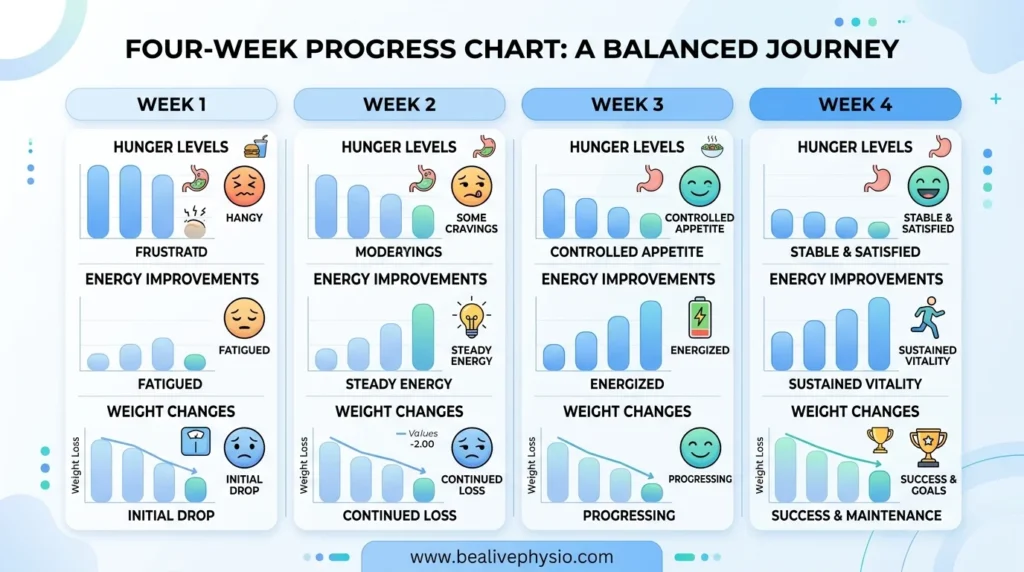
Instead of giving generic results, here’s my real experience:
Week 1:
- Constant morning hunger
- Headaches until I increased water intake
- Energy dipped around 10 AM
Week 2:
- Hunger vanished
- Felt lighter and less bloated
- Noticed clearer thinking during work
Week 3:
- Weight began to drop (about 1.5 lbs)
- Better mood and more predictable appetite
Week 4:
- Fasting felt normal
- Social events required adjustments, but were manageable
- Total weight change: 4–5 lbs without calorie counting
Not dramatic, not unrealistic. Just steady improvement.
Step-By-Step Plan to Start Without Failing
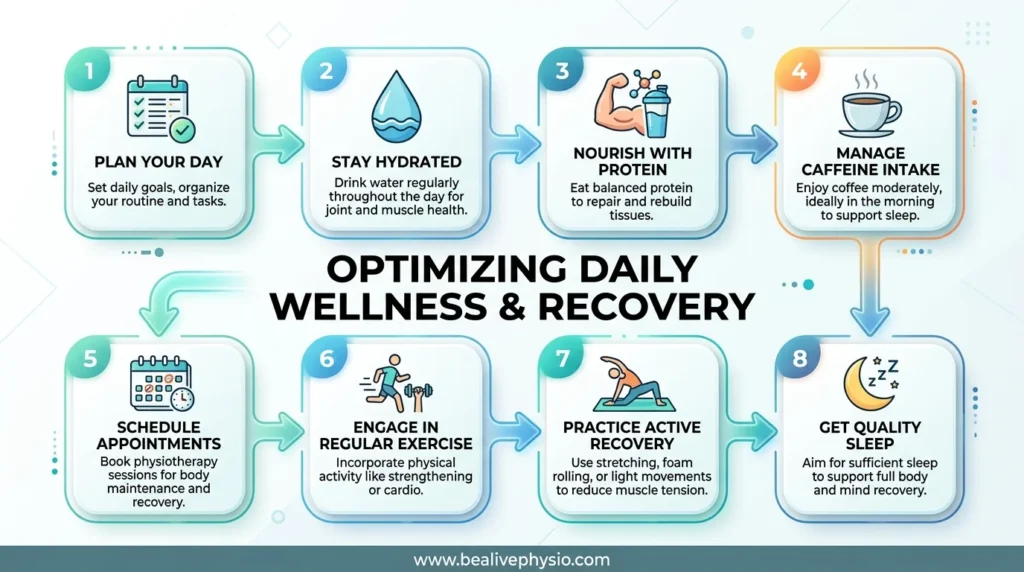
1. Choose a simple schedule
Start with 16:8—no need to complicate it.
2. Set a consistent eating window
Something like:
12 PM to 8 PM
3. Keep the first week flexible
If you’re starving, eat. Pushing too hard causes people to quit.
4. Protect your hydration
Use a simple reminder app like WaterMinder or even the default reminder app on iPhone/Android.
5. Use black coffee or tea during fasting
No sugar, no cream.
They help suppress hunger.
6. Prioritize protein during meals
Example:
Chicken, eggs, tofu, Greek yogurt, legumes.
7. Avoid “reward binges.”
A common beginner trap:
“I fasted all day… time for pizza and cake.”
8. Track your progress weekly—not daily
Daily changes are misleading.
Weekly trends reflect true progress.
Tools, Devices, and Apps That Actually Help
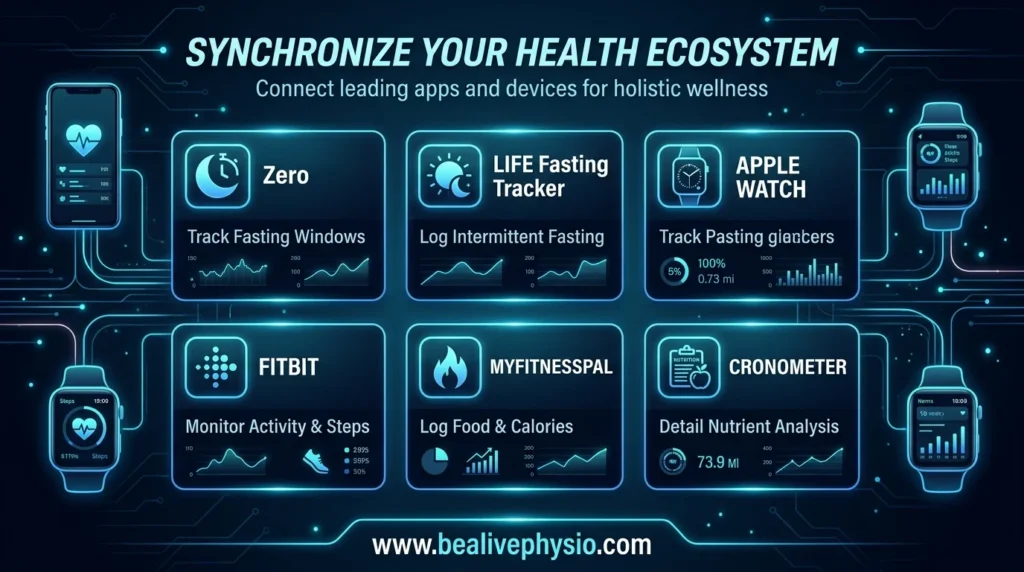
These aren’t required, but they make IF easier:
- Zero Fasting App — Simple fasting tracker
- Life Fasting Tracker — Good community support
- Apple Watch / Fitbit — Tracks hydration reminders and activity
- MyFitnessPal — For those who want to pair IF with calorie awareness
- Cronometer — More accurate nutrient tracking
You don’t need fancy gadgets—your phone timer works fine.
But many people stay more consistent with apps.
Frequently Asked Questions (FAQ)
No. Some people respond well, others feel weak or stressed. Testing for 2–3 weeks gives a clear answer.
Yes—black coffee is allowed.
No sugar, no milk, no creamer.
Many people notice reduced cravings within a week. Visible weight changes often appear between weeks 3–6.
Research shows normal fasting windows (16–20 hours) do not slow metabolism.
Yes, but start light.
Many people enjoy fasted walking or strength training.
Anything with calories.
Water, black coffee, tea, and electrolytes usually don’t break the fast.
Final Thought
Intermittent fasting can be a powerful tool when it fits your lifestyle—not when you force yourself into a schedule that makes every morning miserable. What I’ve learned from my own experience and from watching others is that IF works best when it feels natural. Try different windows, listen to your body, keep the process flexible, and treat fasting as a long-term habit—not a quick fix.