
If you’ve ever skipped a workout because you didn’t have access to a gym, you’re not alone. I’ve been there—traveling, busy with work, or just not in the mood to deal with crowded machines. That’s exactly when I started relying on no-equipment workouts. Over time, I realized something surprising: you don’t need fancy gear to build strength, lose fat, or stay consistent.
This guide is built from real-world experience, not theory. Whether you’re starting from scratch or trying to level up your home routine, this blueprint will help you train effectively using just your body weight.
Why No-Equipment Workouts Actually Work
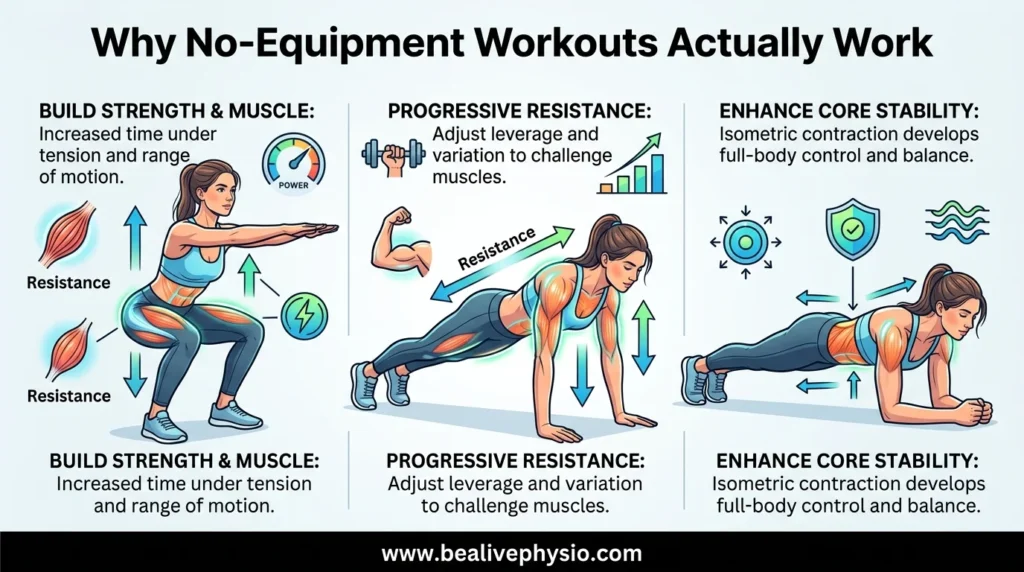
A lot of people underestimate the importance of bodyweight training. I did too at first. But once I focused on proper form, tempo, and consistency, results started showing up—stronger core, better endurance, and even visible muscle definition.
Here’s why it works:
- Your body provides natural resistance (push-ups, squats, planks)
- You can train anywhere—bedroom, rooftop, park
- Less friction = more consistency
- You develop functional strength, not just machine-based strength
According to the American Council on Exercise, bodyweight training improves strength, flexibility, and balance effectively when performed with proper progression [ACE Fitness].
The Core Principles of an Effective Home Workout
Before jumping into routines, it’s important to understand what makes a workout actually effective.
1. Progressive Overload (Yes, Even at Home)
You still need to challenge your body over time.
Real example:
When I started, I could barely do 10 push-ups. Instead of staying there, I:
- Increased reps gradually
- Slowed down each rep
- Added pauses
That alone made a huge difference.
2. Time Under Tension
Slower reps = more muscle engagement.
Try this:
- Regular push-up: 1 second down, 1 second up
- Advanced push-up: 3 seconds down, 2 seconds hold, 1 second up
You’ll feel the difference immediately.
3. Consistency Beats Intensity
A 20-minute workout done 5 days a week beats a random 90-minute session.
Beginner Routine (Start Here If You’re New)
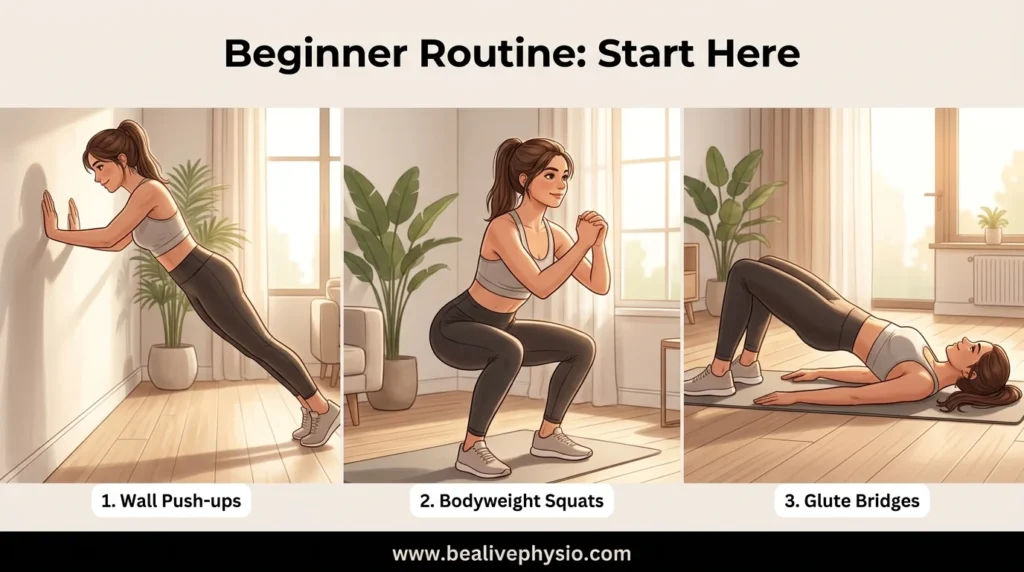
If you haven’t trained in a while, keep it simple. The goal is to build a habit, not burn out.
Workout Plan (3–4 Days/Week)
Warm-up (5 minutes):
- Arm circles – 30 sec
- High knees – 1 min
- Bodyweight squats – 15 reps
Main Workout:
- Wall push-ups – 10–15 reps
- Bodyweight squats – 10–15 reps
- Glute bridges – 12 reps
- Plank – 20 seconds
Rest: 60–90 seconds between rounds
Repeat: 2–3 rounds
Common Beginner Mistakes I See
- Doing too much too soon
- Ignoring warm-ups
- Bad form (especially in squats and push-ups)
I’ve personally dealt with knee discomfort early on because my squat form was off. Fixing that made everything easier.
Intermediate Routine (Build Strength & Endurance)
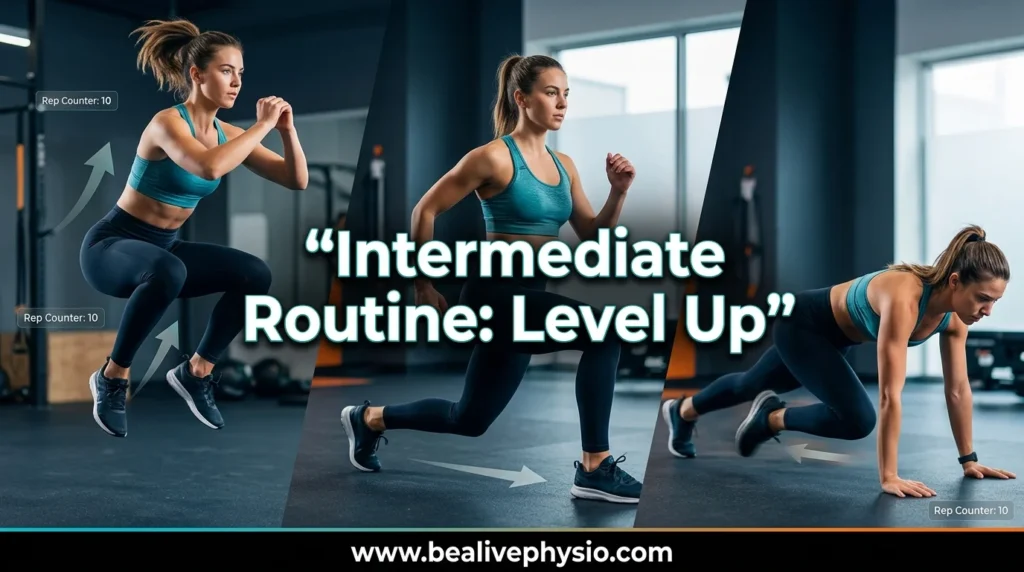
Once basic movements feel easy, it’s time to push further.
Workout Plan (4–5 Days/Week)
Warm-up (5–7 minutes)
Main Workout:
- Standard push-ups – 15–20 reps
- Jump squats – 12–15 reps
- Walking lunges – 12 each leg
- Plank shoulder taps – 20 taps
- Mountain climbers – 30 seconds
Repeat: 3–4 rounds
Rest: 45–60 seconds
Real Progress Indicator
When I reached this level, I noticed:
- Less fatigue during daily tasks
- Improved posture
- Visible core strength
If your workouts feel “too easy,” that’s a sign to level up.
Advanced Routine (Challenge Your Limits)
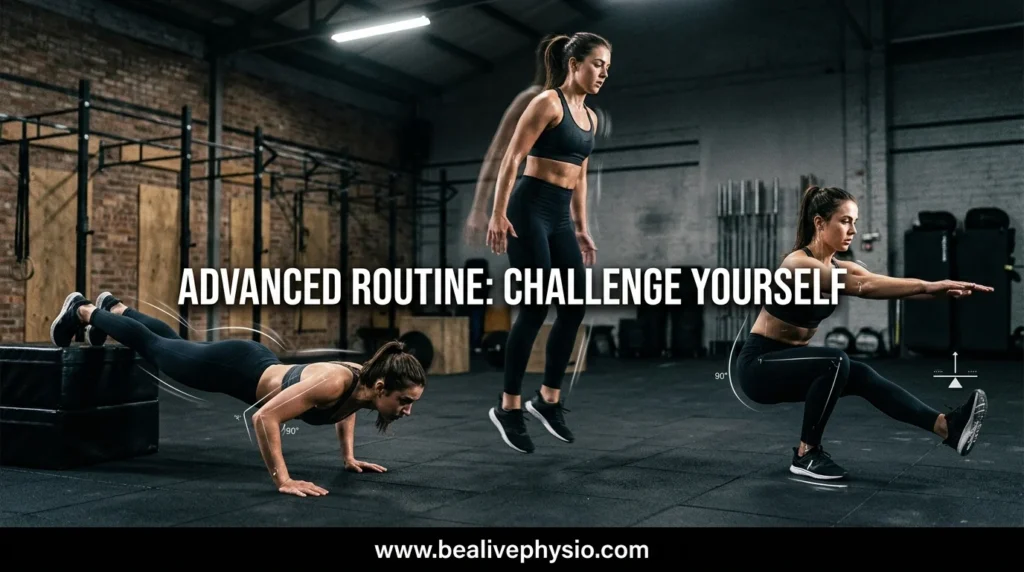
This is where bodyweight training gets intense.
Workout Plan (5–6 Days/Week)
Main Workout:
- Decline push-ups – 20 reps
- Pistol squats – 8 each leg
- Bulgarian split squats (use chair) – 12 each leg
- Plank to push-up – 15 reps
- Burpees – 15 reps
Repeat: 4–5 rounds
Rest: 30–45 seconds
Advanced Tip: Combine Movements
Instead of separate exercises:
- Squat → jump → push-up (full-body combo)
This increases intensity without needing weights.
Sample Weekly Schedule
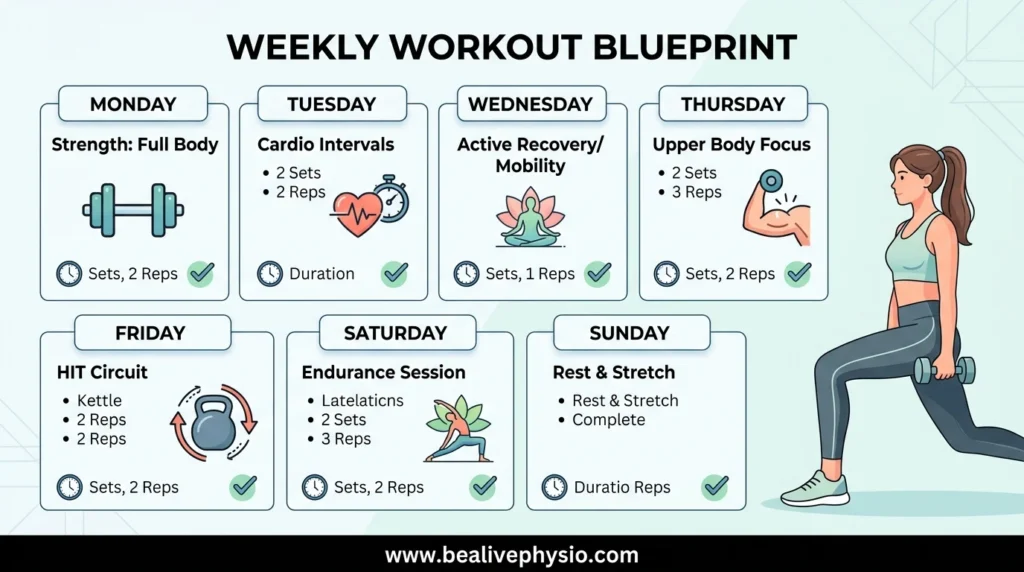
Here’s a simple structure I’ve used successfully:
| Day | Focus |
|---|---|
| Monday | Full Body |
| Tuesday | Core + Cardio |
| Wednesday | Rest |
| Thursday | Lower Body |
| Friday | Upper Body |
| Saturday | Light Activity |
| Sunday | Rest |
Tools That Help (Even Without Equipment)
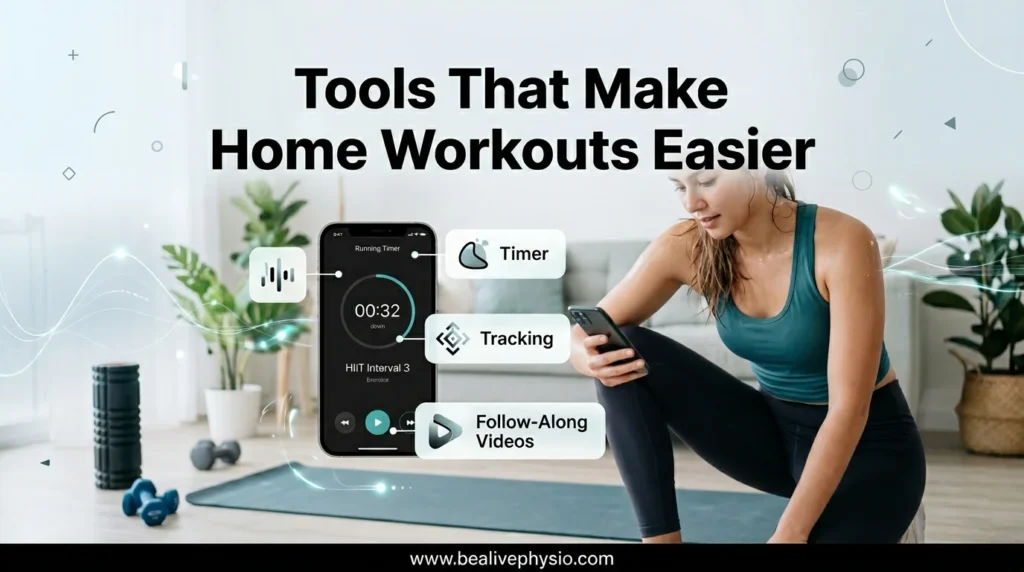
Even though this is a no-equipment plan, a few simple tools can make life easier:
- Timer apps (like Interval Timer or Seconds)
- YouTube follow-along workouts (good for beginners)
- Fitness tracking apps (like MyFitnessPal for logging progress)
Nutrition Still Matters
You can’t out-train a poor diet.
From experience:
- When I cleaned up my diet, results came faster
- Focus on protein, hydration, and balanced meals
According to Harvard Health Publications, exercise combined with proper nutrition significantly improves overall fitness outcomes.
Frequently Asked Questions (FAQs)
Yes, especially as a beginner or intermediate. Progressive overload and proper form are key.
20–45 minutes is enough if done consistently.
Most people notice improvements in 3–4 weeks with regular training and proper diet.
Yes, when combined with a calorie-controlled diet and consistency.
Even a small area is enough. I’ve done full workouts in a 6×6 ft space.
Final Thoughts
No-equipment workouts remove one of the biggest excuses—access. Once that barrier is gone, what’s left is consistency and effort. The routines above aren’t magic, but they work when you do.
You don’t need the “perfect setup” to get started. A small space, your body, and a clear plan are enough. Start simple, stay consistent, and adjust as you grow stronger.
The blueprint is here. What matters now is showing up.