
Most people set health goals with good intentions but lose momentum after a few weeks. The problem usually isn’t motivation—it’s unclear, unrealistic goals that never had a real plan behind them. SMART goals change that. They give you a simple structure that turns vague ambitions like “get healthy” into an actionable plan you can actually follow. Below, you’ll learn how to build SMART health goals based on real-world experience, practical systems, and tools you can start using today.
Why Most Health Goals Fail (and What SMART Fixes)
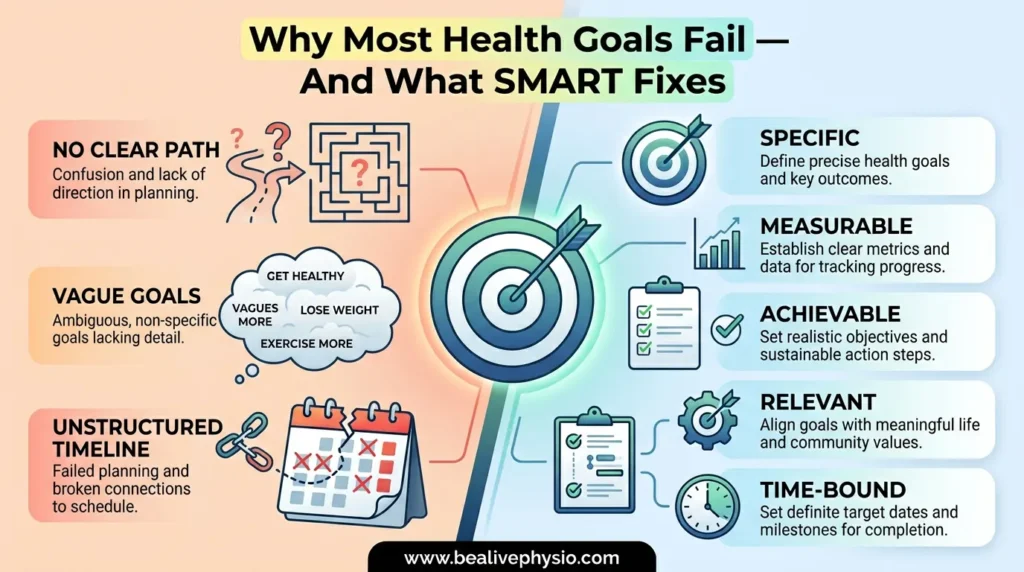
After coaching people on fitness and lifestyle habits for years, I’ve noticed the same pattern: people know what they want but have no clue how to get there.
Common failed goals I hear all the time:
- “I want to lose weight.”
- “I need to exercise more.”
- “I should sleep better.”
- “I want to reduce stress.”
These goals fail because:
- They’re too vague.
- There’s no measurement.
- They ignore real-life limitations.
- They feel overwhelming instead of doable.
- There’s no end date, so there’s no urgency.
SMART goals, solve all of these issues by giving your goal a clear structure.
What SMART Health Goals Really Look Like
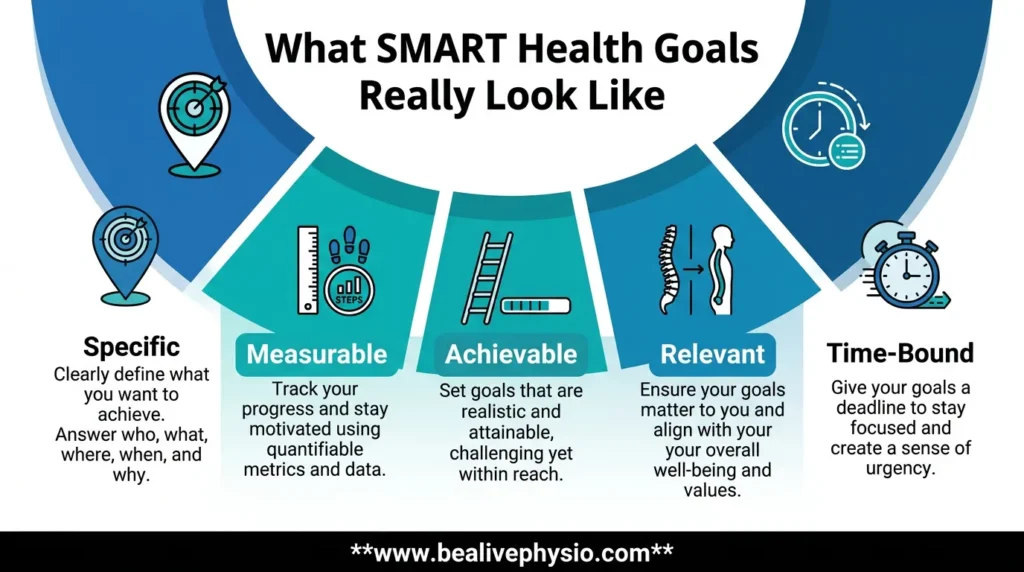
SMART stands for:
- Specific
- Measurable
- Achievable
- Relevant
- Time-Bound
But let’s break this down with real experience—not textbook examples.
Specific
A specific goal tells you exactly what action you’ll take.
Not: “I want to get fit.”
Better: “I will walk 30 minutes after work.”
Measurable
You need a number or metric to know you’re making progress.
Not: “I’ll walk more.”
Better: “I’ll walk 6,000 steps/day tracked with my Fitbit Charge 6.”
Achievable
A goal is achievable when it matches your lifestyle.
If you work 12-hour shifts, a daily 90-minute gym session won’t stick.
But 15 minutes of bodyweight exercise might.
Relevant
Your goal should make sense for your life—not someone else’s.
Example:
If your back hurts from sitting all day, mobility training is more relevant than heavy strength training.
Time-Bound
Without a timeframe, you can delay forever.
Example:
“I will complete this goal by March 30.”
How to Build SMART Health Goals Step-by-Step
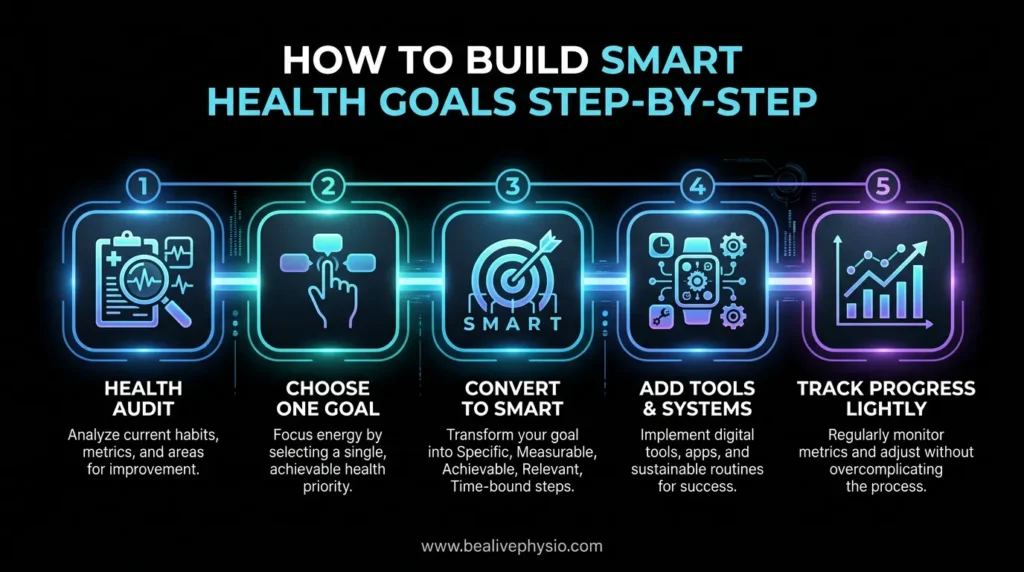
Step 1: Start With a Health “Audit”
Before setting goals, spend 5–10 minutes answering these:
- What’s one health issue I want to fix?
- What’s draining my energy right now?
- What have I tried before, and why didn’t it last?
- When during the day am I realistically free?
Most people skip this step—but it’s crucial.
If you don’t understand your baseline, you’ll create goals that don’t fit your real life.
Step 2: Choose One Goal (Not Five)
One of the biggest mistakes I see is trying to upgrade your entire life at once:
- Meal prep
- Sleep early
- Run daily
- Drink 3 liters of water
- Meditate
- Strength train
That’s not a health plan—that’s burnout.
Pick one primary health goal for the next 30–60 days.
Step 3: Turn It Into a SMART Goal
Here’s a real example from a client who struggled with fatigue:
Before:
“I want to feel less tired.”
SMART version:
“I will walk outside for 20 minutes during my lunch break, 4 days per week, for the next 6 weeks.”
Why it works:
- It’s specific (walk outside)
- It’s measurable (20 minutes, 4 days/week)
- Achievable (fits into lunch break)
- Relevant (helps energy + reduces sitting time)
- Time-bound (6 weeks)
Step 4: Add Tools & Systems to Make It Stick
Goals succeed when you support them with systems.
Useful tools:
- Fitness trackers: Fitbit, Apple Watch, Garmin Venu
- Sleep apps: SleepCycle, AutoSleep (iOS), Whoop
- Habit apps: TickTick, Notion trackers, Streaks
- Nutrition apps: MyFitnessPal, Cronometer, Yazio
For example:
If your goal is 6,000 daily steps, enable step reminders on your watch.
If your goal is better sleep, set “wind-down mode” on your phone at 10 PM.
Step 5: Track Progress Without Becoming Obsessed
Tracking is useful, but burning out on tracking is real.
Use “light tracking.” Examples:
- Check weight twice per week, not daily.
- Log workouts, not every calorie.
- Use weekly summaries instead of obsessing over daily stats.
The goal is progress, not perfection.
Examples of Realistic SMART Health Goals
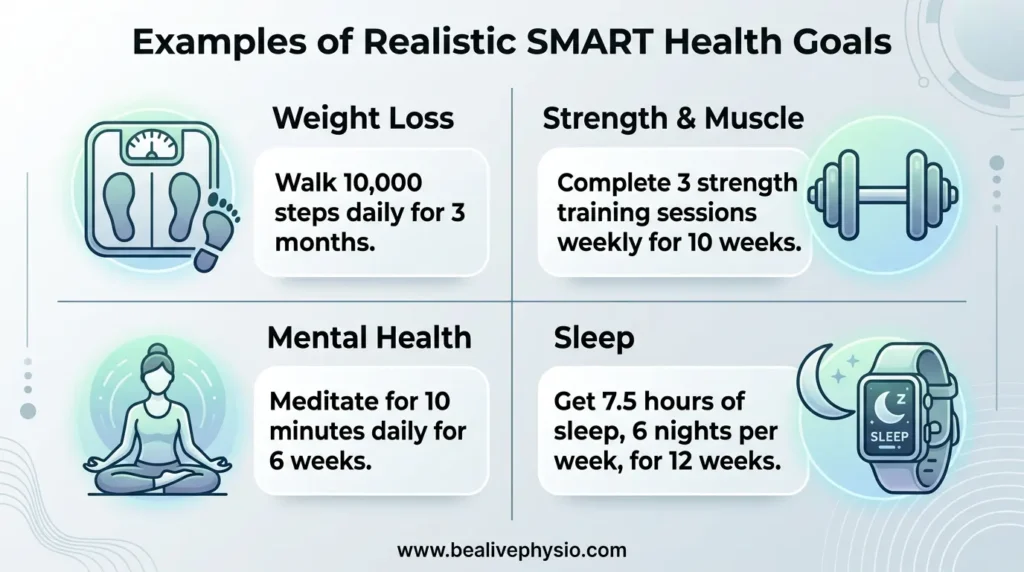
Weight Loss
❌ “I want to lose weight.”
✔ “I will maintain a 300–400 calorie deficit tracked with MyFitnessPal and walk 7,000 steps daily for 8 weeks.”
Strength & Muscle
✔ “I will complete three 30-minute strength-training sessions per week using dumbbells at home through the Nike Training Club app for 12 weeks.”
Mental Health
✔ “I will meditate using the Calm app for 10 minutes every morning for the next 30 days.”
Sleep
✔ “I will avoid screens after 10 PM and get in bed by 10:30 PM for the next 21 days, tracked by Apple’s Sleep Focus mode.”
All of these are:
- tied to real tools that help
- specific
- measurable
- realistic for most adults
The Most Common Mistakes People Make With SMART Goals
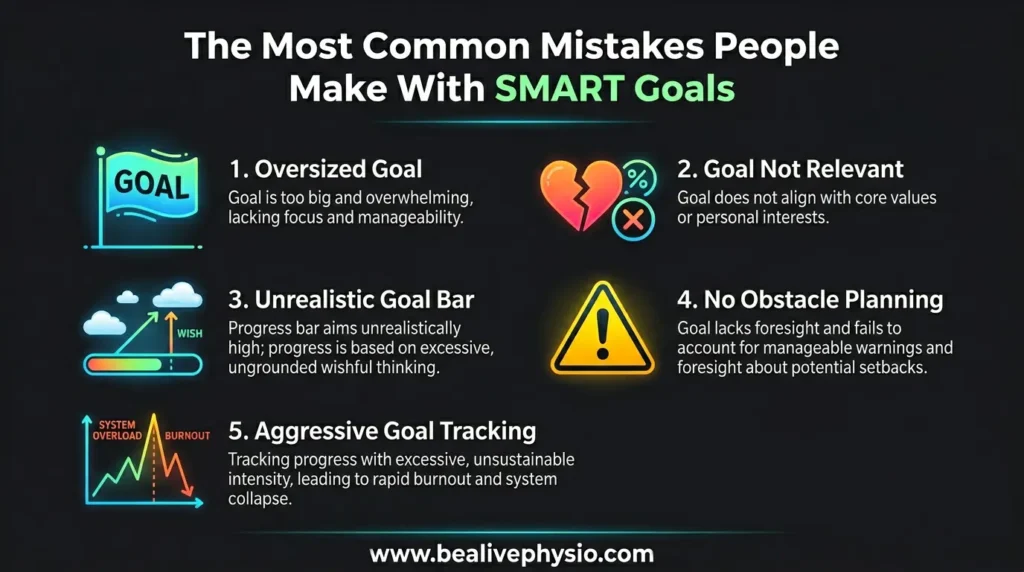
Over the years, I’ve seen the same mistakes repeated:
1. Setting goals based on what they wish they could do
Not what they can actually do with their schedule.
2. Choosing a goal they don’t truly care about
If you’re doing it because someone told you to, it will fail.
3. Making the goal too big
Most people underestimate how powerful small wins are.
4. Not planning for obstacles
No plan for:
- travel
- sick days
- Busy weeks mean the habit collapses.
5. Tracking too aggressively
This leads to burnout and obsession.
What to Do When You Fall Off Track
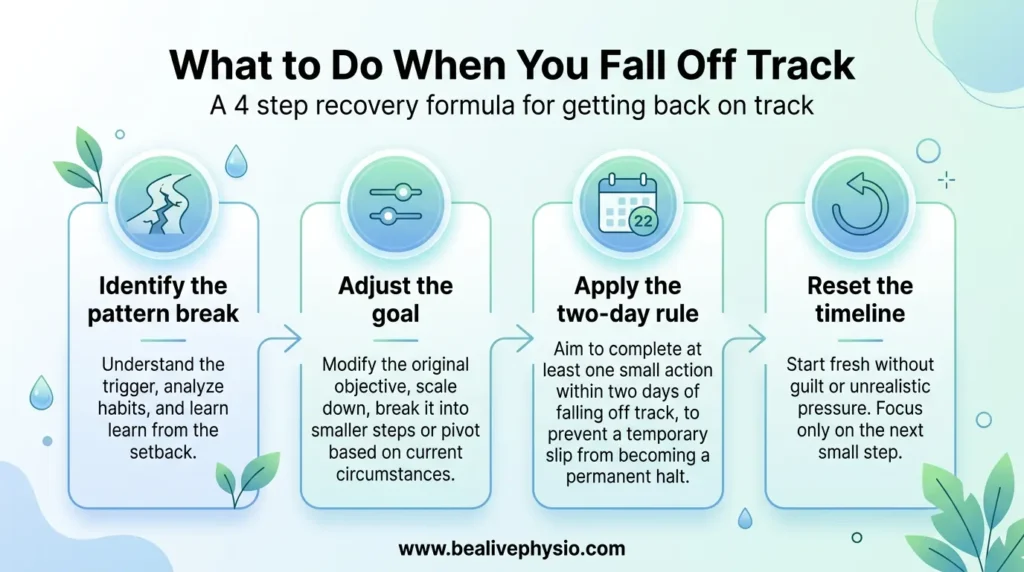
Everyone slips. What matters is the recovery plan.
Here’s a simple formula I use:
1. Ask: “What broke the pattern?”
Travel? Illness? Stress? Overcommitment?
2. Adjust the goal slightly
If 10k steps isn’t sustainable, reduce to 7k.
3. Use the “Two-Day Rule”
Never miss two days in a row of your chosen habit.
4. Reset the timeline
You didn’t fail—you just extended the goal.
Tools & Devices That Make SMART Tracking Easier
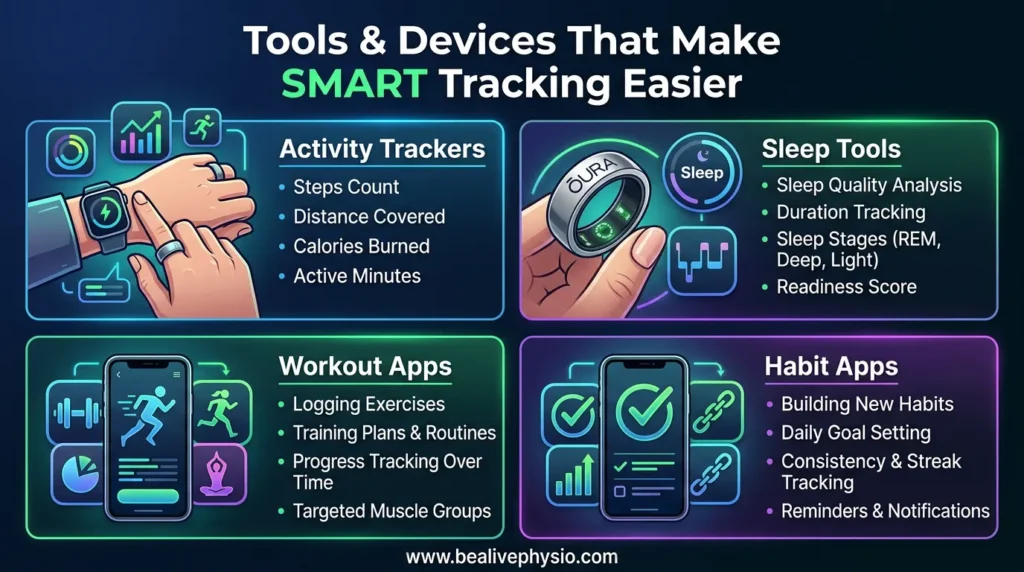
Realistic, non-sponsored recommendations:
Fitness & Activity
- Fitbit Charge 6
- Apple Watch SE
- Garmin Venu SQ
Sleep Tracking
- Oura Ring
- SleepCycle app
- AutoSleep (iPhone)
Workout Apps
- Nike Training Club
- Fitbod
- StrongLifts 5×5
- Peloton App (even without the bike)
Habit Tracking
- Streaks (iOS)
- Todoist
- Notion templates
These tools don’t replace discipline, but they make staying consistent easier.
Final Thought
Setting SMART health goals isn’t about being perfect—it’s about being consistent in a way that actually fits your life. The people who see real, lasting results aren’t the ones chasing extreme routines or short-term motivation. They’re the ones who build simple, realistic systems and stick to them, even on busy or low-energy days.
If there’s one takeaway, it’s this: start smaller than you think you need to. A short walk, a basic sleep routine, or a few focused workouts each week can create more progress than an ambitious plan that burns out in two weeks. Progress builds quietly, and over time, those small wins compound into noticeable change.
You don’t need a perfect plan—you need a plan you’ll follow. Adjust it when life gets messy, keep showing up, and let consistency do the heavy lifting.