
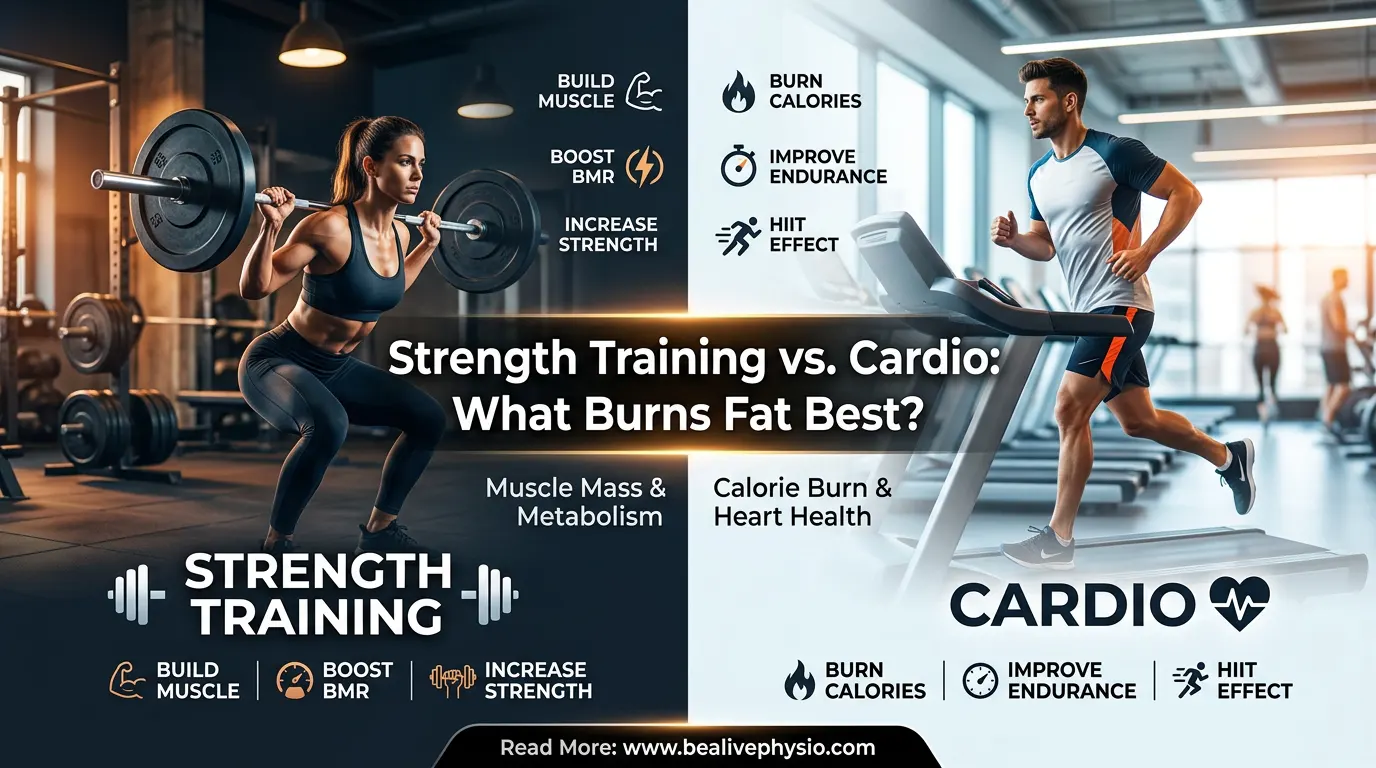
As a fitness methodology supported by exercise science and peer‑reviewed research, the answer is clear: cardio burns more calories immediately, while strength training increases long‑term fat loss through muscle retention, metabolic elevation, and EPOC (afterburn). The most effective fat‑loss strategy combines both, producing results validated in clinical studies from organizations such as the American Council on Exercise (ACE) and the National Strength and Conditioning Association (NSCA).
Fat loss is not just about what burns more calories in the moment—it’s about how your body adapts metabolically. This is why experts in kinesiology and sports physiology consistently recommend a combined training approach.
What Is Cardio and How Does It Burn Fat?
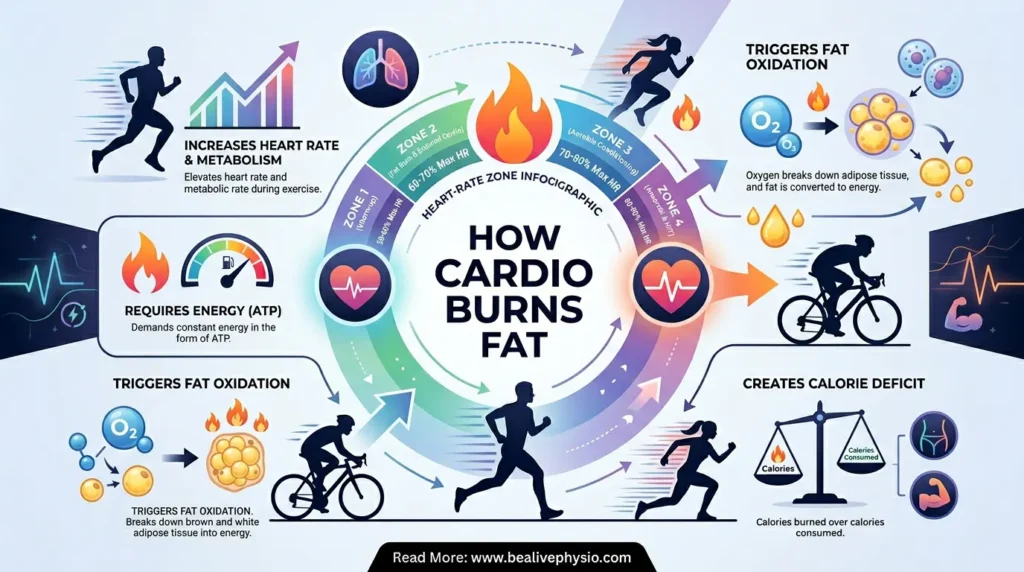
Cardio, short for cardiovascular exercise, includes activities like running, cycling, and swimming. These exercises increase your heart rate and burn calories quickly.
Types of Cardio
Steady-state cardio involves maintaining a consistent pace, while high-intensity interval training (HIIT) alternates between intense bursts and recovery periods. HIIT has been shown to burn more calories in less time.
Calories Burned During Cardio
Cardio is highly effective for immediate calorie burn. According to the American Council on Exercise, a 155-pound person can burn around 300 calories in 30 minutes of moderate-intensity cardio.
Pros and Limitations
Cardio improves heart health and burns calories quickly, but it does little to preserve muscle mass if overdone.
What Is Strength Training and How Does It Burn Fat?
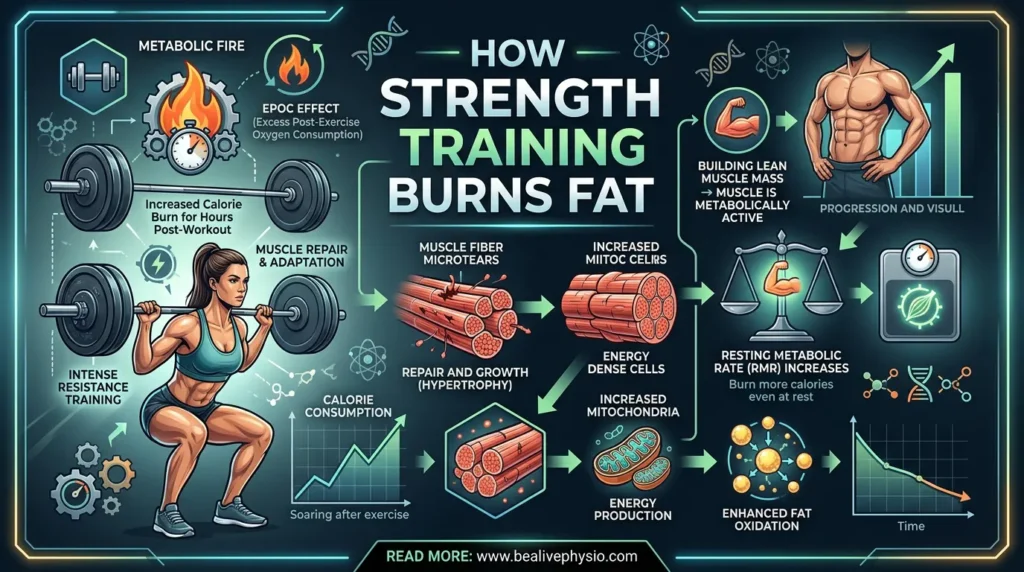
Strength training includes exercises like weightlifting and resistance training. While it burns fewer calories during the workout, it plays a crucial role in long-term fat loss.
Muscle Growth and Metabolism
Muscle tissue burns more calories at rest than fat. Increasing muscle mass boosts your resting metabolic rate.
Afterburn Effect (EPOC Explained)
Strength training increases excess post-exercise oxygen consumption (EPOC), meaning your body continues to burn calories after your workout.
Pros and Limitations
Strength training builds muscle and improves body composition but may not burn as many calories during the session compared to cardio.
Strength Training vs Cardio: Key Differences
Calories Burned
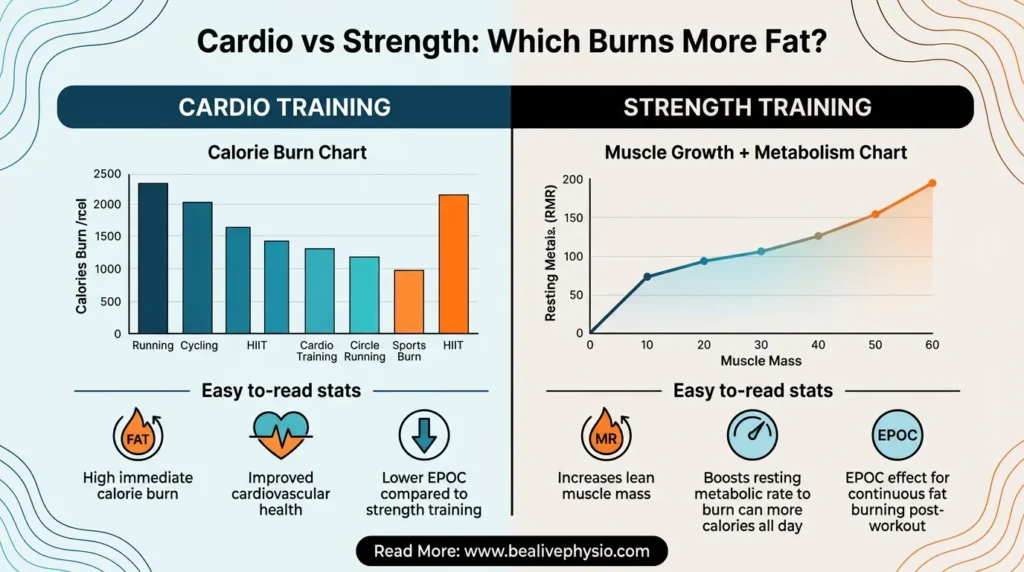
Cardio burns more calories during exercise, while strength training contributes to calorie burn over time.
Fat Loss Efficiency
Research shows that combining both methods leads to better fat loss results than either alone (Willis et al., 2012).
Long-Term Results
Strength training supports sustainable fat loss by maintaining muscle mass.
Why You Need Both for Optimal Fat Loss
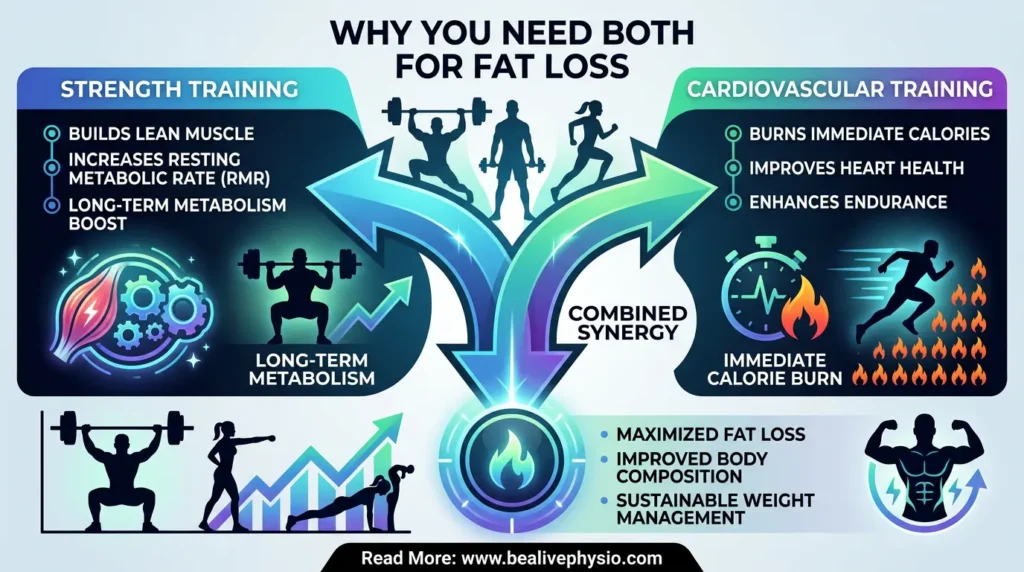
Scientific consensus among certified strength and conditioning specialists (CSCS) and metabolic researchers shows that the combination of strength training and cardio produces superior fat‑loss outcomes compared to either method alone. This dual approach supports both metabolic health and long‑term weight management.
Immediate vs Long-Term Fat Burning
Cardio helps create a calorie deficit, while strength training ensures that weight loss comes from fat rather than muscle.
Body Composition Benefits
Combining both leads to a leaner, more toned physique.
Injury Prevention and Balance
A balanced routine reduces overuse injuries and improves overall fitness.
Best Workout Plan for Fat Loss
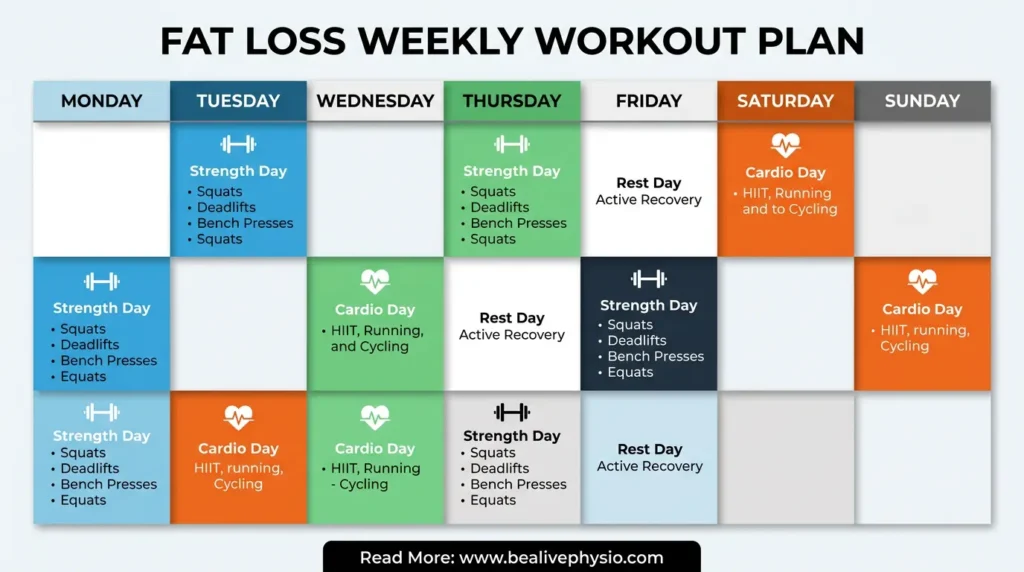
Weekly Workout Split Example
- 3 days strength training
- 2–3 days cardio
- 1–2 rest days
Beginner vs Advanced
Beginners should start with full-body workouts, while advanced individuals can use split routines.
Common Mistakes to Avoid
- Not allowing recovery time
- Doing only cardio
- Ignoring progressive overload
Final Thought
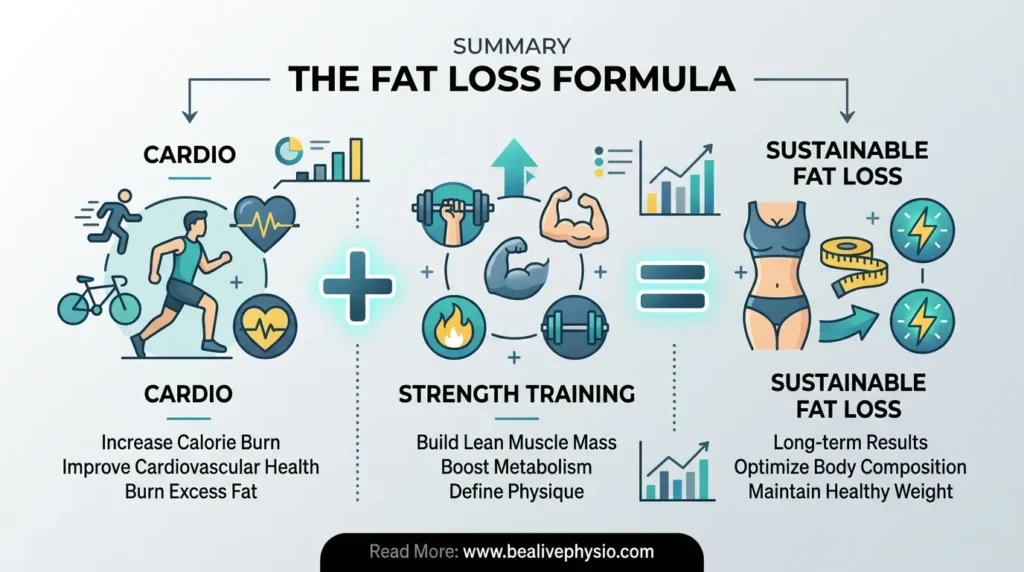
From an evidence‑based fitness perspective, neither strength training nor cardio alone is the ultimate fat‑loss solution. Cardio creates rapid caloric expenditure, while strength training enhances metabolic function, preserves lean mass, and ensures weight loss comes from fat rather than muscle.
Professionals in exercise science agree: the synergy of both is what delivers sustainable, healthy, long‑term fat loss. Building muscle through resistance training gives your metabolism lasting strength, while cardio supports heart health and consistent energy expenditure.