
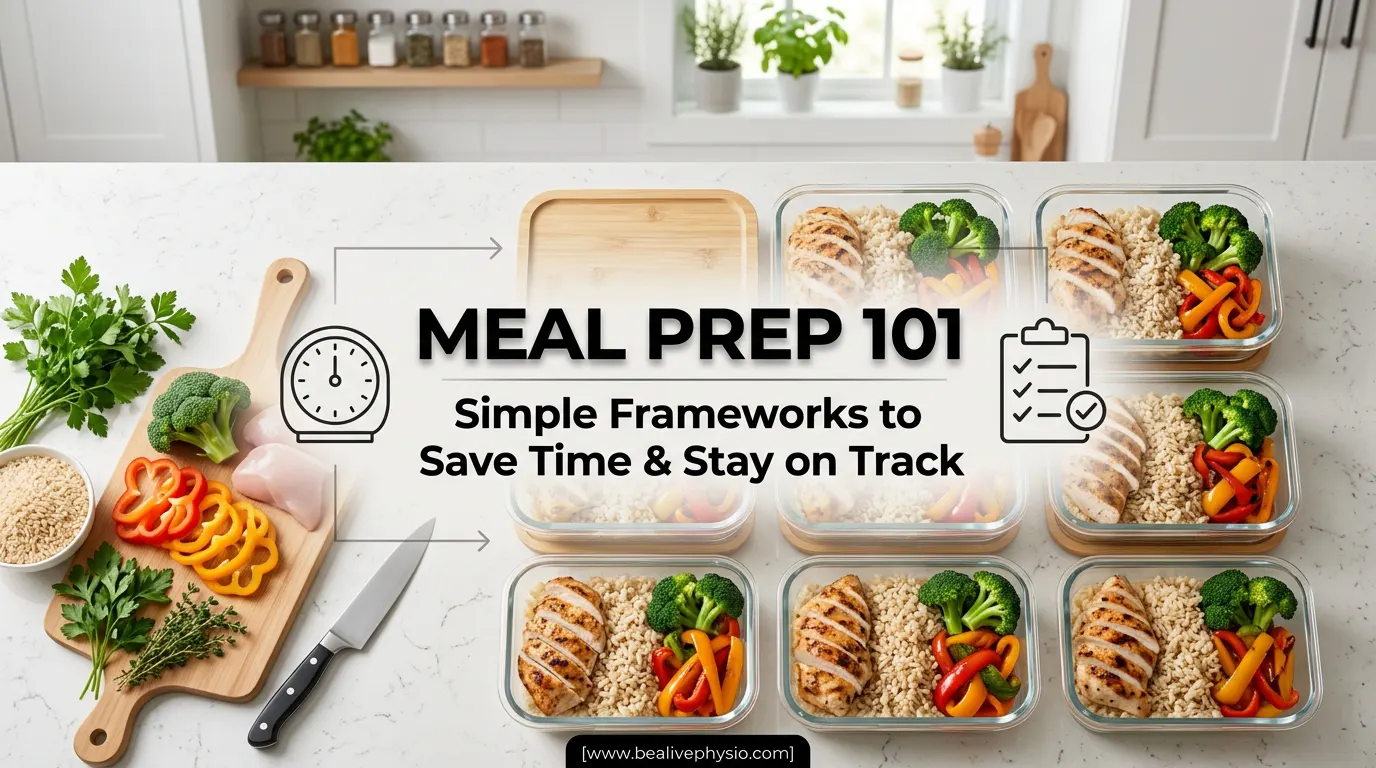
Meal prep doesn’t require fancy containers, a chef-level kitchen, or spending your entire Sunday chopping carrots. I say this as someone who used to burn out every few weeks—too many complicated recipes, too much food waste, and honestly, too much pressure to be “perfect.”
What finally worked was shifting from Pinterest-perfect meal prep to a simple framework anyone can follow, even if your schedule is chaotic. Below, I’ll walk through the exact system I use today—based on real mistakes, real experiments, and real results. You can copy it, adjust it, or use it as a base to build your own routine.
Why Most People Fail at Meal Prep (My Early Mistakes)
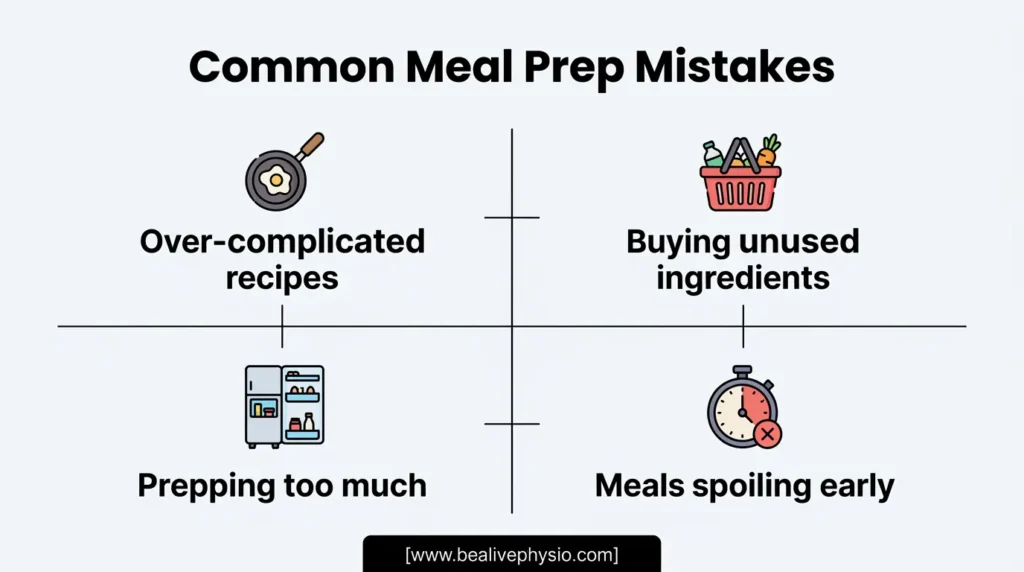
If you’ve ever meal-prepped for one week and never again, you’re not alone. I made all the classic mistakes:
1. Prepping complicated recipes
I once tried cooking four different dinners on a Sunday. I washed dishes for longer than I cooked.
2. Buying ingredients I never used
A bundle of cilantro that died in the fridge. A random spice I used once. A 2-pound bag of quinoa I convinced myself I liked.
3. Over-prepping and burning out
I’d prep perfectly… then get sick of the food by Wednesday.
4. Making meals that didn’t store well
Soggy veggies, dried-out chicken breast, mushy rice.
Once I tossed out three whole containers of food because I couldn’t even pretend to like them anymore. That was the moment I knew something had to change.
The Simple Meal Prep Framework I Use (And Teach to Friends)
Most people overcomplicate meal prep. The trick is to prep building blocks, not full recipes.
Here’s the framework that finally made meal prep sustainable.
Step 1 – Choose Your Prep Style (Pick ONE)
There are three types of meal prep styles. Mixing them usually leads to chaos.
A. “Full Meal Prep”
Complete meals in containers, ready to reheat.
Good for: people with strict schedules.
B. “Buffet-Style Prep” (my favorite)
Cook separate proteins, carbs, and veggies, then mix and match each day.
Good for: people who get bored easily.
C. “Ingredient Prep”
Chop veggies, marinate proteins, or make sauces ahead of time.
Good for: absolute beginners.
Choose ONE for now. You can mix later once you’re comfortable.
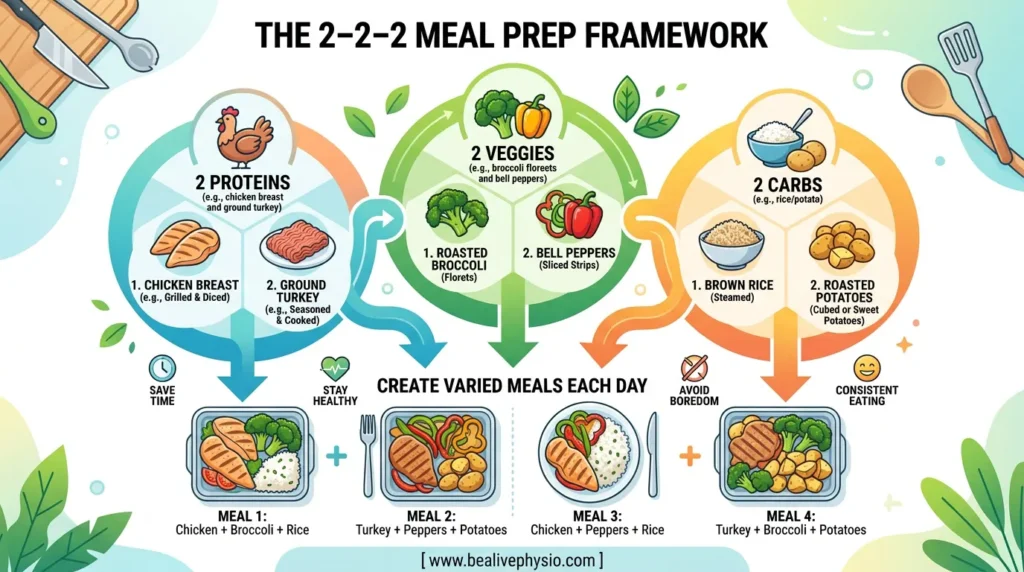
Step 2 – Use the “2 Proteins, 2 Veggies, 2 Carbs” Rule
This rule saved me more time than any meal-prep app or fancy cookbook.
It’s simple:
- Pick 2 proteins (chicken + tofu, beef + eggs, etc.)
- Pick 2 veggies (broccoli + peppers, carrots + spinach, etc.)
- Pick 2 carbs (rice + potatoes, pasta + quinoa)
With these 6 components, you can create 10–14 different combinations without repeating the same meal twice.
Example combos:
- Chicken + rice + broccoli
- Chicken + potatoes + peppers
- Tofu + rice + spinach
- Beef + potatoes + broccoli
It keeps meals interesting without extra work.
Step 3 – Plan Using a Realistic Schedule
This part matters more than people think. Ask yourself:
- How many meals do you actually need?
- How many times will you eat out?
- Do you want dinner leftovers for lunch?
I use Google Calendar and the Notion “Weekly Meal Board,” but even a sticky note works.
Pro tip: Prep only 2–3 days at a time.
Food is fresher, and you won’t dread eating the same thing all week.
Step 4 – Batch Cook in 60–90 Minutes
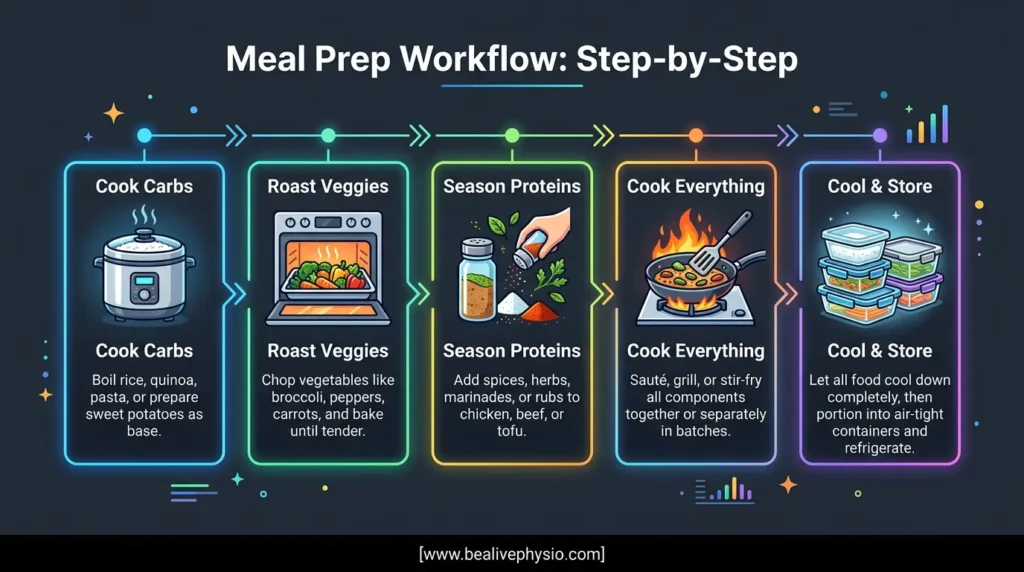
Here’s my exact workflow on a Sunday afternoon:
- Start carbs first (rice cooker or Instant Pot).
- Preheat oven to roast veggies.
- Season proteins while oven warms up.
- Cook proteins on stovetop or air fryer.
- Chop fresh veggies while everything cooks (multitasking without stress).
- Cool, portion, store.
Using multiple appliances (air fryer + rice cooker + oven) cuts total time almost in half.
Step 5 – Store the Right Way (Prevents Soggy, Mushy Food)
This is where most beginners fail.
Tips:
- Use glass containers for proteins (better reheating).
- Store carbs separately to avoid sogginess.
- Don’t pre-cut watery veggies like cucumbers.
- Add sauces the day you eat, not before.
I rotate between SnapWare glass containers and collapsible silicone ones for space-saving.
Real-World Examples (Actual Meals I Prep Often)
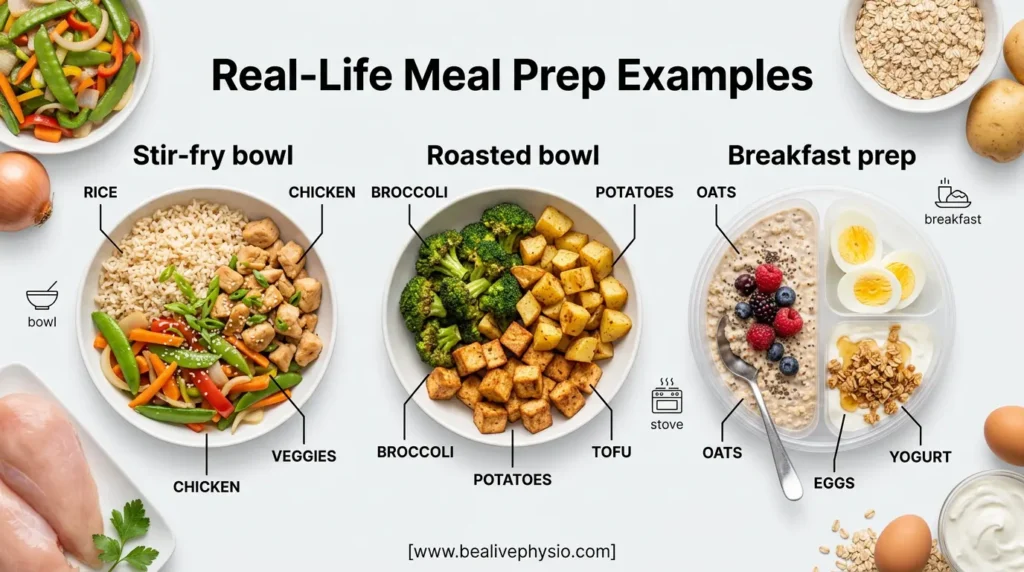
Here are meals I actually eat—not Instagram staging.
1. 10-Minute Stir Fry Mix
- Pre-cooked chicken
- Frozen stir-fry veggie blend
- Leftover rice
- Soy sauce + garlic powder
Takes 10 minutes on a skillet.
2. Roasted Bowl
- Roasted potatos
- Air-fried tofu
- Broccoli
- Tahini lemon sauce
Feels “restaurant healthy” without effort.
3. Breakfast Prep (5 Days)
- Overnight oats
- Eggs boiled in batches
- Greek yogurt + berries
Easy grab-and-go options if I’m running late.
Tools & Devices That Make Meal Prep Easier
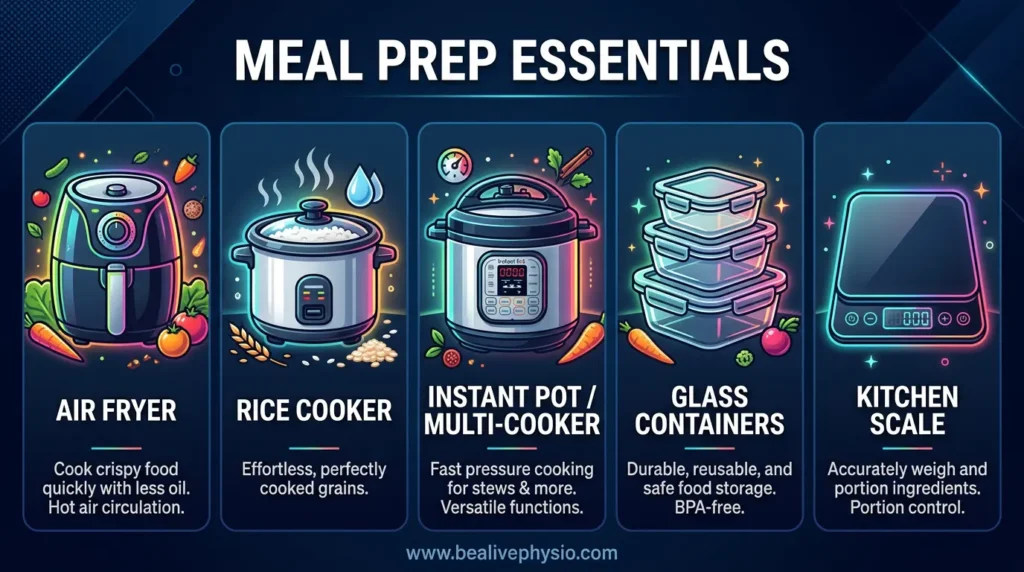
You don’t need everything, but a few devices genuinely save time.
Game-Changers I Actually Use
- Air Fryer (Ninja AF101 or Cosori 5qt)
- Rice Cooker (Zojirushi or Panasonic)
- Instant Pot (for bulk beans, soups, shredded chicken)
- Kitchen Scale (for portioning)
- Stackable Glass Containers (IKEA or SnapWare)
Meal Prep for Weight Loss, Muscle Gain, or Workweeks
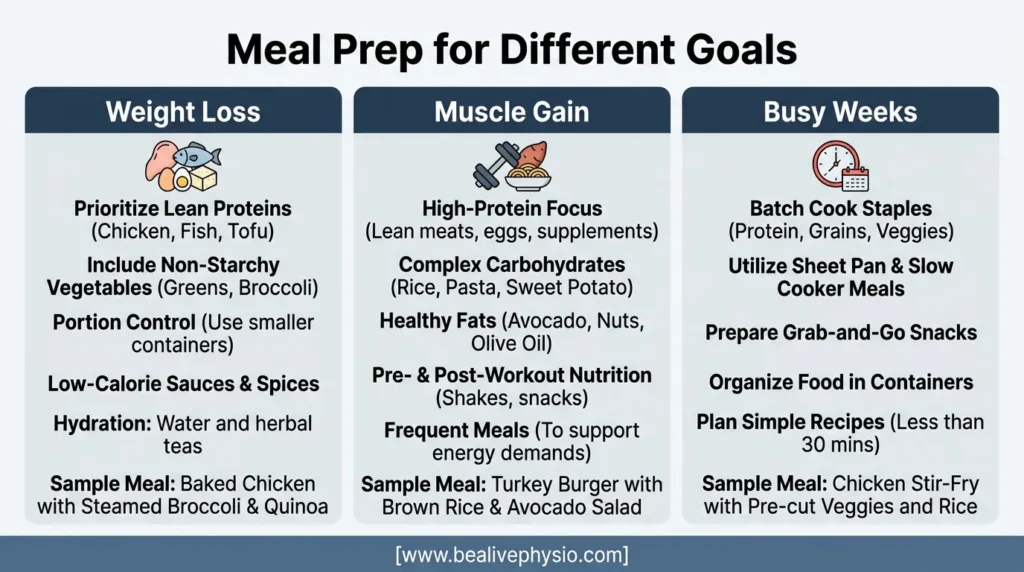
Weight Loss
Focus on:
- lean protein
- high-volume veggies
- moderate carbs
Batch-cook meals around 400–500 calories.
Muscle Gain
Increase:
- carbs
- protein portions
- healthy fats
Add rice, pasta, nut butters, and Greek yogurt.
Busy Workweeks
Prioritize:
- overnight oats
- pre-marinated proteins
- pre-washed salad kits
You can meal prep in two 20-minute sessions during the week instead of Sundays.
Common Problems & Fixes
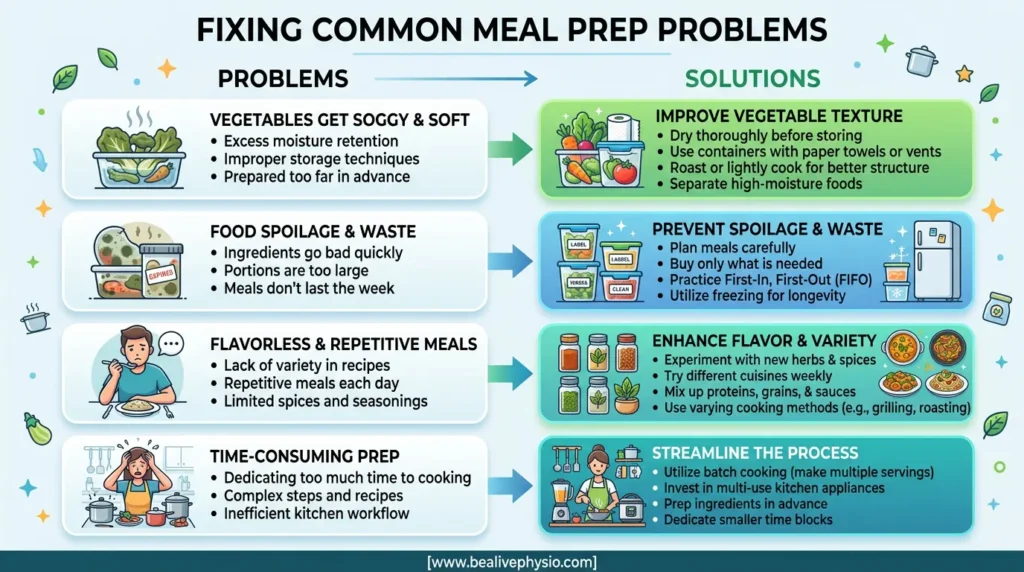
Food gets boring
→ Use sauces and seasonings after cooking, not before.
Food spoils too fast
→ Prep only 2–3 days ahead, not a full week.
Takes too long
→ Use oven + stovetop + air fryer simultaneously.
Don’t know what to cook
→ Stick to the 2-2-2 framework until you get comfortable.
Final Thought
Meal prep isn’t about strict diets or perfectly arranged containers—it’s a practical tool to make life easier. Once you switch from recipe-based prep to simple frameworks, the whole process feels lighter. Start with small wins: prep a protein, a carb, and a veggie. Build from there. Over time, you’ll create a rhythm that fits your lifestyle, not someone else’s.
FAQs
Most cooked meals last 3–4 days in the fridge when stored properly.
Yes—just cool food before storing and reheat to 165°F (74°C).
No, but glass containers improve reheating and keep food fresher.
Yes—air fryers, toaster ovens, or stovetops all work.
Store sauces separately and keep carbs/veggies in separate compartments