
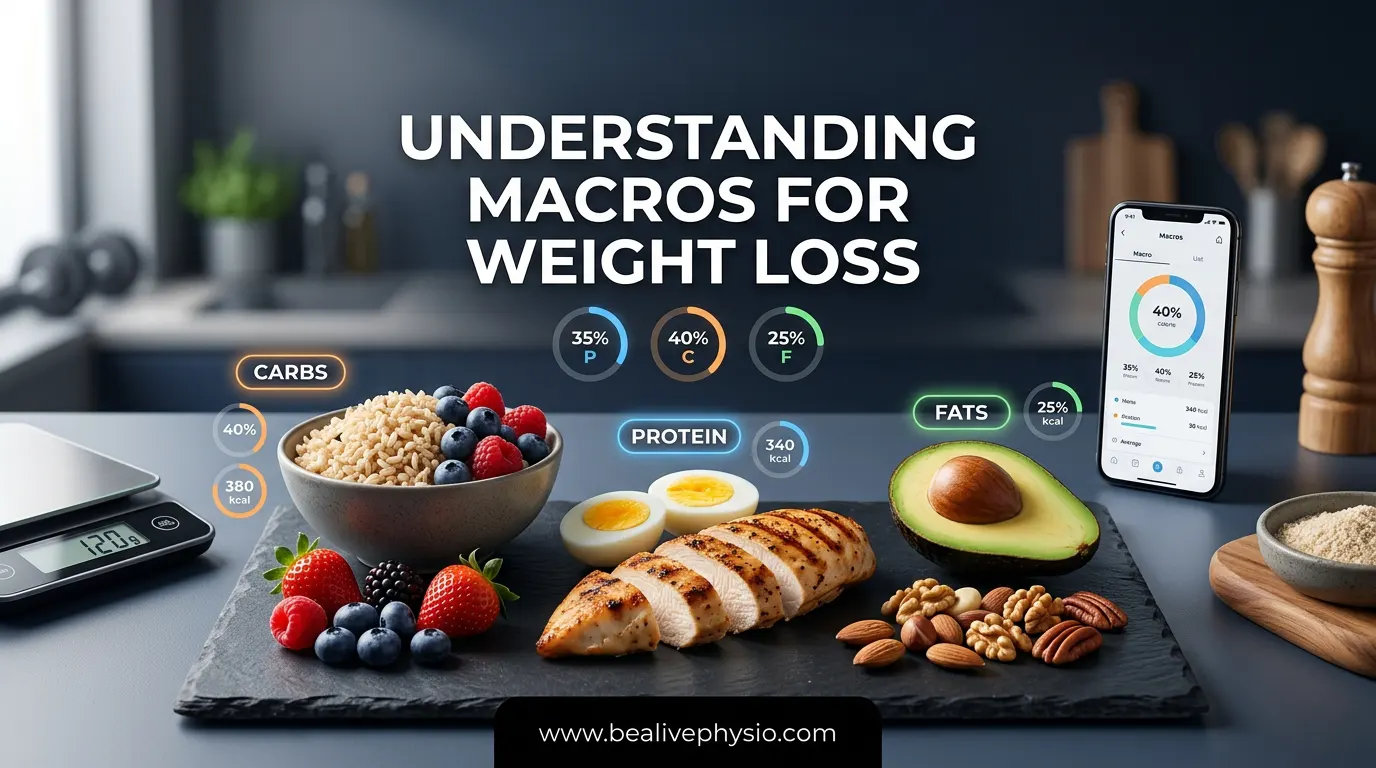
Macros—short for macronutrients—are the nutrients your body needs in large amounts: protein, carbohydrates, and fats. While calories decide whether you gain or lose weight, your macro balance decides how that weight changes—whether you lose fat, keep muscle, feel energized, or end up stuck, hungry, or burned out.
If you’ve ever counted calories but still didn’t see results, there’s a good chance your macros were off.
I’ve tracked macros for years—using apps like Chronometer, MyFitnessPal, and even a basic Google Sheet when traveling. I can say with absolute honesty: the moment I stopped focusing only on calories and started balancing macros properly, everything changed.
My hunger dropped. Energy increased. Workouts felt easier.
And weight loss finally became predictable instead of frustrating.
Here’s the straightforward, no-nonsense explanation I wish I had from the start.
What Are Macros and Why They Matter for Weight Loss
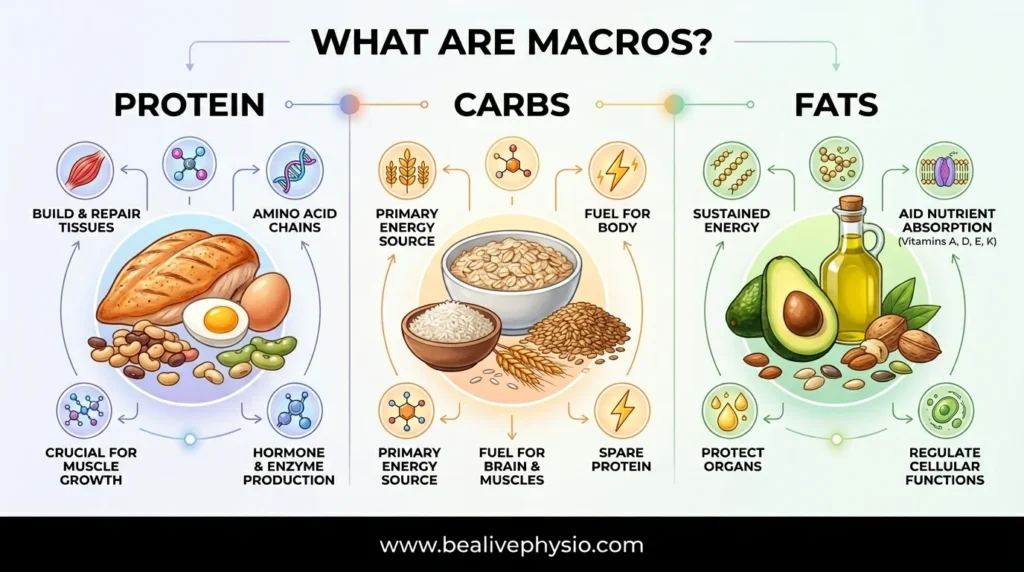
Macros are the big three nutrients that give your body energy
- Protein (4 calories per gram)
- Carbohydrates (4 calories per gram)
- Fats (9 calories per gram)
Every calorie you eat comes from one of these.
Calories vs. Macros: What’s the Difference?
- Calories = the total energy you consume.
- Macros = where those calories come from.
You can eat 1,800 calories of pastries and lose weight—but you’ll be starving, losing muscle, and low on energy.
Or you can eat 1,800 calories with balanced macros and feel full, strong, and energized.
According to the NIH, macronutrient composition significantly impacts satiety, metabolic rate, and body composition, even when total calories are controlled (NIH, 2015).
Why Macro Balance Matters for Fat Loss
Balanced macros help:
- control hunger
- preserve muscle
- stabilize energy
- reduce cravings
- make weight loss more predictable
Macros are your weight loss dial settings. They determine how comfortable and sustainable your fat loss will be.
How Protein Impacts Weight Loss (The Real Game-Changer)
Most people—my past self included—eat far less protein than they think. When I started tracking seriously, I learned I was eating around 40–50 grams per day. I needed almost double that.
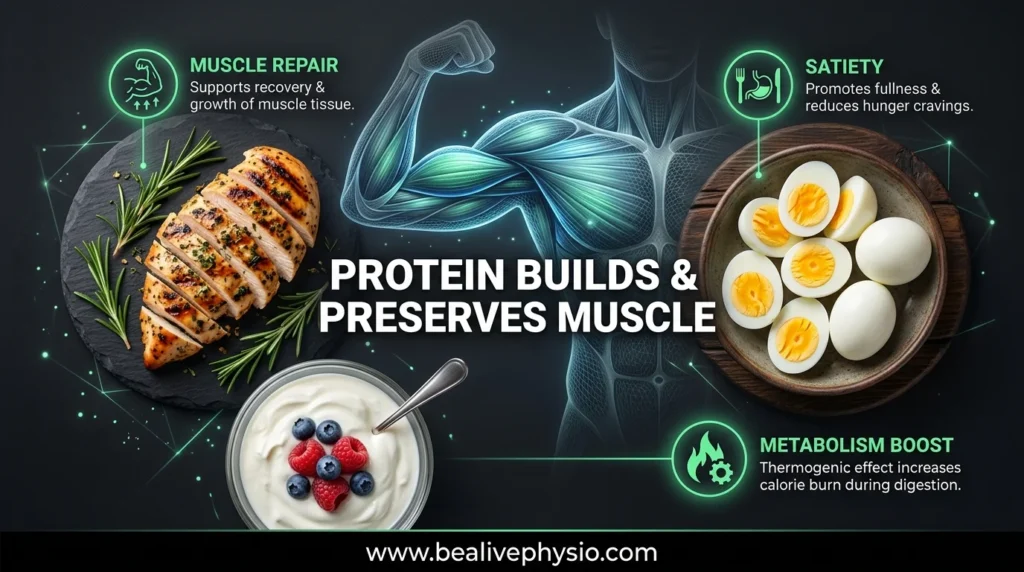
Protein affects weight loss in three major ways:
1. It keeps you full longer
A high-protein breakfast (like eggs or Greek yogurt) will keep you satisfied much longer than a high-carb one (like cereal).
Real example:
I swapped my usual bowl of oats for an omelet plus a high-protein yogurt. The first day, I didn’t feel hungry until almost 1 PM. That never happened before.
2. It protects muscle while losing fat
When you lose weight, you want it to be fat, not muscle.
More muscle = higher metabolism
Less muscle = slower metabolism
Protein is basically the insurance policy.
3. It slightly increases calorie burn
Not dramatically, but protein takes more energy for your body to digest compared to carbs or fats. It won’t melt the weight off, but it helps.
How much protein should you eat?
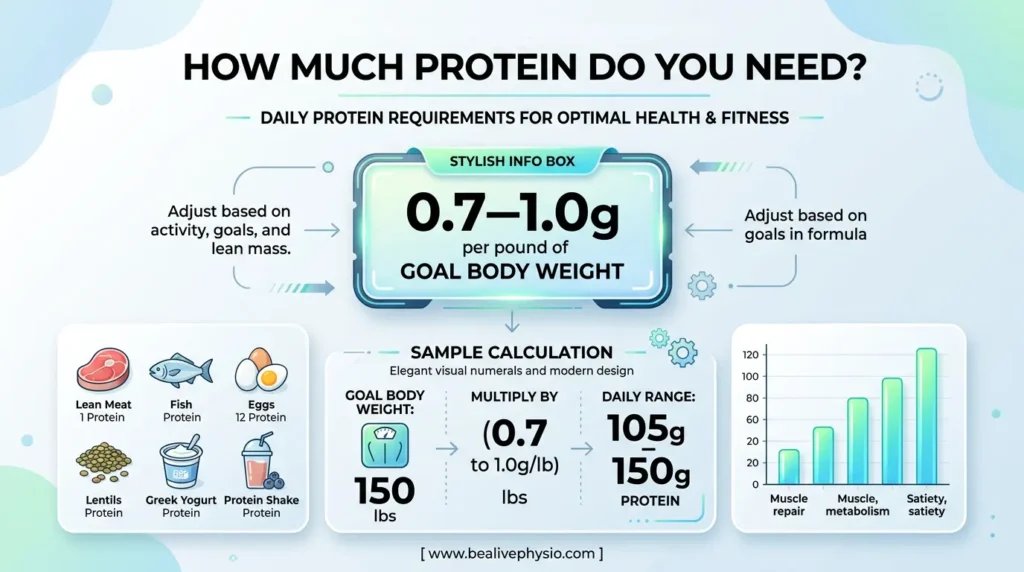
Most people aiming for fat loss do well with:
0.7–1.0 grams per pound of goal body weight
Example: If your goal is 150 lbs → 105–150 grams of protein per day.
I personally hover around 120–140g depending on training days.
Easy Protein Sources That Aren’t “Diet Food”
- Greek yogurt
- Chicken thighs
- Ground turkey
- Eggs
- Protein pasta
- Whey protein
- Cottage cheese
- Tofu or tempeh
Most beginners under-eat protein simply because they lack go-to protein foods.
How Carbs Support Weight Loss (They’re Not the Enemy)
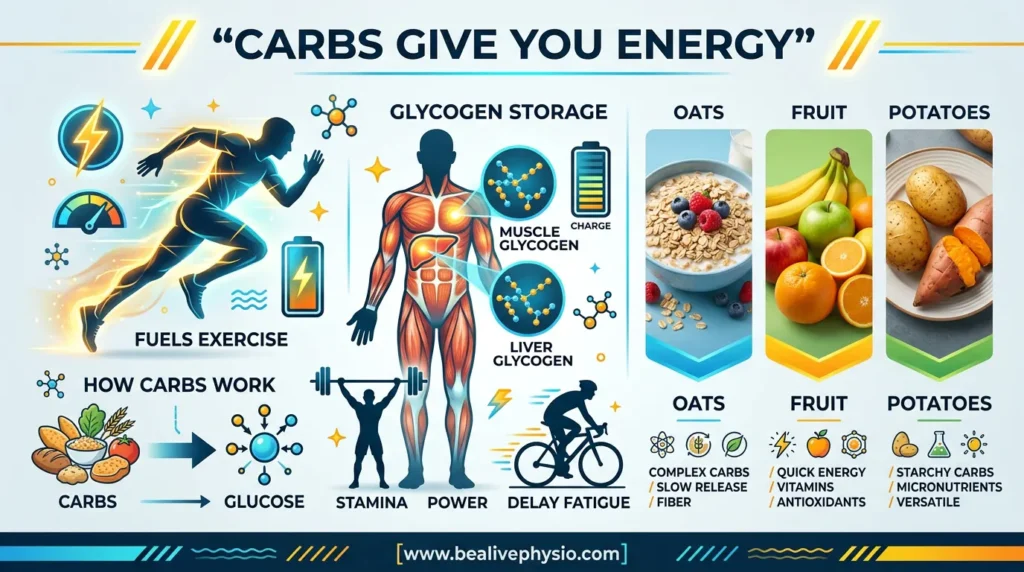
Carbs get blamed for weight gain, but the science is clear: carbs don’t cause fat gain—extra calories do (NIH, 2018).
Carbs Are Your Body’s Preferred Energy Source
Low-carb diets work for some, but for those who lift weights, run, or cycle, low-carb eating often leads to:
- fatigue
- poor performance
- slower recovery
- irritability
Carbs restore glycogen, which powers intense workouts.
Carbs Don’t Make You Fat—They Store Water
When you eat carbs, your body stores water with them. This is not fat gain.
Each gram of glycogen holds 3–4 grams of water (NIH, 2020). That’s why low-carb diets cause rapid “weight loss”—it’s water.
High-Quality vs. Low-Quality Carbs
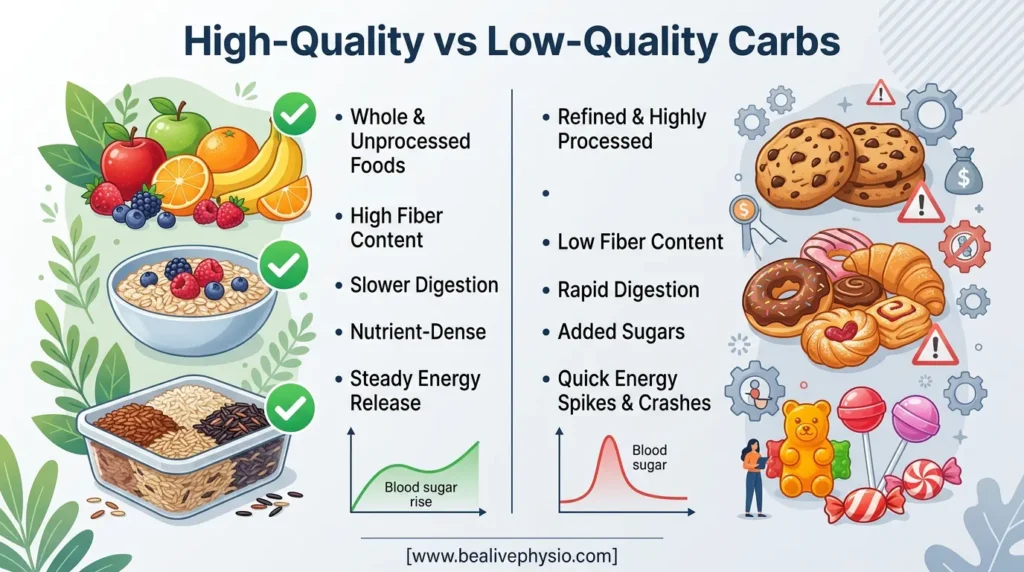
High-quality carbs (keep hunger stable):
- potatoes
- oats
- fruit
- whole grains
- beans
- rice
Low-quality carbs (easy to overeat):
- pastries
- cookies
- candy
- sugary cereal
Ideal Carb Intake for Weight Loss
A good starting point:
35–45% of daily calories from carbs
More active individuals can eat more.
How Fats Influence Weight Loss and Hunger
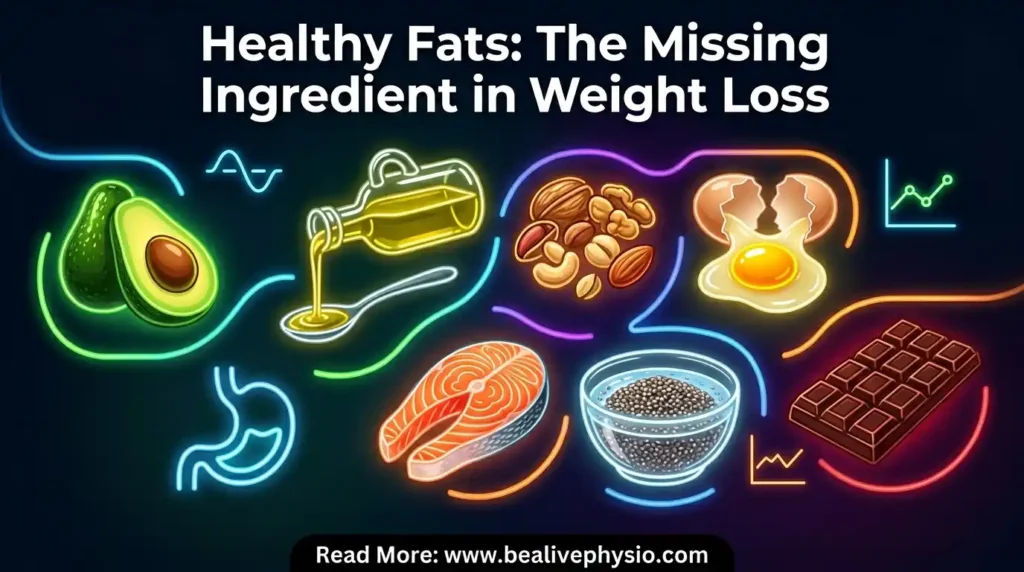
Fat is essential—not something to avoid.
Fat Supports Hormone Health
Your body needs dietary fat to produce hormones that regulate:
- appetite
- mood
- metabolism
- vitamin absorption
Very low-fat diets can negatively impact hormonal balance (PubMed, 2014).
Fat Helps Keep You Full
Fat slows digestion and promotes satiety.
Recommended Fat Intake
25–35% of calories from fat is ideal for most people.
Healthy Fat Sources
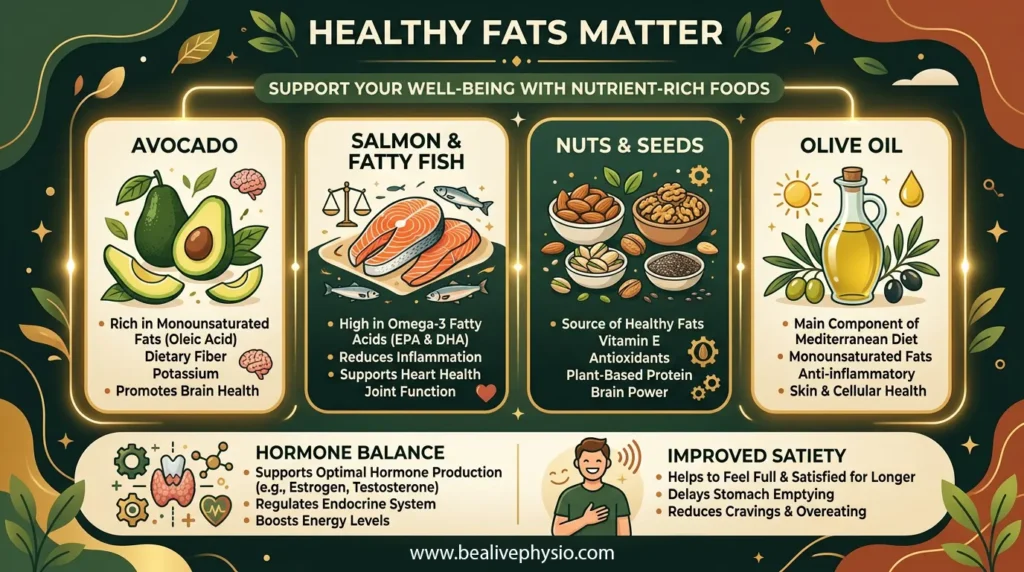
- salmon
- avocado
- nuts
- olive oil
- coconut oil
- eggs
- dark chocolate
- chia seeds
How to Set Up Macros for Weight Loss
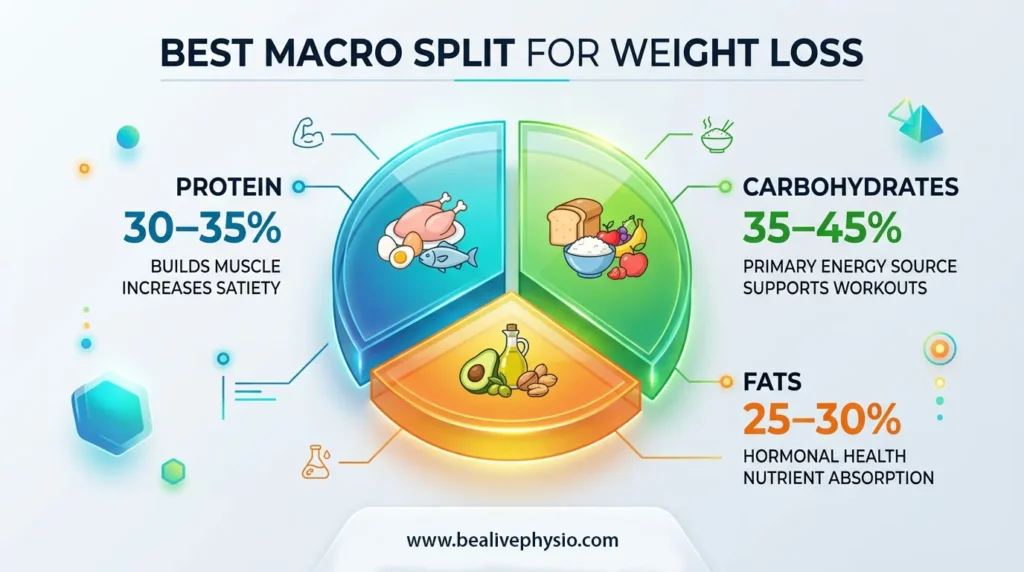
Below is a balanced, beginner-friendly macro split that works for most people.
Recommended Macro Split for Weight Loss
- Protein: 30–35%
- Carbs: 35–45%
- Fats: 25–30%
How to Calculate Your Macros (Simple Method)
- Determine target calories (e.g., 1,800).
- Multiply each macro percentage:
- Protein: 30% of 1,800 = 540 calories / 4 = 135g protein
- Carbs: 40% of 1,800 = 720 calories / 4 = 180g carbs
- Fat: 30% of 1,800 = 540 calories / 9 = 60g fat
Common Macro Mistakes
- Trying to hit perfect numbers
- Ignoring protein
- Going extremely low-carb
- Underestimating fats (calorie-dense)
- Forgetting fiber
- Drinking liquid calories
Macro-Friendly Meal Ideas
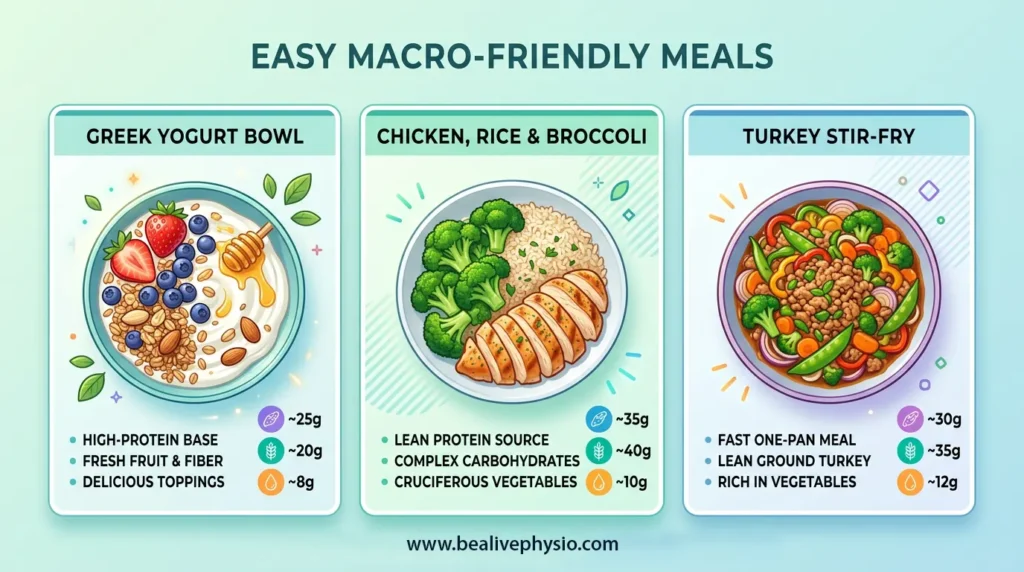
High-Protein Breakfast
- Greek yogurt
- Berries
- Protein granola
- Optional honey
Balanced Lunch
- Rice
- Chicken thighs
- Broccoli
- Olive oil drizzle
Simple Dinner
- Ground turkey stir fry
- Potatoes or rice
Snacks
- Cottage cheese
- Protein shakes
- Hard-boiled eggs
- Apple + peanut butter
How Macros Help You Lose Fat (Real Results)
Once I shifted from calorie-only tracking to macro-balanced eating:
- hunger dropped
- energy increased
- strength improved
- Sleep quality improved
- fat loss became predictable
Macros aren’t a restrictive diet—they’re a roadmap.
Final Thought
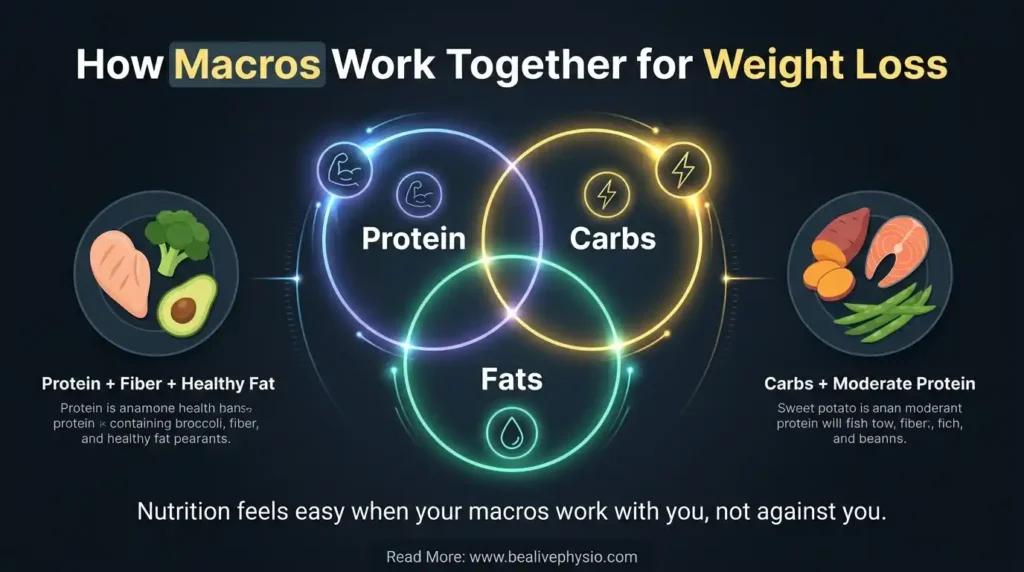
Macros aren’t a diet.
They’re a way of understanding how food works with your body instead of against it. Once you dial them in, weight loss becomes noticeably smoother, hunger becomes more predictable, and you stop guessing every time you open the fridge.
Give yourself a week or two to adjust.
It feels confusing at first, but then one day the numbers start to make sense—and your body starts responding in a way that feels almost effortless.
FAQs
Both matter, but macros determine how sustainable your calorie deficit feels.
Yes, but tracking macros speeds progress.
No—excess calories do.
Optional, but higher carbs improve performance.
Usually, yes, because it controls hunger and preserves muscle.